 Pin it
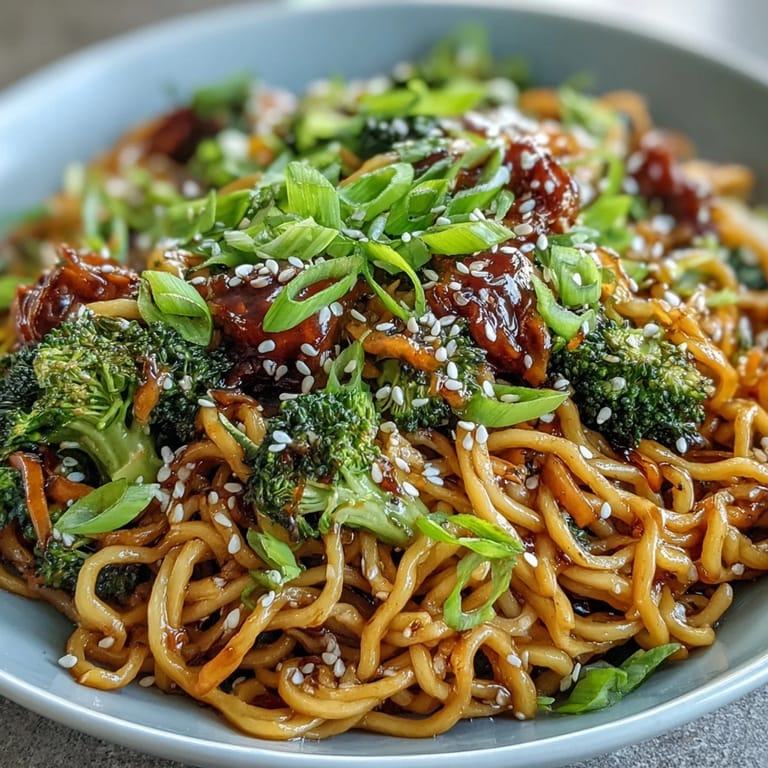
 There's something almost meditative about the moment when you pour a glossy teriyaki sauce over a pile of steaming noodles and watch it cling to every strand like liquid gold. I discovered this bowl on a particularly hectic Tuesday when I had fifteen minutes and an empty fridge, yet somehow needed to feed myself something that felt both nourishing and celebratory. The kitchen filled with the most incredible aroma of garlic and ginger hitting hot oil, and I realized I'd stumbled onto something I'd be making again and again.
I made this for my neighbor one evening when she mentioned missing her favorite Asian restaurant, and watching her face light up when she tasted it reminded me why I love cooking for people. She asked for the recipe immediately, and now whenever I see her, she thanks me again for that bowl. It became our little kitchen connection, proof that sometimes the simplest meals create the most meaningful moments.
Ingredients
- Egg noodles (300g): The foundation of everything, and they need to be cooked just past tender but still with a hint of chew, then rinsed so they don't clump together when the sauce hits them.
- Broccoli florets (2 cups): Keep them bite-sized and blanch them just enough to take the raw edge away while they still snap between your teeth.
- Carrots, julienned (2 medium): The thin cuts let them cook evenly and catch the sauce in every crevice, adding natural sweetness and a pop of color.
- Green onions, sliced (2): Use both the white and green parts, as the white adds a subtle bite when cooked and the green gives brightness at the end.
- Soy sauce (1/4 cup): This is your salt and umami base, so taste as you go because different brands vary in intensity.
- Mirin (2 tbsp): If you don't have mirin, dry sherry works beautifully and adds a similar subtle sweetness without being cloying.
- Honey or maple syrup (2 tbsp): The honey dissolves smoothly into the sauce, though maple syrup brings an earthier note if that's your preference.
- Rice vinegar (1 tbsp): This brightens everything and keeps the sauce from becoming too heavy, acting like a quiet backbone.
- Brown sugar (1 tbsp): It layers another dimension of sweetness that balances the salty soy and sharp vinegar beautifully.
- Sesame oil (2 tsp): A little goes a long way here, and toasted sesame oil smells so good it might make you pause for a second before continuing.
- Garlic and ginger (2 cloves minced, 1 tsp grated): Fresh is absolutely the way to go, as they create that unmistakable aroma that makes people ask what's cooking.
- Cornstarch slurry (1 tbsp cornstarch mixed with 2 tbsp water): This is what gives the sauce its glossy cling, so whisk it smooth before adding or you'll get lumps.
- Toasted sesame seeds (2 tbsp) and extra green onion: These final touches add texture and a nutty flavor that makes everyone think you spent way more time than you actually did.
Tired of Takeout? 🥡
Get 10 meals you can make faster than delivery arrives. Seriously.
One email. No spam. Unsubscribe anytime.
Instructions
- Start with the noodles:
- Bring a large pot of salted water to a rolling boil and add your egg noodles, stirring occasionally so they don't stick together. Cook according to the package instructions, usually about 4-5 minutes, then drain and rinse under cool water until they've stopped steaming.
- Prep your vegetables:
- While the noodles cook, have your broccoli cut into florets and your carrots sliced thin and uniform. This is where a sharp knife makes all the difference and makes the whole process feel less like work and more like flow.
- Quick cook the vegetables:
- Bring a separate pot of salted water to a boil and add the broccoli and carrots, cooking for just 2-3 minutes until they've lost their raw edge but still have that satisfying crunch. Drain them immediately and set aside so they don't continue cooking.
- Build the sauce:
- In a small saucepan over medium heat, whisk together your soy sauce, mirin, honey, rice vinegar, brown sugar, sesame oil, minced garlic, and grated ginger. Let it come to a gentle simmer, and you'll know you're in the right place when it smells like a good restaurant kitchen.
- Thicken and finish:
- Whisk your cornstarch slurry one more time to make sure there are no lumps, then pour it into the simmering sauce while stirring constantly for about 1-2 minutes. The sauce will go from thin and liquid to glossy and coating, clinging beautifully to whatever you dip into it.
- Bring it all together:
- In a large wok or skillet over medium-high heat, add your drained noodles, cooked broccoli, carrots, and sliced green onions, then pour the sauce over everything. Toss continuously for about a minute so the noodles absorb the sauce evenly and everything gets heated through.
- Plate and celebrate:
- Divide into bowls while everything is still steaming, then sprinkle generously with toasted sesame seeds and extra green onion slices. The aroma alone is reason enough to pause and appreciate what you've just made.
 Pin it
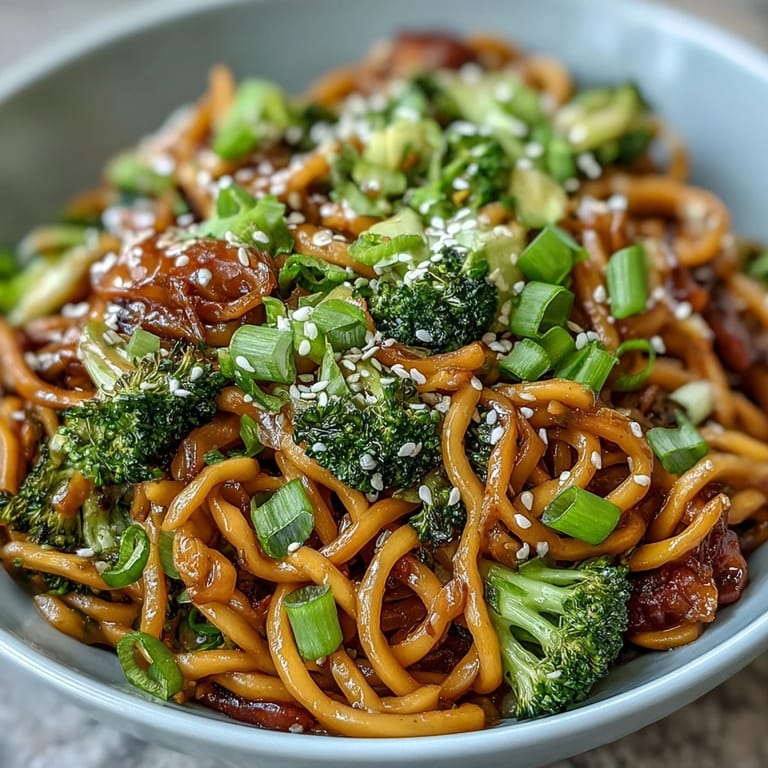
 There was an evening when my roommate came home absolutely exhausted from a long shift, and I had this ready within twenty minutes of hearing about her day. She sat down, took one bite, and just closed her eyes for a moment, and that's when I understood that sometimes the greatest gift you can offer someone is a bowl of food that tastes like someone cared enough to make it happen.
The Sauce is Everything
I learned this lesson the hard way when I first made this dish and tried to skip the sauce step, thinking I'd just drizzle some soy sauce over the noodles. It was dreadfully flat and one-dimensional, so I went back and made the proper sauce, and suddenly the same ingredients transformed into something transcendent. The magic happens when soy, mirin, honey, vinegar, and brown sugar are coaxed together over gentle heat, creating a balance where no single flavor dominates but each one lifts the others.
Variations and Protein Options
One night I had some leftover grilled chicken from the weekend, and I chopped it up and added it to the bowl, and it suddenly felt like dinner at a proper restaurant. The beauty of this dish is that it's a canvas waiting for whatever protein you have on hand or whatever your dietary needs require. I've made it vegan by swapping egg noodles for rice noodles and using maple syrup instead of honey, and it tastes just as craveable, proving that flexibility doesn't mean sacrificing flavor.
Make It Your Own
The core of this recipe is forgiving and adaptable, which is partly why it's become such a reliable go-to in my kitchen. You can add mushrooms if you love umami, swap in bok choy for broccoli, or even toss in some cashews for crunch if that calls to you. The teriyaki sauce pairs with almost anything, so trust your instincts and play around with what sounds good.
- Fresh herbs like cilantro or Thai basil scattered on top at the very end add brightness without competing with the sauce.
- A squeeze of lime juice right before serving lifts everything and adds a dimension you didn't know was missing.
- Toasted peanuts or cashews give you another layer of texture if you want to push it beyond the sesame seeds.
 Pin it
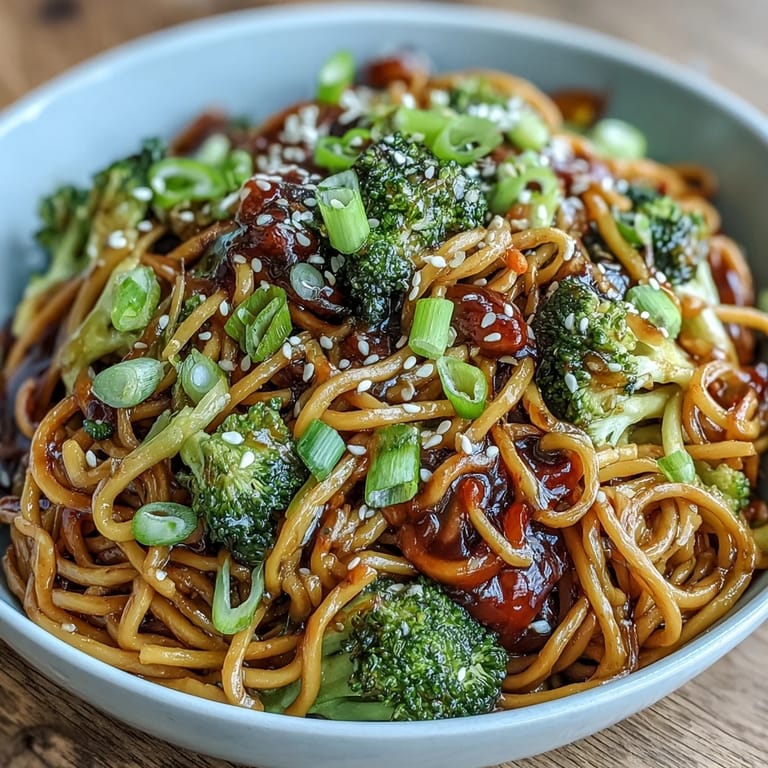
 This bowl has become my answer to that question everyone asks: what's something you make that feels special but doesn't require hours in the kitchen? It's proof that good food doesn't need to be complicated, just made with a little intention and a willingness to taste as you go.
Recipe FAQs
- → Can I make this vegan?
Substitute egg noodles with wheat or rice noodles, and replace honey with maple syrup. All other ingredients are naturally plant-based.
- → How long does the teriyaki sauce keep?
Store leftover sauce in an airtight container in the refrigerator for up to two weeks. Reheat gently before using, as it may thicken when cold.
- → What protein additions work well?
Crispy tofu, tempeh, grilled chicken strips, or shrimp all complement the teriyaki flavors. Add your protein during the final tossing step to heat through.
- → Can I prepare this ahead?
Cook noodles and vegetables in advance, storing them separately. Reheat quickly in the wok with fresh sauce before serving for best texture.
- → What vegetables can I substitute?
Snap peas, bell peppers, bok choy, or shredded cabbage work beautifully. Aim for roughly 4 cups of vegetables total to maintain the bowl's balance.