 Pin it
 I discovered this platter concept while flipping through an old cookbook at a estate sale, and something about the whimsy of arranging blue cheeses like mountain peaks just clicked. That afternoon, I found myself at the cheese counter studying the different veins and colors, imagining how they'd look lined up together. My cheese monger laughed when I explained the idea, then quietly started recommending the best specimens like I was planning something important. I went home and created it for a dinner party that night, and somehow it became the thing people still ask me to bring.
The first time I served this was at a small dinner where someone mentioned being bored with standard charcuterie, and I found myself thinking on my feet. I arranged the cheeses with the platter tilted slightly on a cutting board, and the candlelight caught the veins in a way that made someone actually gasp. That moment—when something simple suddenly feels like art—is why I keep making it.
Ingredients
- Roquefort Cheese: The peppery one with those bold blue veins; it's the most intense of the bunch and anchors your mountain.
- Gorgonzola Cheese: Creamy and a touch sweeter than Roquefort, it softens the sharpness and adds depth.
- Stilton Cheese: The British option with a gentler flavor, almost buttery compared to its French cousins.
- Bleu d'Auvergne Cheese: Delicate and complex, it rounds out your flavor profile so no single note dominates.
- Artisanal Whole-Grain Crackers: They need enough structure to hold the cheese without crumbling, and whole grains add an earthy backdrop.
- Honey: A tablespoon creates those glossy pools that catch light and cut through the cheese saltiness.
- Toasted Walnuts: The crunch matters more than you'd think; it gives teeth to each bite and anchors the sweetness.
- Fresh Grapes or Sliced Figs: These are your color contrast and provide a cleansing sweetness between bites of rich cheese.
- Fresh Herbs: Rosemary sprigs add an aromatic whisper and visual dimension without overwhelming the delicate flavors.
Tired of Takeout? 🥡
Get 10 meals you can make faster than delivery arrives. Seriously.
One email. No spam. Unsubscribe anytime.
Instructions
- Prepare Your Cheeses:
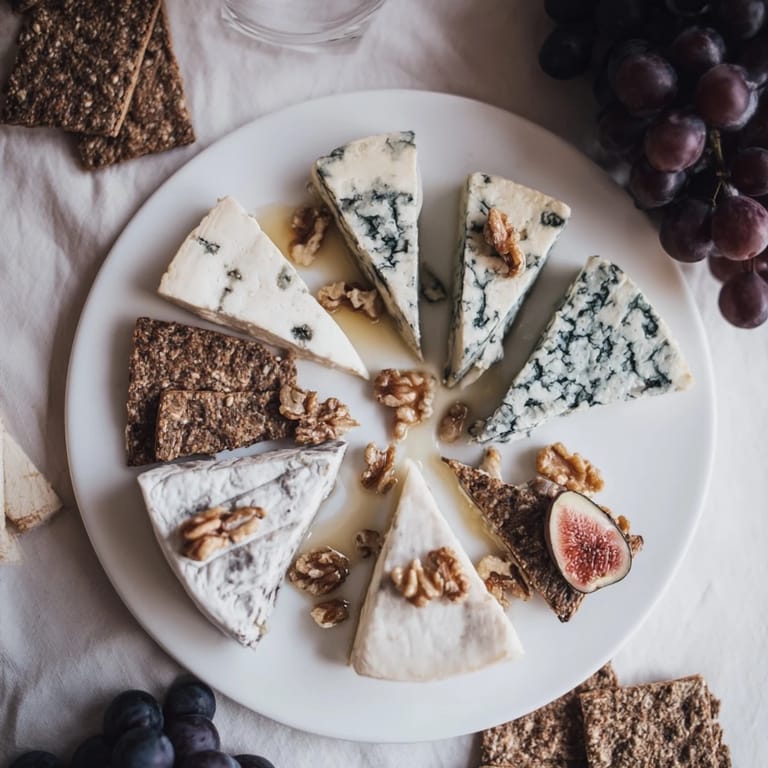
- Take each blue cheese straight from the cool section and let them sit for five minutes so your knife glides through instead of sticking. Cut them into irregular wedges of varying sizes—the imperfection is the point, creating natural-looking peaks.
- Build Your Canvas:
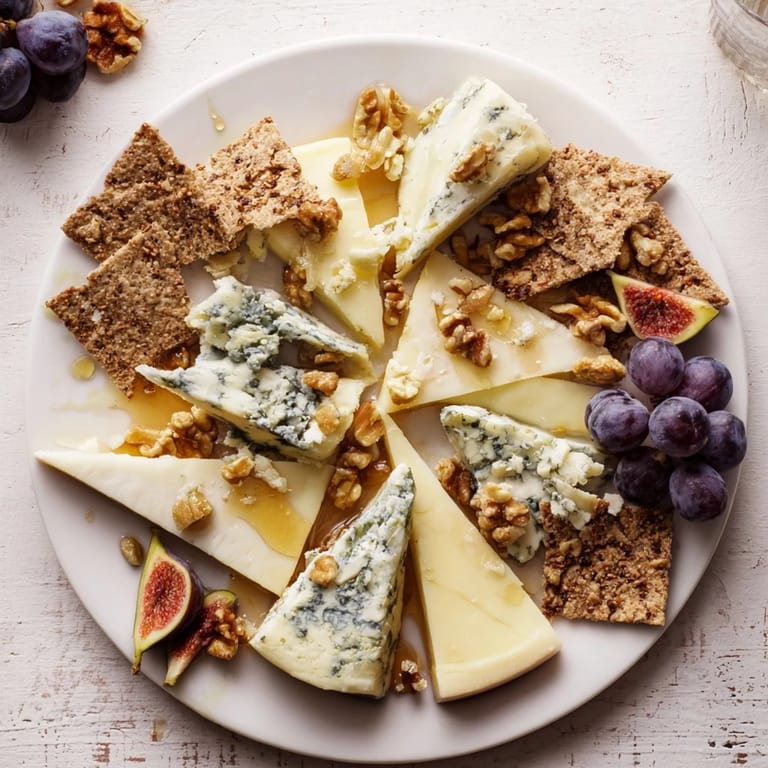
- Lay the crackers in a single layer across your platter, leaving the edge slightly bare so the cheeses have room to stand proud. Think of this as your sky background, giving the cheeses room to breathe.
- Create the Horizon:
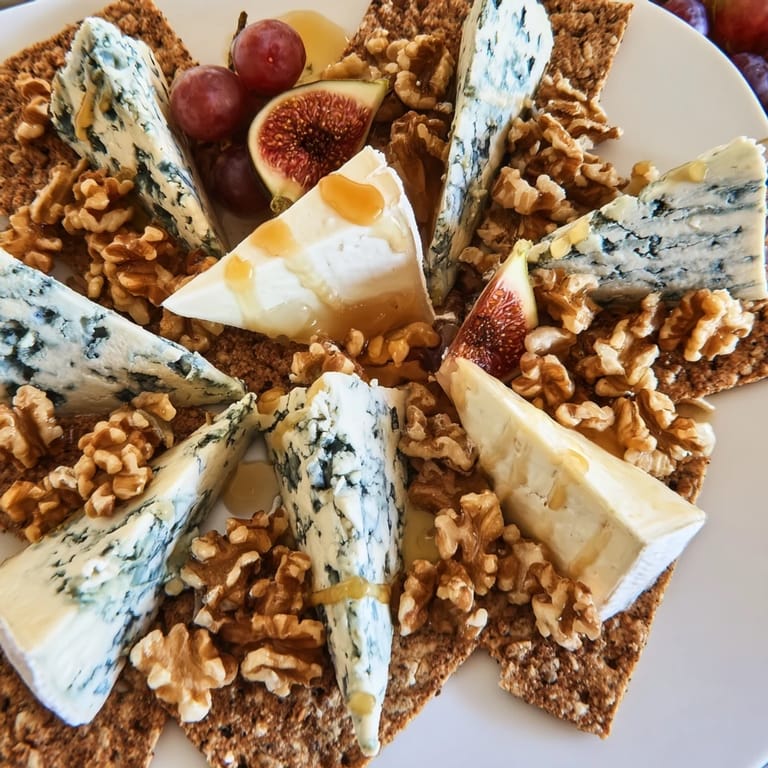
- Position your cheese wedges in a row along the cracker edge, staggering heights so some peek higher than others. Step back and look—you're aiming for a silhouette that feels organic, not symmetrical.
- Add Depth and Shine:
- Drizzle honey in thin streams across and around the cheeses, letting it pool in the blue veins and creating visual depth. The honey also tastes incredible with the salty cheese, so don't be shy.
- Layer in Texture and Color:
- Scatter your toasted walnuts across the platter and tuck grapes or fig slices into the negative space. These bright pops of color make the whole thing feel intentional and composed.
- Final Flourish:
- Add fresh rosemary sprigs if you like—they add a subtle aroma and complete the landscape feeling. Serve immediately while everything is at its best.
 Pin it
 I remember my grandmother watching me arrange this at a family gathering and saying, "You're making food into pictures now," and I realized that's exactly why I love it. Something shifts when people see their appetizer before they eat it, like you've invited them into a moment instead of just feeding them.
Choosing Your Blue Cheese Lineup
The magic of this platter lives in the variety you select, and I learned this through happy accidents at different cheese counters. Each blue cheese tells its own story—Roquefort from those ancient caves in France, Gorgonzola from Italian fog-wrapped regions, Stilton from English countryside dairies. When you taste them side by side, you're not just eating cheese; you're tasting geography and tradition. The color variation alone creates visual interest, from pale ivory with subtle blue veins to deep charcoal-blue throughout, and that's part of what makes the mountain aesthetic work.
The Art of Arrangement
The beauty of this dish is that there's no right way to arrange it, which is both liberating and slightly terrifying at first. I've learned that stepping back frequently helps—your eye catches things your hands might miss, like an awkward gap or a cheese wedge that needs repositioning. Think about shadows and highlights, how the candlelight or afternoon sun will interact with the platter. One time I arranged it facing east instead of west and was genuinely surprised how different it looked; light changes everything.
Pairing and Serving Suggestions
This platter becomes something truly special when paired with the right wine, and I've discovered that people are often more adventurous than they think. A chilled Sauternes creates this magical sweet-savory conversation with the salty blues, while a robust red wine adds richness that feels luxurious. I once served this at a casual gathering with just sparkling water and fresh-squeezed lemonade, and it worked just as beautifully—the sweetness of both complemented the cheese in unexpected ways. The key is thinking about balance and letting your guests discover what they enjoy.
- Pair with Sauternes for an elegant sweet-savory dance that feels like a special occasion.
- A sturdy red wine like Côtes du Rhône echoes the earthiness and adds comfort to the richness.
- Keep crackers visible and easily accessible so people can build their perfect bites throughout the evening.
 Pin it
 This platter reminds me that the most memorable appetizers aren't always the most complicated—they're the ones that spark joy the moment someone sees them. There's something deeply satisfying about transforming simple ingredients into something that looks like it took hours when really you've given yourself time to be present with your guests instead.
Recipe FAQs
- → What types of cheese are used in this platter?
The platter includes Roquefort, Gorgonzola, Stilton, and Bleu d'Auvergne cheeses, all known for their distinctive blue veins and strong flavors.
- → How are the cheeses prepared for serving?
Each cheese is sliced into irregular wedges or blocks to mimic mountain peaks, creating an artistic and natural presentation.
- → What garnishes enhance this cheese arrangement?
Honey is drizzled over the cheeses, toasted walnuts add crunch, and fresh grapes or sliced figs provide color and freshness. Fresh herbs can be added optionally.
- → Can this platter be adapted for nut allergies?
Yes, walnuts can be omitted or replaced with alternatives like pumpkin seeds to avoid nuts.
- → What are suitable accompaniments for this platter?
Chilled Sauternes or a robust red wine complement the flavors and textures of the blue-veined cheeses beautifully.