 Pin it
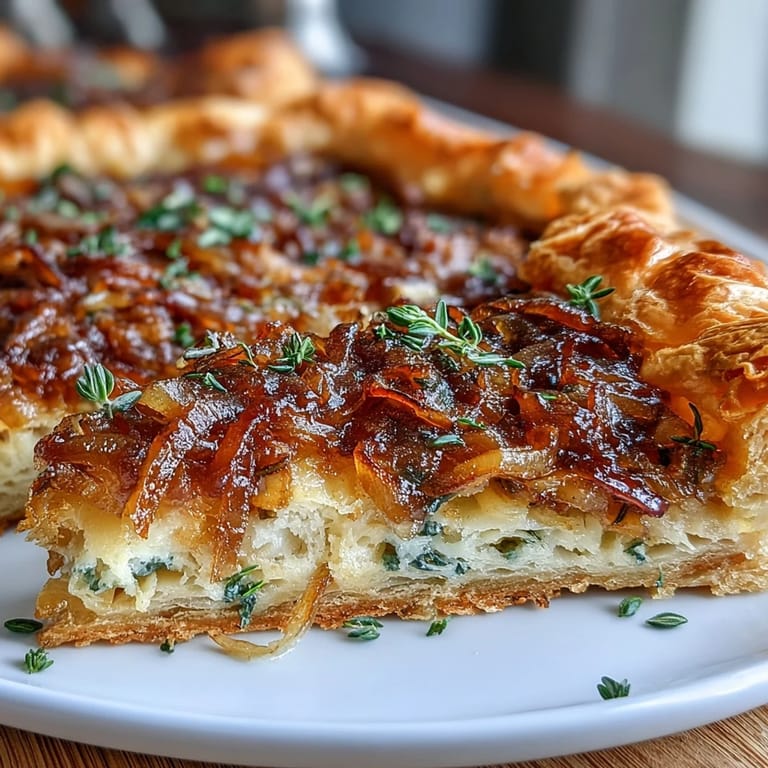
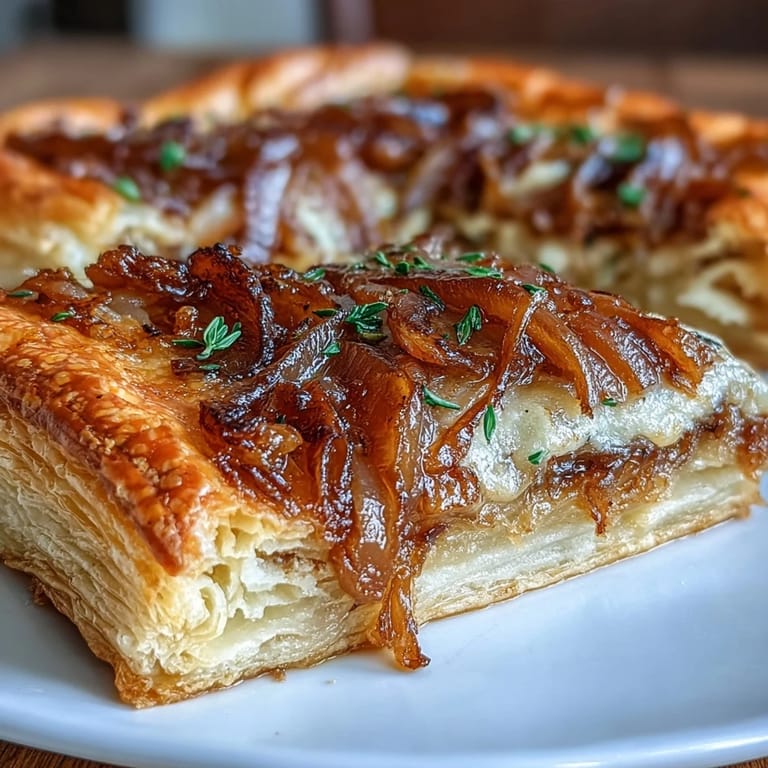
 Sometimes, a savory aroma creeps out of the oven just as the sun dips low, filling the kitchen with a warm, buttery scent that turns a regular evening into something a little more special. The first time I pulled this French Onion Puff Pastry Tart from the oven, the sizzle of cheese and faint, herbal perfume of fresh thyme had everyone drifting in—no announcement necessary. There's an art to caramelizing onions, but somehow, the softly bubbling pan always managed to anchor me in the present, letting the rhythmic stir and sweet aroma hush the chatter of the day. Crisp edges and gooey cheese promised much, but it was the golden, jammy tangle of onions that stole the show. This tart may borrow from French onion soup, but the flaky pastry and simple assembly make it a fresh classic all on its own.
I once made this tart on a rainy Thursday evening when friends dropped in unexpectedly, and I remember laughing at how three onions and a roll of pastry were enough to make everyone feel lavishly welcomed. The cozy aromas were reason enough to settle in, but seeing everyone crowd eagerly around the baking sheet remains my favorite part.
Ingredients
- Puff pastry: Buy the best all-butter puff pastry you can find—its flakiness is the secret to every bite being both crisp and tender.
- Yellow onions: Low, slow cooking turns their sharpness completely sweet; slice thinly for fast, even caramelization.
- Unsalted butter and olive oil: Using both gives the onions richness without burning; don't rush this step.
- Sugar: Just a pinch encourages the onions to break down and develop their characteristic color.
- Salt and black pepper: Season at every stage to build depth.
- Fresh thyme: A sprig or two brightens the final flavor and is a welcome cut against the richness.
- Gruyère cheese: Its nutty, melty quality was made for this tart, but Emmental works in a pinch.
- Egg: Beaten and brushed around the border for that glossy, bakery-style finish.
Tired of Takeout? 🥡
Get 10 meals you can make faster than delivery arrives. Seriously.
One email. No spam. Unsubscribe anytime.
Instructions
- Prep the oven and tray:
- Slide your baking sheet lined with parchment paper into an oven preheated to 400°F (200°C); you want it ready for flaky success.
- Caramelize those onions:
- Melt butter and olive oil in a skillet, then tumble in the sliced onions with sugar, salt, and pepper; stir gently and let them transform over 20–25 minutes, adding thyme toward the end as the kitchen fills with a sweet herbal aroma.
- Roll out the pastry:
- On a floured surface, roll your puff pastry into a rectangle, about the size of a large envelope, and transfer it carefully to the prepared sheet.
- Score and dock:
- Use a sharp knife to trace a half-inch border around the edges—don't cut through—then poke the center all over with a fork, which keeps the middle flat and helps everything bake evenly.
- Brush and layer:
- Paint the border with egg wash for shine, then pile the glossy caramelized onions within the border, topping generously with Gruyère.
- Bake to perfection:
- Slide it all into the oven and let the pastry puff and turn gloriously golden in about 18–22 minutes; listen for the gentle crackle as you peek at the transformation.
- Finish and serve:
- Let your tart cool slightly, sprinkle with more fresh thyme and black pepper if you fancy, then slice into squares and serve while still warm or even at room temperature.
 Pin it
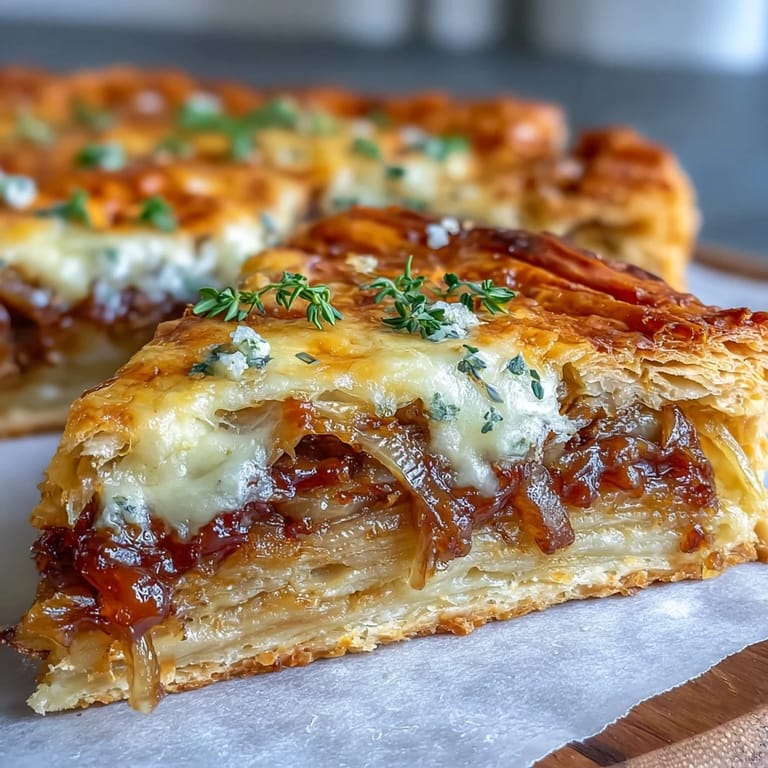
 The first time this tart hit our table as a Sunday lunch centerpiece, my conversation with my dad drifted from work troubles to stories of his years abroad—the aroma alone seemed to carry us right to a Paris bistro, even if only for a moment.
Choosing and caramelizing onions like a pro
Not all onions are created equal. Yellow onions caramelize into a sweet, almost jammy finish without becoming too sharp, but a splash of sherry or even white wine near the end creates tiny bursts of extra flavor that make the tart especially layered and interesting.
Mastering the perfect pastry texture
Keeping your pastry cold right up to baking is critical for layers that rise sky-high. If things get a little warm while rolling out, simply pop the entire sheet back in the fridge for a few minutes—the result will be visibly puffier and more golden.
Versatile serving and pairing ideas
This tart makes an elegant starter or a light meal when paired with salad. It also shines on a brunch table or alongside a crisp glass of Sauvignon Blanc or Chardonnay.
- Slice smaller squares for party bites.
- Try scattering a few roasted mushrooms on top for earthiness.
- Leftovers reheat beautifully in the oven.
 Pin it
 Sometimes the simplest recipes spark the warmest gatherings—this tart always delivers more than the sum of its parts. May every flaky slice bring you the same easy delight it brings to my table.
Recipe FAQs
- → How long should I caramelize the onions?
Cook sliced yellow onions over medium heat in butter and olive oil for 20–25 minutes, stirring frequently until deeply golden. A pinch of sugar helps with browning; add a splash of sherry or white wine near the end for extra depth.
- → What cheeses can I use instead of Gruyère?
Emmental, Swiss, or Comté are great substitutes: they melt well and offer a similar nutty profile. Grate the cheese finely for even coverage and a nicely browned finish.
- → How do I prevent the pastry from getting soggy?
Score a 1/2-inch border and dock the center with a fork to keep the edges crisp. Brush the border with beaten egg and bake at a high temperature on a preheated sheet to promote rapid puffing and a flaky texture.
- → Can parts be prepared ahead of time?
Yes. Caramelized onions can be made up to 2 days ahead and chilled. Assemble and bake just before serving to preserve the puff pastry’s crispness.
- → Any tips for slicing and serving?
Let the tart rest 4–5 minutes after baking so the cheese sets slightly, then slice with a sharp knife. Serve warm or at room temperature with a simple green salad for balance.
- → What wine pairs well with this tart?
Opt for a crisp Sauvignon Blanc or an unoaked Chardonnay to cut the richness, or a light-bodied Pinot Noir if you prefer red.