 Pin it
 The first time I arranged a cheese board with gold leaf, I felt like I was staging something in a museum. My hands shook slightly as I lifted those paper-thin sheets with tweezers, worried I'd tear them or send them flying across the kitchen. But once the first cheese caught that light, shimmering like it had been touched by something precious, I realized this dish wasn't about complexity—it was about creating a moment of quiet luxury on a platter. That feeling stuck with me.
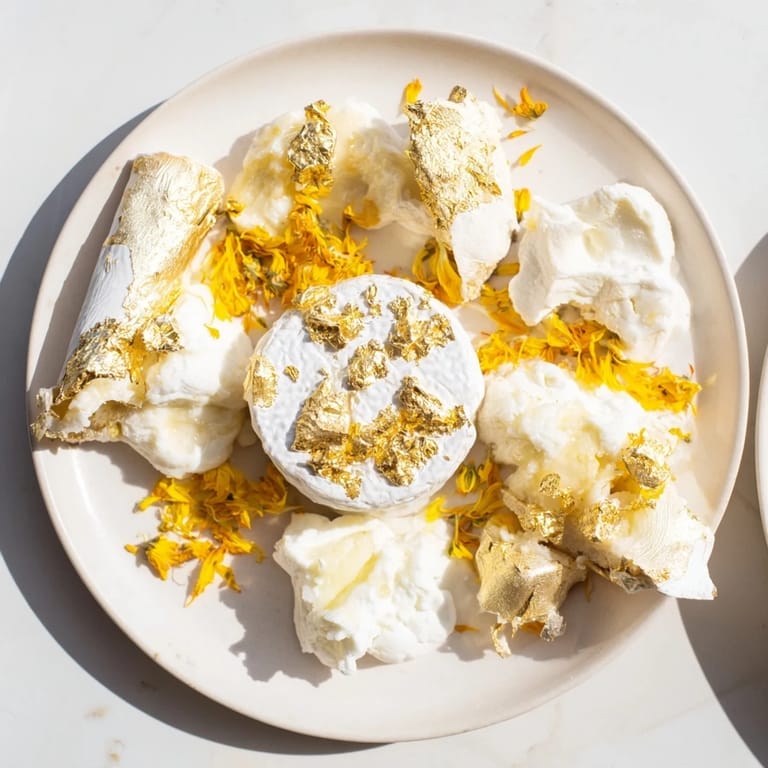
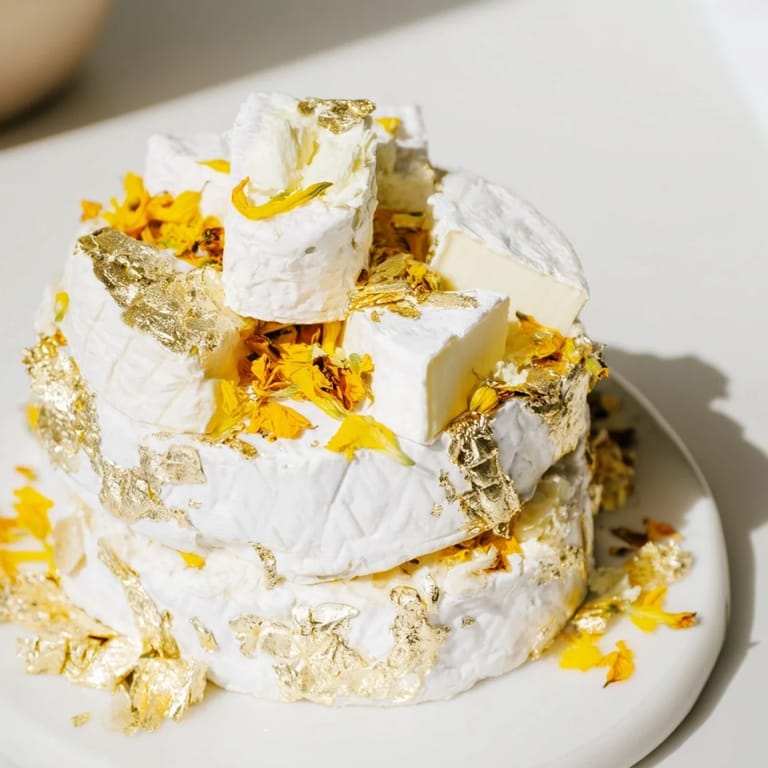
I made this for a small dinner party last spring, and someone asked if I'd hired a caterer. The gold leaf had caught the late afternoon sun streaming through the window, and the yellow petals looked almost alive against the creamy whites. What made me proudest wasn't the gold—it was watching people actually linger with the platter, trying each cheese, comparing notes like they were tasting wine. That's when I understood: elegance isn't always about doing more; sometimes it's about arranging what you love thoughtfully.
Ingredients
- Goat cheese log (chèvre): Choose one that's fresh and creamy, ideally with a slight tang—it's the perfect anchor for the gold and holds the petals beautifully when applied gently.
- Triple-cream brie: This is the luxurious one; the extra fat makes it so pillowy that the gold catches every angle, and it tastes like velvet on your tongue.
- Fresh ricotta: I love the subtle sweetness here—it contrasts perfectly with the salt from the feta and plays well with honey if you drizzle it.
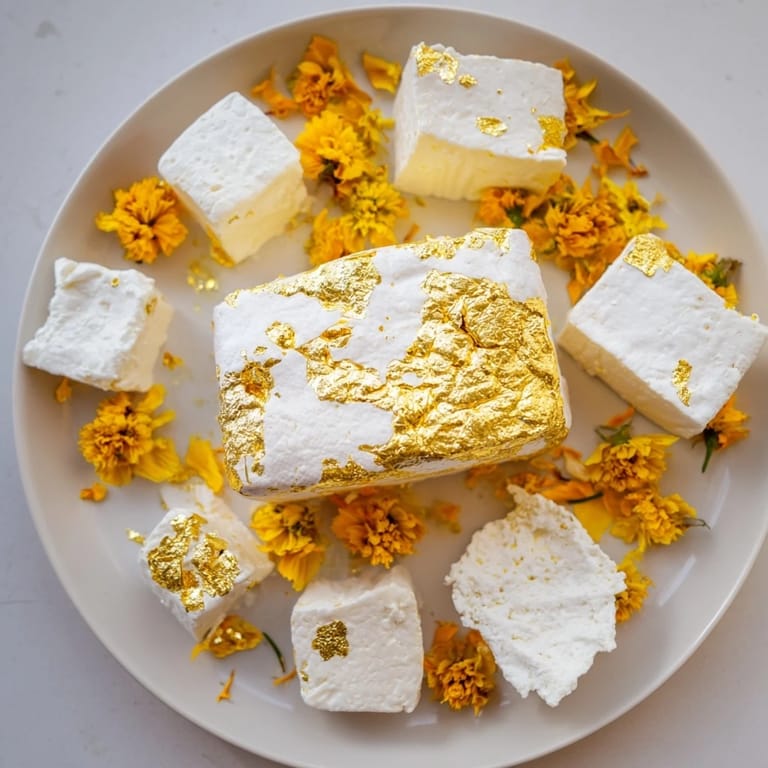
- Feta (block-style, drained): Make sure it's truly drained so the platter doesn't get watery; a good block feta has crumbly edges that look rustic against all that gold.
- Edible gold leaf: Buy from a reputable source and check that it's food-grade; the thinner it is, the more ethereal it looks when it catches light.
- Yellow edible flower petals: Marigold and calendula are my go-tos because they're sturdy and their color is unapologetic—make sure they're genuinely edible and pesticide-free.
- Honey: Optional but I rarely skip it; a gentle drizzle adds warmth and invites people to taste the cheeses differently.
- Baguette and crackers: Go for a mix of textures and flavors to complement each cheese without overwhelming it.
Tired of Takeout? 🥡
Get 10 meals you can make faster than delivery arrives. Seriously.
One email. No spam. Unsubscribe anytime.
Instructions
- Arrange your canvas:
- Lay out your cheeses on the platter with intention—think of negative space as part of the design. I usually cluster them in a loose triangle or line, leaving room for the petals and leaves to feel organic rather than cramped.
- Gold leaf application:
- Tweezers work better than your fingers because they won't accidentally warm and stick the gold to your skin. Work slowly, using the tweezers to lift small pieces and gently press them onto each cheese—if a piece tears, don't worry; those irregular edges actually look more natural than perfect sheets.
- Scatter your flowers:
- Sprinkle the petals around and across the cheeses like you're painting with color, not decorating a cake. Let some land on the platter itself; it creates a sense of abundance and intentional beauty.
- The finishing touches:
- If you're drizzling honey, do it just before serving so it stays glossy and doesn't soak into the cheese. A few microgreens tucked in the corners add a whisper of freshness that ties everything together.
- Serve with intention:
- Arrange your bread and crackers nearby but not on top of the cheese—people should feel like they're composing each bite themselves.
 Pin it
 What surprised me most about this dish is how it changed the conversation at the table. People slowed down, asked questions about the cheeses, wanted to know where I found the gold and petals. It became less about eating and more about experiencing something together, and that's when I realized food can be a bridge between the practical and the beautiful.
Choosing Your Cheeses
The magic of this platter lives in the contrast between the four cheeses. The goat cheese brings tang and earthiness, the brie offers pure indulgence, the ricotta whispers sweetness, and the feta grounds everything with salt and crumb. I always taste each one before I build the board—not just to enjoy them, but to understand their personalities so I can arrange them in a way that tells a story. If one is less fresh than I'd like, I know to position it strategically or add extra honey nearby to complement it.
The Art of Restraint
Less is genuinely more with gold leaf and edible flowers. I've seen boards where every surface is gilded, and they read as chaotic rather than elegant. My approach: use just enough gold to catch light and create interest, and scatter flowers where they feel like accents, not camouflage. The cheese should still be the main character; everything else is simply there to help it shine.
Creating a Moment
This isn't a dish you rush through preparing or serving. There's something about the ritual of laying it out, the care required to apply the gold leaf, the pause people take when they see it finished. I've started thinking of it as a small performance—nothing showy, but intentional and present in a way that matters. Build it as close to serving time as you can, and watch it work its quiet magic.
- Use a platter that has enough breathing room; crowding undermines the elegance you're working toward.
- If petals or gold wilt or fall, that's not a failure—it's proof the dish is alive and real, not a photograph from a magazine.
- Pair this with a wine or sparkling drink that feels special to you, because the whole point is savoring the moment alongside the flavors.
 Pin it
 This platter taught me that luxury doesn't have to be complicated. Sometimes it's just thoughtfulness, a few beautiful ingredients, and the willingness to slow down and notice what you've made. That's the kind of elegance worth reaching for.
Recipe FAQs
- → What cheeses work best for this cheese platter?
Soft white cheeses like goat cheese, triple-cream brie, ricotta, and block-style feta create a creamy texture and mild flavor that complement the gold leaf and petals beautifully.
- → How is the edible gold leaf applied without damaging the cheese?
Use clean, dry tweezers or a fine brush to gently lift and place small pieces onto the cheese surface, avoiding moisture to maintain the delicate gold leaf intact.
- → Are the yellow flower petals safe to eat?
Yes, only edible flowers from reputable suppliers like marigold, calendula, or chrysanthemum petals should be used to ensure they are safe and flavorful.
- → Can this platter be made vegan or gluten-free?
Substitute plant-based white cheeses for a vegan option, and serve with gluten-free bread or crackers to accommodate dietary preferences.
- → What accompaniments enhance this cheese arrangement?
Thinly sliced baguette, assorted crackers, and a drizzle of honey add delightful textures and subtle sweetness, elevating the overall experience.
- → How should the platter be stored before serving?
Keep the cheeses chilled and assemble the gold leaf and flower petals shortly before serving to maintain freshness and presentation.