 Pin it
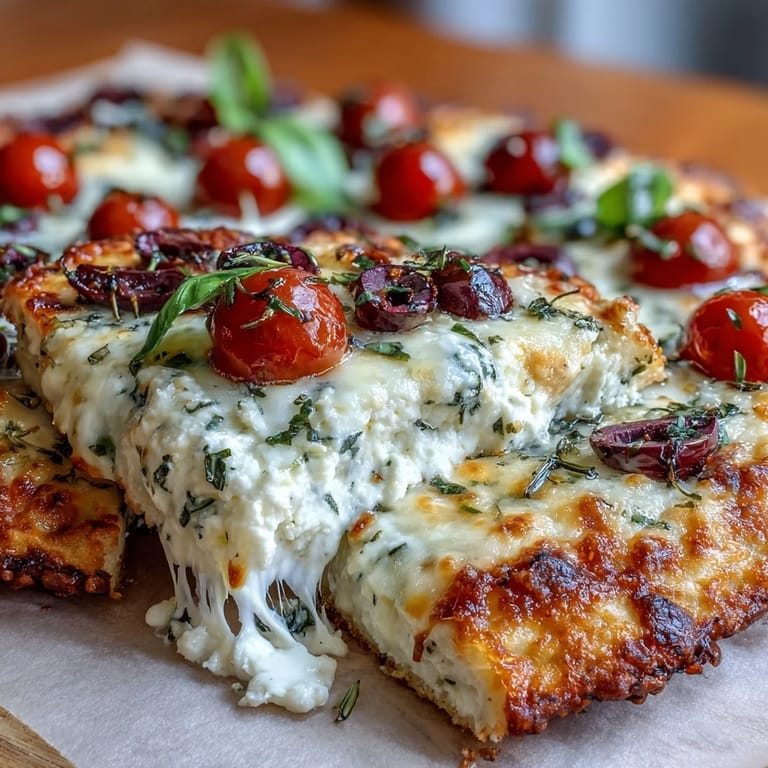
 Wednesday night, I was staring at my fridge wondering how to make pizza feel exciting again when my eyes landed on a tub of cottage cheese I'd bought for something else entirely. That random moment led to this flatbread pizza, and honestly, I've never looked back. The crust turned out tender and crispy at the same time, nothing like the dense low-carb attempts I'd made before. Now it's become my go-to when I want something that feels indulgent but doesn't derail my week.
I made this for my sister last month when she was visiting, and she kept asking if I'd ordered it from somewhere because she couldn't believe the crust was homemade. Her skepticism turned into three slices and a request for the recipe before she left, which felt like winning the cooking lottery. That moment made me realize this wasn't just a diet hack—it was genuinely delicious pizza that happened to be good for you.
Ingredients
- Cottage cheese: Full-fat gives you the silkiest crust, but low-fat works if that's what you have—blend it until it's completely smooth with no lumps or you'll end up with a bumpy texture.
- Eggs: These bind everything together and create structure, so use large eggs and make sure they're at room temperature for a smoother blend.
- Mozzarella cheese: Finely grated is the secret—pre-shredded doesn't melt quite the same way.
- Parmesan cheese: This adds that savory depth that makes people think you spent way more time on this than you did.
- Coconut flour: Use just 2 tablespoons or the crust becomes dry and crumbly; almond flour gives a nuttier flavor if you prefer that route.
- Baking powder: Don't skip this—it's what makes the crust airy instead of dense and cake-like.
- Garlic powder, oregano, salt, and pepper: These transform the crust from bland to actually flavorful, so don't be timid with them.
- Sugar-free tomato sauce: Regular sauce works too, but watch the carbs if that matters to you.
- Fresh basil: Add it after baking so it stays bright green and aromatic instead of turning dark and sad.
Tired of Takeout? 🥡
Get 10 meals you can make faster than delivery arrives. Seriously.
One email. No spam. Unsubscribe anytime.
Instructions
- Heat your oven and prep:
- Preheat to 400°F and line your baking sheet with parchment paper so the bottom doesn't stick and burn. This small step saves you from scraping disappointment off your pan later.
- Blend the cottage cheese:
- This is crucial—use a blender or food processor and blend the cottage cheese with eggs until completely smooth with no visible lumps. You want it to look almost like pancake batter before you add anything else.
- Mix the batter:
- Combine the blended mixture with the cheeses, coconut flour, and seasonings in a bowl, stirring until it comes together as a thick, spreadable batter. Don't overmix or the texture gets gummy.
- Spread and shape:
- Pour the batter onto your prepared sheet and spread it into a 10-inch oval or rectangle about 1/3-inch thick using a spatula. The thickness matters—too thin and it gets crispy and fragile, too thick and the inside stays doughy.
- Bake the crust:
- Bake for 15 minutes until it's lightly golden on top and feels set when you touch it gently. You'll smell the cheese and garlic toasting, which is your signal it's almost ready.
- Add your toppings:
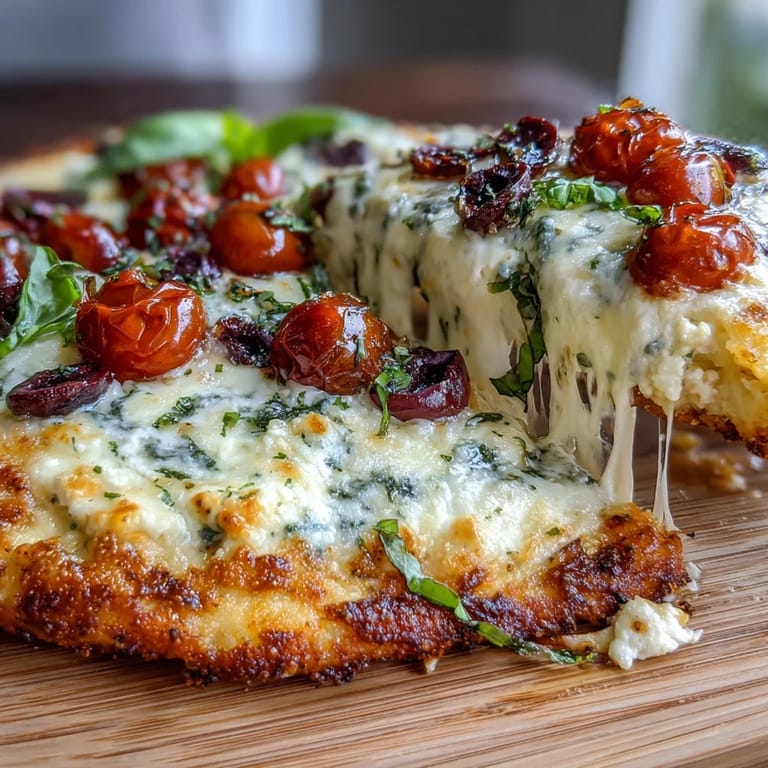
- Spread the tomato sauce evenly, then scatter mozzarella, olives, and tomatoes over the top—don't overload it or the crust gets soggy. Less is actually more here.
- Finish baking:
- Return to the oven for 5 to 7 minutes until the cheese bubbles and starts to brown slightly. If you like it crispier, broil for 1 to 2 minutes at the very end, but watch it closely because it goes from golden to burnt fast.
- Garnish and serve:
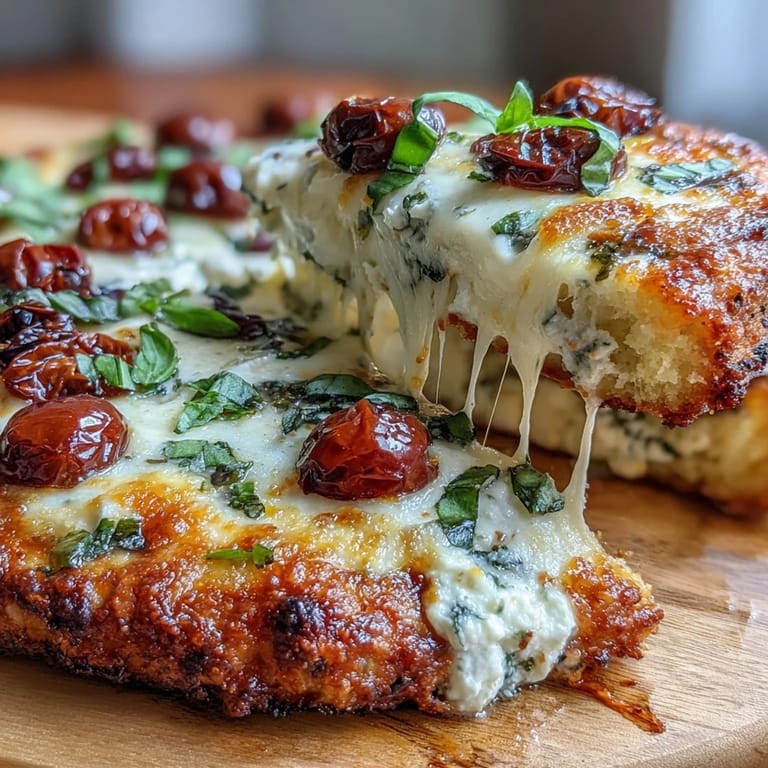
- Top with fresh basil leaves right before slicing and eating while it's hot and the cheese is still pulling when you cut into it. This is the moment when all that effort pays off.
 Pin it
 There's something satisfying about pulling a pizza out of the oven that looks completely legitimate, knowing you made it from cottage cheese and eggs instead of traditional dough. My confidence in the kitchen shifted a little that day, realizing I could actually improvise with ingredients I had and make something that tasted restaurant-quality.
Why This Crust Works So Well
The magic happens because cottage cheese is mostly protein and moisture, so when you blend it with eggs and baking powder, you're creating a structure that bakes up tender but still has enough integrity to hold toppings. The added cheeses give it flavor and help it brown beautifully, while the coconut flour keeps carbs low without making it taste like a fitness experiment. It's one of those recipes where the science actually tastes good.
Customizing Your Toppings
The beauty of this flatbread is that it pairs with almost anything you'd normally put on pizza, so you can rotate through your favorites without getting bored. I've topped mine with spinach and mushrooms, pepperoni and jalapeños, caramelized onions and goat cheese—the crust is sturdy enough to handle whatever you throw at it. Once you nail the base recipe, the fun part is treating your kitchen like your own pizzeria.
Storage and Make-Ahead Tips
You can bake the flatbread crust a day ahead and store it in the fridge, then top and finish baking it when you're ready for dinner, which turns this from a 35-minute meal into a 10-minute assembly job. Leftovers reheat beautifully in a 350°F oven for about 5 minutes—the crust stays crispy and the cheese doesn't get rubbery like it would in the microwave. Here's what I've learned from making this repeatedly:
- Let the baked crust cool for a few minutes before adding toppings so the base sets slightly and doesn't get soggy.
- If you're making two pizzas, bake them on separate racks or the one on the lower rack might get too dark on the bottom.
- Fresh toppings like basil and tomatoes taste better when added after cooking, but harder vegetables like olives and mushrooms can go on before baking.
 Pin it
 This pizza has genuinely changed how I think about low-carb cooking—it's not about deprivation, it's about discovering that some of the best food comes from experimenting with what you have. Now I make it at least twice a month, and everyone who tries it asks if I've opened a secret pizzeria in my kitchen.
Recipe FAQs
- → Can I substitute almond flour for coconut flour?
Yes, almond flour can be used to add a nutty flavor and create a slightly denser flatbread texture.
- → How do I make the flatbread crust crispy?
For a crispier crust, broil the flatbread for 1–2 minutes after baking to achieve a golden, crunchy finish.
- → Are there gluten-containing ingredients in this dish?
All ingredients are gluten-free, but always check the labels for possible cross-contamination.
- → What toppings can I use instead of olives and tomatoes?
Swap in low-carb options like pepperoni, spinach, or mushrooms to customize the topping to your preference.
- → What kitchen equipment is needed for preparation?
A blender or food processor for mixing, a baking sheet lined with parchment paper, and a spatula for spreading the batter are required.