 Pin it
 My daughter pressed her nose against the produce section glass, pointing at a magazine cover featuring an elaborate fruit peacock. She insisted we recreate it for her school potluck, and I nearly talked myself out of it—seemed too precious, too fussy. But standing in my kitchen that afternoon, slicing cucumbers into thin ovals and arranging them like feathers, I discovered something wonderful: you don't need culinary school to create something that makes people smile before they even taste it. The Peacock Tail became our thing, proof that the simplest ingredients, when arranged with a little intention, turn an ordinary platter into theater.
I'll never forget the silence that fell over the potluck when someone set this down on the table. For a solid ten seconds, nobody moved. Then one of the other parents laughed and said, "This is too pretty to eat," and suddenly everyone was laughing, and my daughter was beaming. That's when I realized this wasn't really about the recipe at all—it was about creating a moment where food stops being fuel and becomes conversation.
Ingredients
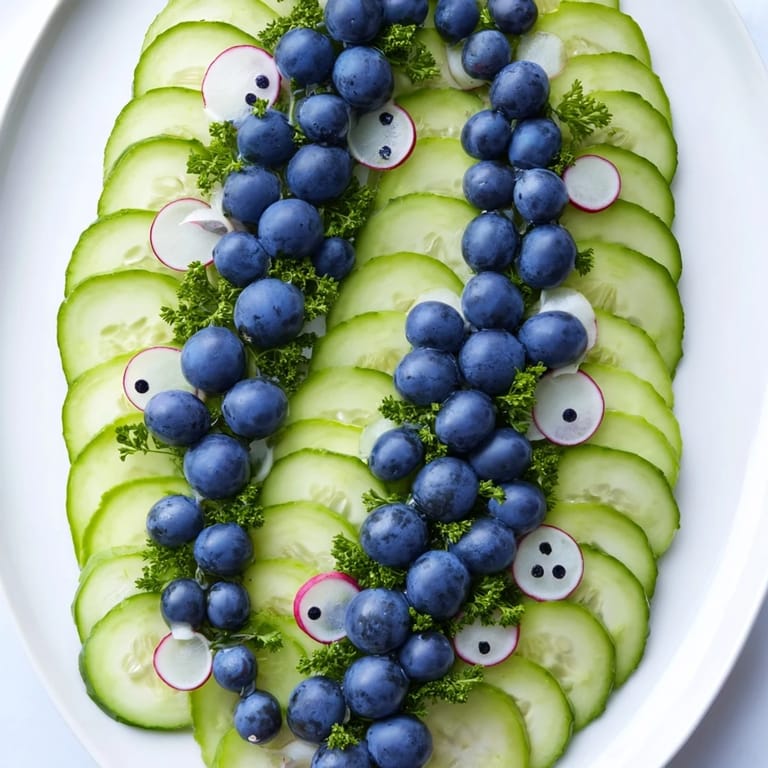
- 2 large cucumbers: The backbone of your peacock—look for firm ones without soft spots, and slice them on a diagonal for those elegant oval shapes that catch the light.
- 1½ cups (225 g) blue or black seedless grapes: These are your jewels, the part that makes people go "oh." Fresh and plump ones roll less and look more intentional.
- 4 medium radishes: Thin-sliced, they become the delicate eye centers that transform the whole composition from "pretty platter" to "is that really a food?"
- Fresh parsley or dill sprigs (optional): A whisper of green at the base feels like feathering—adds depth without overthinking it.
- 1 small carrot (optional): For the beak and feet details if you want to push the peacock illusion further.
Tired of Takeout? 🥡
Get 10 meals you can make faster than delivery arrives. Seriously.
One email. No spam. Unsubscribe anytime.
Instructions
- Start with a clean slate:
- Wash and dry everything thoroughly—any moisture on the platter will make your design slip around. I learned this the hard way when my carefully arranged grapes started migrating.
- Create your feather foundation:
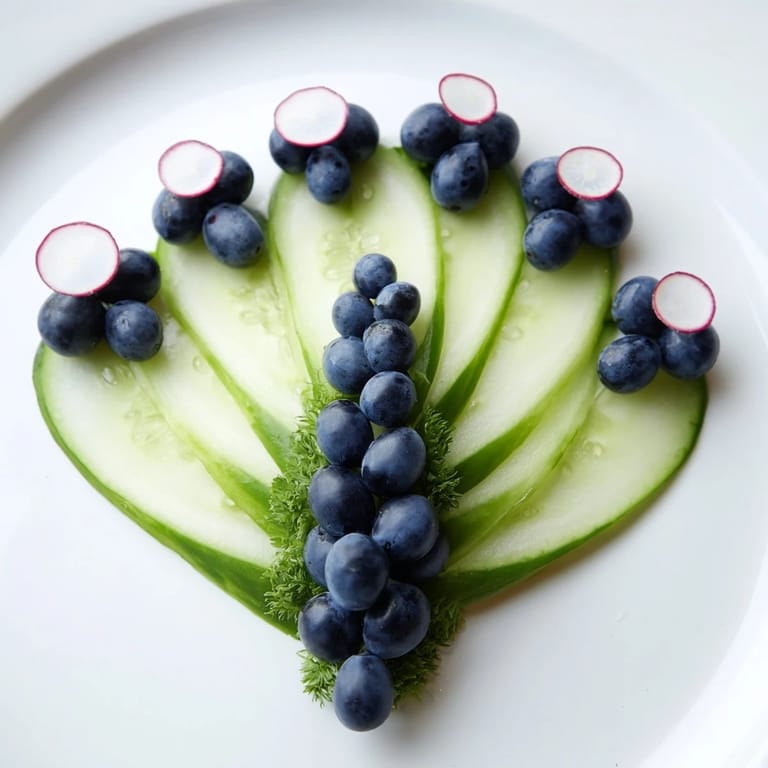
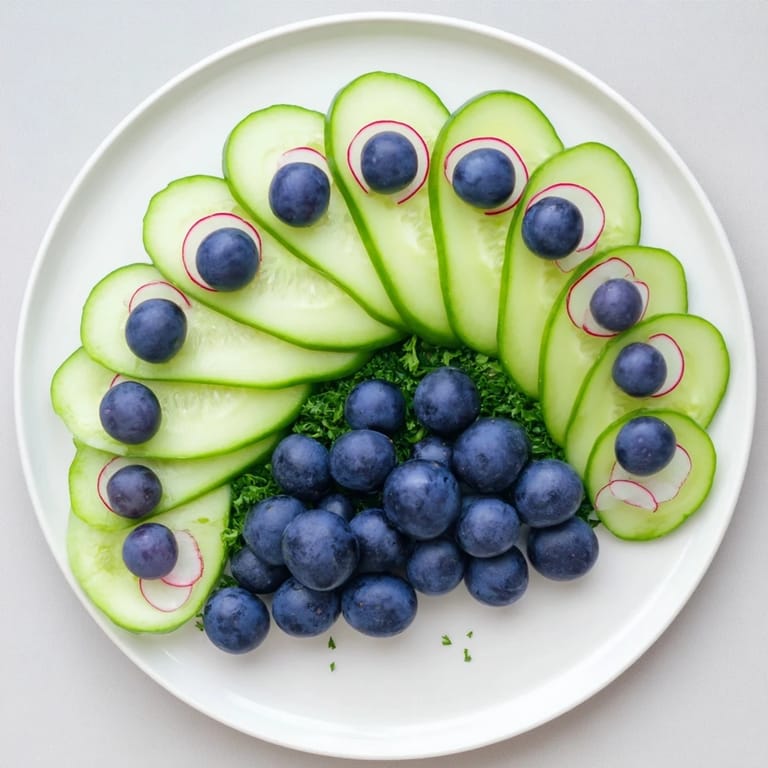
- Slice cucumbers on a bias into thin ovals, then arrange them on your largest platter in overlapping rows, starting wide at one end and tapering toward the other. This is where you get to play with rhythm and spacing—the overlaps should feel intentional, like real feathers.
- Build the eye pattern:
- Slice radishes into thin rounds, then place a grape cluster on the cucumbers and crown each one with a radish circle in the center. The contrast between the deep purple grape and pink radish is what sells the whole thing.
- Sketch in the details:
- If you're using carrot, cut thin slices for a beak at the narrow end and use little strips for the feet. Layer fresh parsley or dill at the base to suggest plumage and anchor the whole design.
- Serve with intention:
- Either bring it straight to the table, or cover loosely and refrigerate for up to two hours. The longer it sits, the crispness softens, so timing matters if you want that satisfying crunch.
 Pin it
 There was a moment at that potluck when a quiet kid who usually sits alone at lunch came up and asked if he could help arrange the next one. We spent twenty minutes together, me pointing out where the gaps were, him finding the perfect grape to fill them. His face changed when we finished—he looked proud. Food can do that sometimes; it's not always about hunger.
The Beauty of Simple Assembly
This recipe taught me something about cooking that took me years to understand: transformation doesn't require heat or complexity. The Peacock Tail proves that vision, sharp knife skills, and patience can elevate humble produce into something people remember. There's an honesty to it too—nothing is hidden or disguised, just arranged with respect for what each ingredient brings to the table.
Playing with Color
Once you nail the basic structure, you can start experimenting with variations that feel completely natural. Red grapes instead of blue shift the entire mood, and if you slice golden beets thin enough, they catch light like tiny mirrors scattered across the fan. A friend of mine used a mix of purple and green grapes in alternating rows, and it looked even more peacock-like than my original—sometimes the best ideas come from someone seeing your work and thinking, "what if?"
Making It Your Own
The skeleton of this recipe is flexible enough to accommodate whatever you have in your vegetable drawer and whatever story you want to tell with the platter. I've done versions with thin apple slices, with pomegranate seeds clustered like jewels, with thin slices of yellow bell pepper for warmth against the blue grapes. Each one felt different, each one was met with delight, and each one reminded me why I love cooking—it's not about rules, it's about possibility.
- If your grapes keep rolling, place them in a shallow indent carved into a cucumber slice rather than loose on top.
- A yogurt dip or hummus on the side feels generous and gives people permission to eat what looks like edible art.
- The real magic happens when you step back and look at it from across the room—that's when you'll see if the balance feels right.
 Pin it
 This dish reminds me that some of the most meaningful food moments have nothing to do with complicated technique and everything to do with attention. A kid's face, a quiet moment in a crowded room, people slowing down to appreciate something beautiful before they eat it—that's the real recipe.
Recipe FAQs
- → What type of grapes works best for the platter?
Seedless blue or black grapes are preferred for their size and color, but red or yellow grapes can add vibrant variation.
- → How should cucumbers be sliced for an ideal presentation?
Slice cucumbers thinly on a bias to create oval shapes that overlap smoothly for the fanned tail effect.
- → Can this dish be prepared ahead of time?
Yes, you can assemble it and refrigerate for up to 2 hours, but it's best served fresh to maintain crispness.
- → What garnishes add the best finishing touches?
Fresh parsley or dill sprigs offer a feathered base, while carrot slices can form detailed accents like beak and feet.
- → Are there any recommended dips to serve alongside?
Light dips such as yogurt-based sauces or hummus complement the freshness without overpowering the flavors.