 Pin it
 There's something wonderfully unpretentious about a charcuterie board that comes together in the time it takes to pour a glass of wine. I discovered this years ago when a friend dropped by unexpectedly on a Friday evening, and instead of panicking about dinner, I opened my fridge and found myself arranging cheese, cured meats, and whatever fruit was lurking in the crisper drawer onto a wooden board. Twenty minutes later, we were laughing and eating like we'd planned the whole thing, proving that sometimes the best meals aren't cooked at all.
I made this for my sister during one of those late-night catch-up sessions where we ended up talking until midnight, and she mentioned how nice it was to have something that felt special without anyone having stressed in the kitchen. That moment stuck with me because it captured what this board really is: an act of care that doesn't require performance or effort, just thoughtfulness about arrangement and flavor.
Ingredients
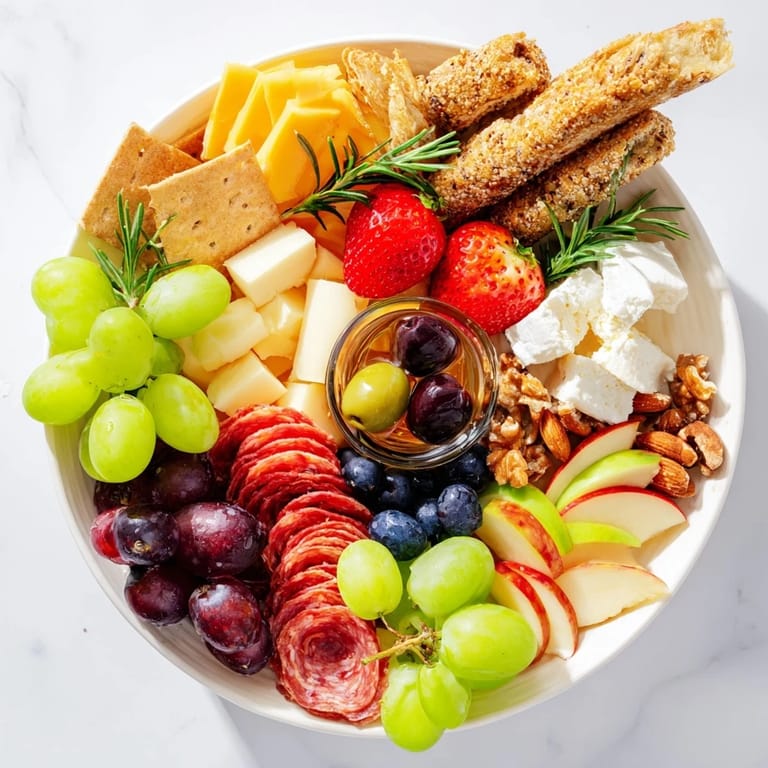
- Brie cheese: This is your creamy anchor—mild, buttery, and forgiving if your board sits out for a while.
- Sharp cheddar cheese: It adds backbone and a flavor people can actually taste, cutting through the richness of softer cheeses.
- Goat cheese: A tangy counterpoint that wakes up your palate and feels intentional rather than expected.
- Prosciutto: Paper-thin and salty, it's the umami whisper that makes people keep coming back for another bite.
- Salami: Choose something with genuine spice or flavor rather than the blandest option; it matters more than you'd think.
- Seedless grapes: Sweet, refreshing, and they roll around in the gaps between everything else like edible decorations.
- Apple slices: The acidity cuts through richness and keeps the palate fresh; toss them lightly with lemon juice if you're making this ahead.
- Mixed berries: Strawberries and blueberries add brightness and visual contrast without overpowering the savory elements.
- Crackers or baguette: These are your foundation—pick something substantial enough to hold cheese without shattering in your hand.
- Mixed nuts: Raw or lightly toasted, they add texture and earthy depth that rounds out the board.
- Honey or fig jam: A small drizzle on creamy cheese transforms it; this is where you get people's attention.
- Olives: Choose ones you actually love eating, not the forgettable kind; they're a statement ingredient.
- Fresh herbs: A sprig of thyme or rosemary tucked into the arrangement looks intentional and smells incredible.
Tired of Takeout? 🥡
Get 10 meals you can make faster than delivery arrives. Seriously.
One email. No spam. Unsubscribe anytime.
Instructions
- Set your stage:
- Pull out your board or platter and take a breath—this isn't about perfection, it's about confident placement. Think of it like composing a painting where you're leaving white space and creating little conversations between ingredients.
- Position your cheeses:
- Place each cheese type in its own territory, giving them breathing room so people can cut what they want without it feeling crowded. This is your foundation, so trust your eye.
- Create layers with meat:
- Fold or loosely roll the prosciutto and salami so they catch the light and look intentional. Nestle them near the softer cheeses where they naturally belong.
- Scatter fruits with intention:
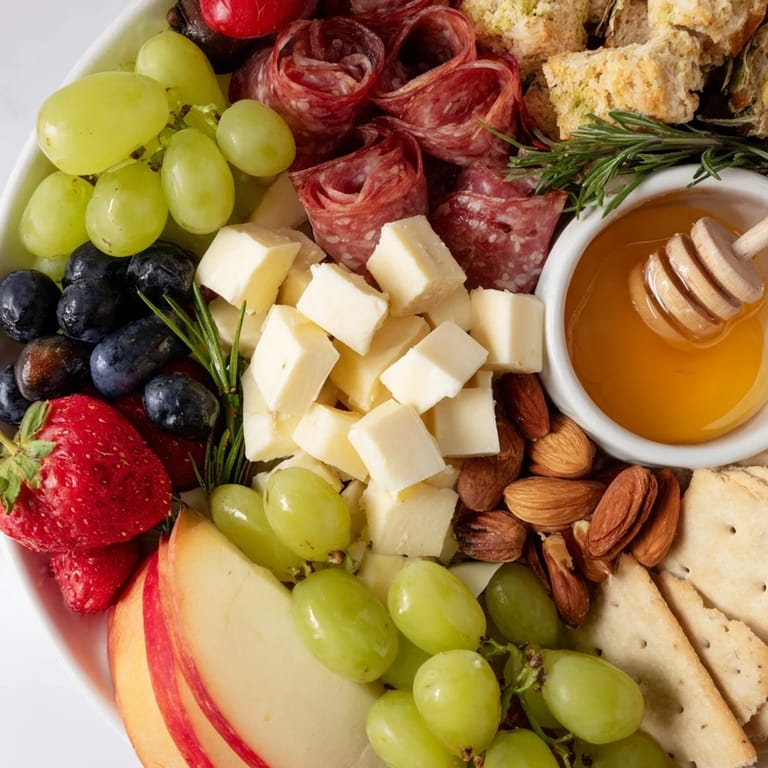
- Group grapes together, fan your apple slices slightly, and cluster berries where they'll draw the eye. Small clusters feel abundant without looking fussy.
- Fill the gaps:
- Arrange crackers or baguette slices in the spaces, then tuck nuts and olives into the remaining corners. The goal is a full board that still feels like there's room to move things around.
- Finish with the good stuff:
- Pour honey or jam into a small bowl and place it where it's visible but not dominating. Tuck fresh herbs into a gap so they add fragrance and visual interest.
- Serve immediately:
- Bring it to the table while everything is still at its best temperature and the board has that just-assembled energy that makes people want to dive in.
 Pin it
 I remember my neighbor peeking over and asking if I'd made everything myself, and when I admitted it was just assembled, she looked almost disappointed—until she tasted it and realized that assembly with care is its own kind of cooking. That's when I understood that this board isn't about pretending to be a chef; it's about respecting the ingredients enough to let them shine.
The Art of Arrangement
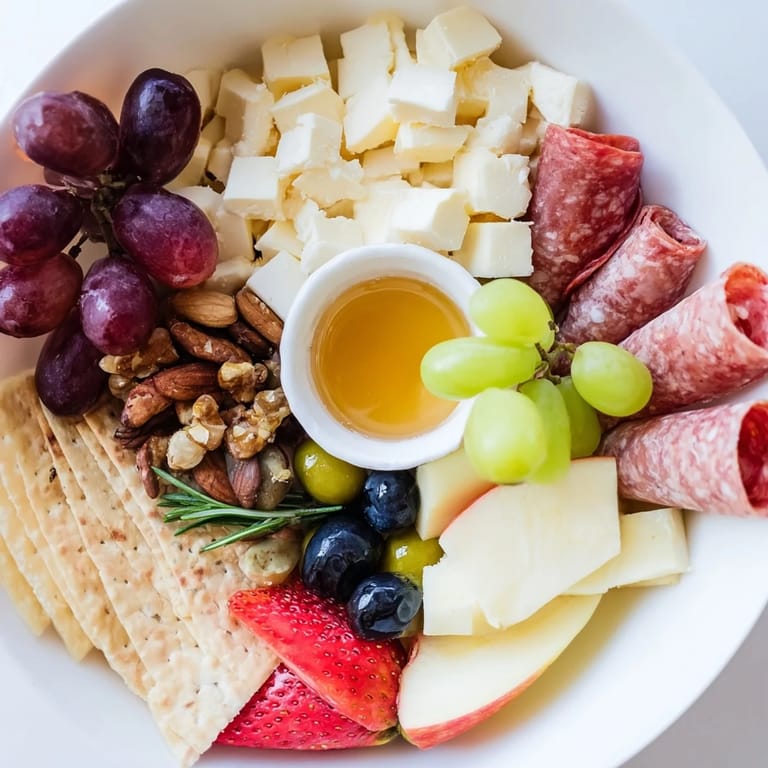
The real skill here isn't culinary—it's understanding balance and movement on a flat surface. Think about color distribution, so you're not piling all the dark meats in one corner and all the pale cheeses in another. Leave gaps that invite people to see the board as an invitation rather than something already finished. The negative space is just as important as what you're placing, and it's what transforms a pile of food into something that feels generous and composed.
Seasonal Flexibility
Summer calls for berries and lighter cheeses, autumn begs for pears and roasted nuts, and winter is the moment for preserved figs and cured meats that feel warming. This board is your canvas for following what's good right now rather than sticking to a rigid recipe. I've learned that the best boards are the ones that feel like a snapshot of the current season, not a generic template repeated all year long.
Pairing and Serving Suggestions
A crisp white wine or rosé is the obvious choice, but sparkling water with fresh herbs works beautifully if you want to stay sober, and there's something unpretentious about serving this board without alcohol at all. Think of this as an opening act rather than a meal, something to gather around while you talk, laugh, and lose track of time. It's equally at home before dinner as it is as the entire dinner if you're feeding people who just want lightness and quality.
- Chill your white wine glasses beforehand so everything feels intentional and cool.
- Set out small plates if people are standing, so they can build their own combinations without dropping things.
- Leave the board out and let it be the centerpiece of the conversation, not something to clear away quickly.
 Pin it
 This board is proof that feeding people doesn't require complexity, just intention and ingredients you genuinely want to eat. Bring it together with the same care you'd give to cooking, and watch it become the kind of meal people remember.
Recipe FAQs
- → What cheeses work best for a quick snack board?
Soft cheeses like Brie and goat cheese pair well with a sharper cheddar to offer a balanced texture and flavor profile.
- → How can I make this board vegetarian-friendly?
Omit the prosciutto and salami, and add marinated vegetables or extra varieties of cheese for a satisfying vegetarian option.
- → What fruits complement the savory items on the board?
Fresh grapes, apple slices, and berries add sweetness and freshness to balance cured meats and cheeses.
- → Are there any good accompaniments to enhance the board?
Assorted crackers, sliced baguette, mixed nuts, olives, and a drizzle of honey or fig jam elevate textures and flavors.
- → How should I arrange the items for an appealing presentation?
Space cheeses evenly on the board, roll meats nearby, cluster fruits in small groups, and fill gaps with crackers, nuts, and olives for a balanced look.