 Pin it
 The bright aroma of lemon always reminds me of spring mornings. I once stumbled on the idea of pressing edible flowers into a cake while flipping through an old gardening book, and I couldn't resist experimenting as soon as the violets bloomed. The kitchen felt transformed, suddenly full of color and curiosity—half celebration, half creative mess. As the cake baked, the buttery scent mingled with tart citrus—and a little flour dust floated through sunbeams. Lifting the finished cake from its pan felt like pulling a garden from the oven, ready for its edible bouquet.
One rainy day, friends showed up unexpectedly and I decided to bake this cake—armed with pansies from the window box and a hasty batch of lemon curd. I distinctly remember us gathered around, fingers sticky from spoon-licked curd, debating the tastiest spring flower. Our laughter echoed as we pressed petals onto cream, trying to make art out of snacks. That ordinary afternoon turned into something special, the cake at the heart of it. Someone asked for the recipe before their fork hit the plate, proof enough of its charm.
Ingredients
- Unsalted butter: Room temperature makes creaming it easy, and it's worth patiently letting it soften for a plush sponge.
- Granulated sugar: Beat well until pale—the secret to a cake that's fluffy, not dense.
- Large eggs: They bind everything smoothly, and room temperature eggs prevent separation.
- Vanilla extract: A dash rounds out the lemon's brightness; use real extract for depth.
- All-purpose flour: Sift it for the gentlest crumb; I've learned clumps lead to uneven texture.
- Baking powder: Measure precisely, or the cake won’t rise as dreamily.
- Fine sea salt: Balances sweetness and accentuates floral notes.
- Whole milk: Room temperature again is key—otherwise the batter risks curdling.
- Lemon zest: Use a microplane for fine flecks, avoiding the bitter white pith.
- Lemon juice: Freshly squeezed gives the curd a tang that bottled simply can't match.
- Powdered sugar: This adds light, sweet structure to the whipped cream without grit.
- Heavy cream: Whip chilled for best stiffness; warm cream won't hold peaks.
- Pressed edible flowers: Choose organic and edible varieties—each adds its own subtle aroma and color.
- Additional lemon zest and unsalted butter (for curd): Patient stirring helps it thicken without scrambling.
Tired of Takeout? 🥡
Get 10 meals you can make faster than delivery arrives. Seriously.
One email. No spam. Unsubscribe anytime.
Instructions
- Set up your cake pans:
- Grease and line two round pans with parchment—it makes removing the cake a breeze and saves any accidental sticking.
- Cream butter and sugar:
- Let the mixer run until the butter and sugar become fluffy and almost pale, feeling soft and airy between your fingers.
- Add eggs and flavor:
- Crack in the eggs one by one, watching the mixture turn glossy; stir in vanilla and lemon zest for an instant uplift.
- Mix in dry ingredients:
- Gently combine sifted flour, baking powder, and salt with the wet mix, alternating with milk—don’t rush this or the batter gets tough.
- Bake your sponge:
- Pour the batter evenly, smooth it out, and bake just until the edges are golden and a toothpick comes out clean.
- Cool and prepare layers:
- Let cakes rest in the pans before turning onto a rack, avoiding cracks; they must cool completely or your cream will melt.
- Make lemon curd:
- Whisk eggs, sugar, lemon juice, and zest over gentle heat, stirring until it thickens—watch for a glossy finish before adding butter.
- Whip the cream:
- Cold cream turns to stiff peaks quickly, so stop before it gets grainy—sweeten with powdered sugar and vanilla for flavor.
- Assemble the cake:
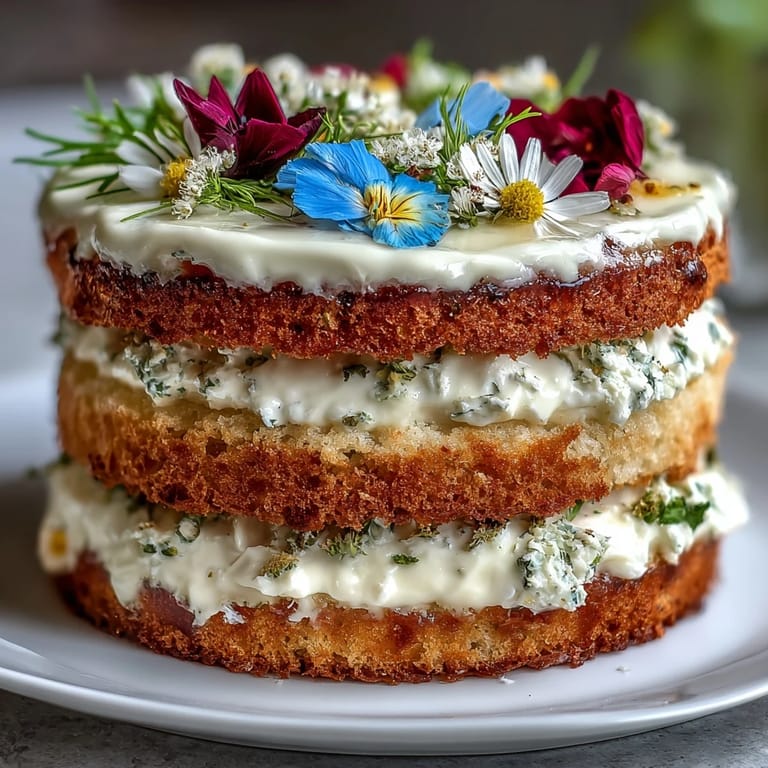
- Spread a thick layer of lemon curd between cake layers, then frost with whipped cream using an offset spatula for smoothness.
- Decorate with flowers:
- Arrange pressed flowers gently, pressing just enough so they adhere without sinking—the effect is beautiful and inviting.
- Chill and serve:
- Let the finished cake rest in the fridge for at least half an hour to let the cream set and flavors mingle.
 Pin it
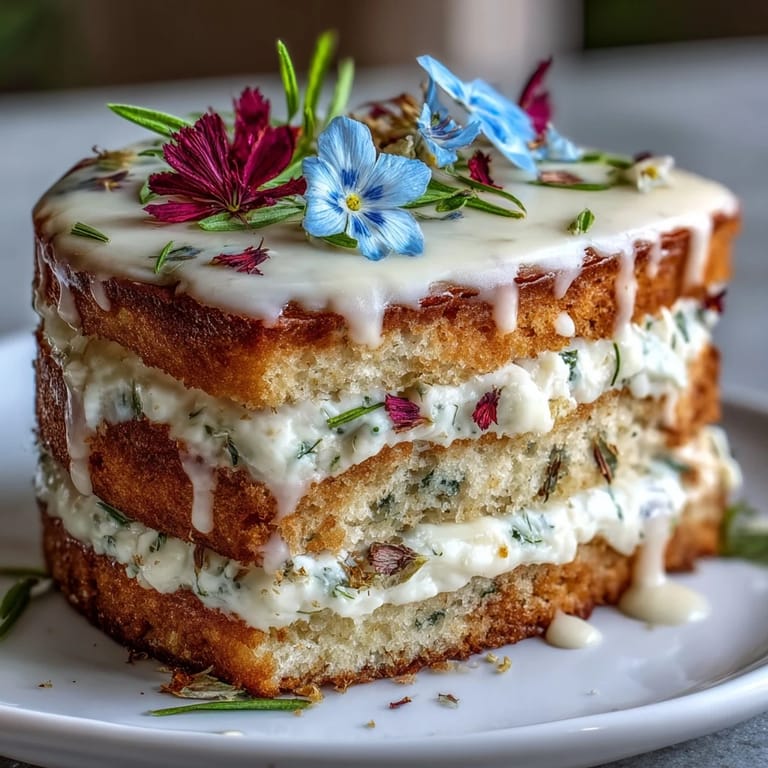
 When I sliced this cake for my niece's birthday, her gasp at the flower-covered top was better than any candle. That moment turned a simple dessert into celebration, and even skeptical eaters ended up admiring the bright, tangy layers underneath. Sometimes a pretty cake isn’t just about looks—it sparked stories about gardens, spring, and sharing something homemade.
Getting the Flowers Just Right
Pressing edible flowers takes only a few days but the anticipation makes decorating feel special. I learned to gently pat them onto parchment under a heavy book, checking daily so they don't get brittle. When handled gently, the petals stay vibrant and the cake becomes a canvas. Even a lopsided arrangement feels charming if the colors are thoughtfully mixed. It's less about perfection and more about personal touch—don't be afraid to experiment.
Making Lemon Curd Without Stress
Whisking curd over simmering water requires constant attention—a moment’s distraction can mean scrambled eggs instead of smooth curd. A gentle, steady stir is all it needs, while the aroma of lemon fills the kitchen. If you start to see streaks, pull it off the heat and whisk quickly, then add the butter for silkiness. Homemade curd always tastes brighter than anything jarred, and leftover curd is perfect for breakfast toast. Let it cool completely before layering, otherwise it’ll melt your cake filling.
Building Layers and Adding the Final Touches
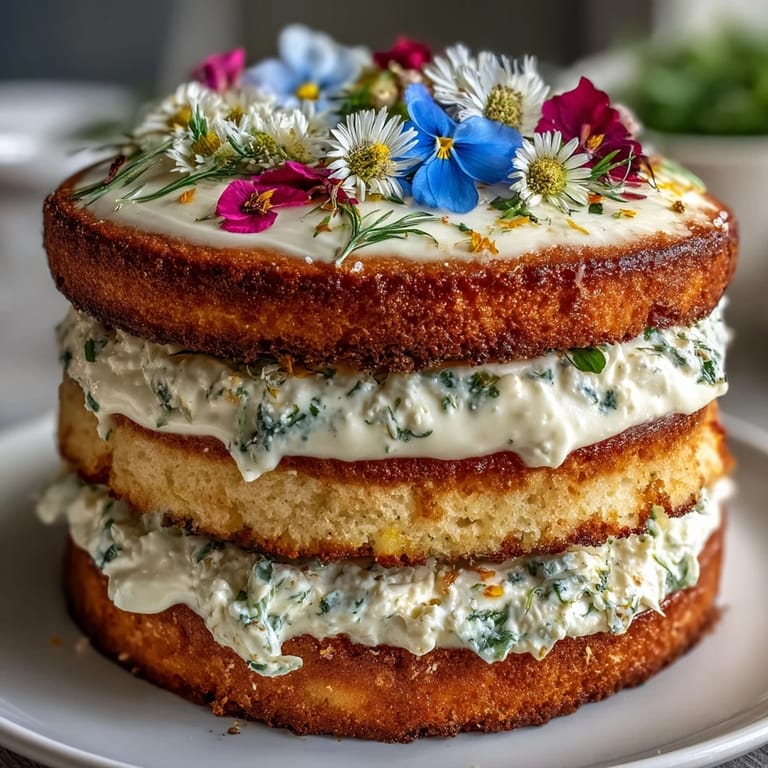
Stacking cakes is easier with a clean kitchen counter and a long spatula; a few crumbs are inevitable, but crumb-coating helps keep the finish smooth. Whipped cream goes on best in soft swirls—don’t overwork it or you’ll lose that delicate mouthfeel. Flowers should be placed gently, spaced for balance rather than symmetry. It’s a cake that invites compliments and conversation.
- Check the fridge temperature before chilling—the cream sets better when cool, not cold.
- Use an offset spatula for cream, it makes achieving a smooth surface much simpler.
- Wait to decorate until just before serving if humidity is high, so the flowers stay crisp.
 Pin it
 Spring Cake with Pressed Edible Flowers and Lemon Curd is more than a treat—it’s a centerpiece and conversation starter. I hope you enjoy every slice, and maybe invent your own floral arrangement before sharing it.
Recipe FAQs
- → How should edible flowers be prepared?
Edible flowers should be organic, pesticide-free, and gently pressed to preserve their shape before decorating the cake.
- → Can cake layers be made ahead?
Yes, cake layers can be baked a day ahead and wrapped tightly at room temperature for convenience.
- → What pairs well with this cake?
Enjoy with Earl Grey tea or a sparkling Moscato to complement the floral and citrus notes.
- → How to intensify lemon flavor?
Brush cake layers with lemon syrup before assembly for an extra zingy citrus kick.
- → Is the dessert vegetarian?
Yes, it is suitable for vegetarians, containing eggs and dairy but no meat products.
- → What allergens are present?
The cake contains eggs, dairy, and wheat; check edible flowers for safety and absence of pesticides.