 Pin it
 I stumbled upon the inspiration for this dish at a gallery opening, of all places—watching a woman admire a Victorian cameo brooch, tracing the profile with her finger, and thinking how food could capture that same delicate artistry. That evening, I played with white cheese and dark tapenade on a whim, and suddenly I had something that felt precious enough to share. It's become my favorite way to start an elegant dinner: four little edible portraits that whisper sophistication without demanding hours in the kitchen.
The first time I made these for guests was unexpected—my sister texted that she was bringing her new partner to dinner, and I had maybe an hour to plan something impressive. I opened my fridge and found a tub of goat cheese and a jar of tapenade, and I thought, why not? Watching them both lean in to study the little cheese ovals, asking if I'd hand-carved them, was the moment I knew this recipe had legs. It became my secret weapon for last-minute entertaining.
Ingredients
- Fresh goat cheese or cream cheese (200 g): The base of everything—creamy, mild, and neutral enough to let the tapenade shine. I prefer goat cheese for its slight tang, but cream cheese works beautifully if that's what you have.
- Black olive tapenade (80 g): This is where the drama lives. Store-bought is perfectly fine, but homemade means you control the saltiness and can taste the olives rather than just salt and paste.
- Rustic baguette or gluten-free crackers: Optional, but they give your guests something to do with their hands and add textural contrast to the creamy cheese.
- Fresh herbs (thyme or chives), finely chopped: A whisper of green that makes the whole plate sing—don't skip this.
- Extra virgin olive oil: A drizzle around the edge adds richness and catches the light in a way that makes these look even more elegant.
Tired of Takeout? 🥡
Get 10 meals you can make faster than delivery arrives. Seriously.
One email. No spam. Unsubscribe anytime.
Instructions
- Shape your cheese medallions:
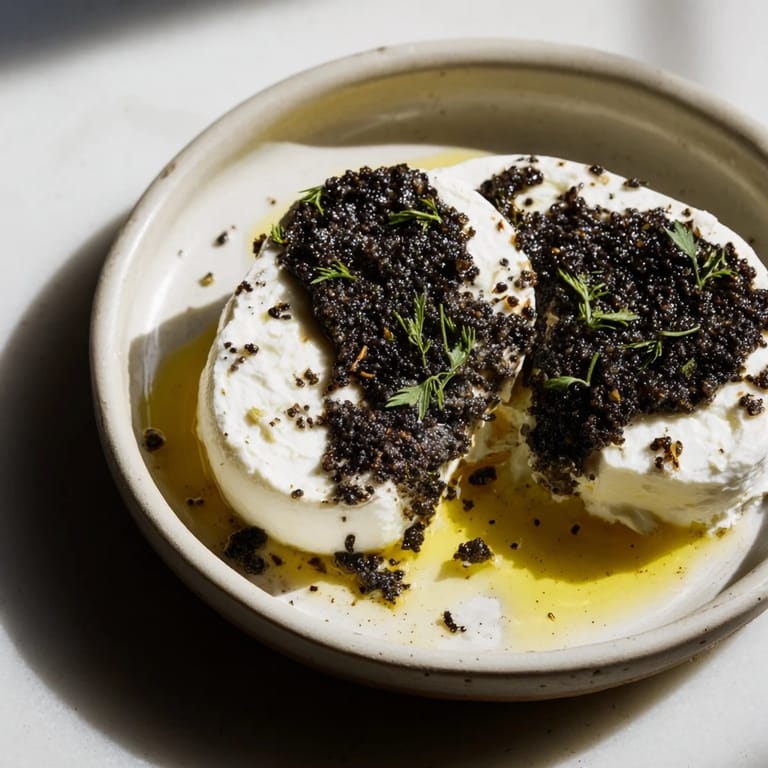
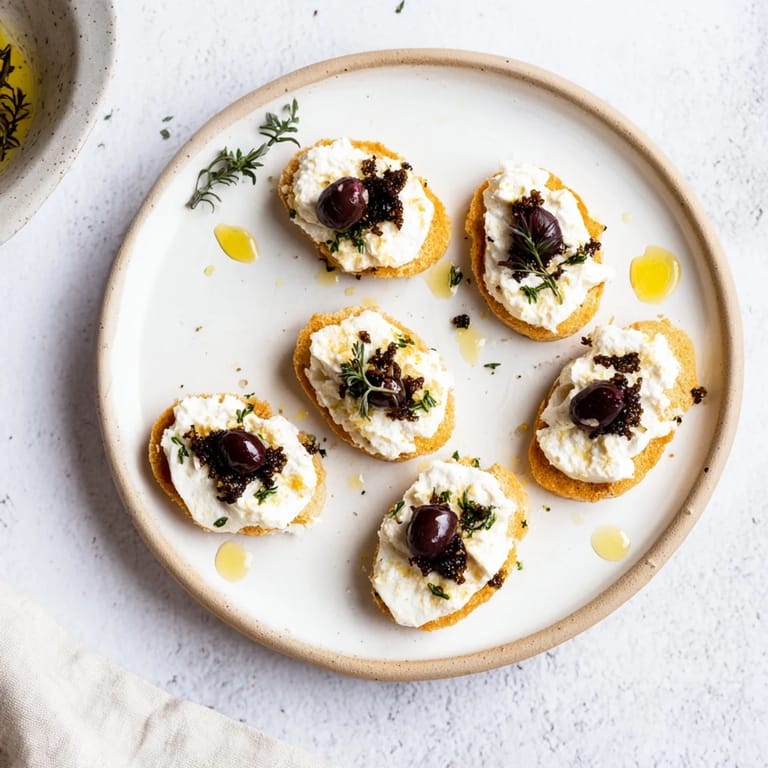
- Scoop or gently shape the cheese into four thick ovals, each about 2 cm tall. You want them sturdy enough to hold the tapenade without sliding, but soft enough that your spoon glides through them. Place each on a serving plate or perch it atop bread if you're using it as the base.
- Paint on the cameo:
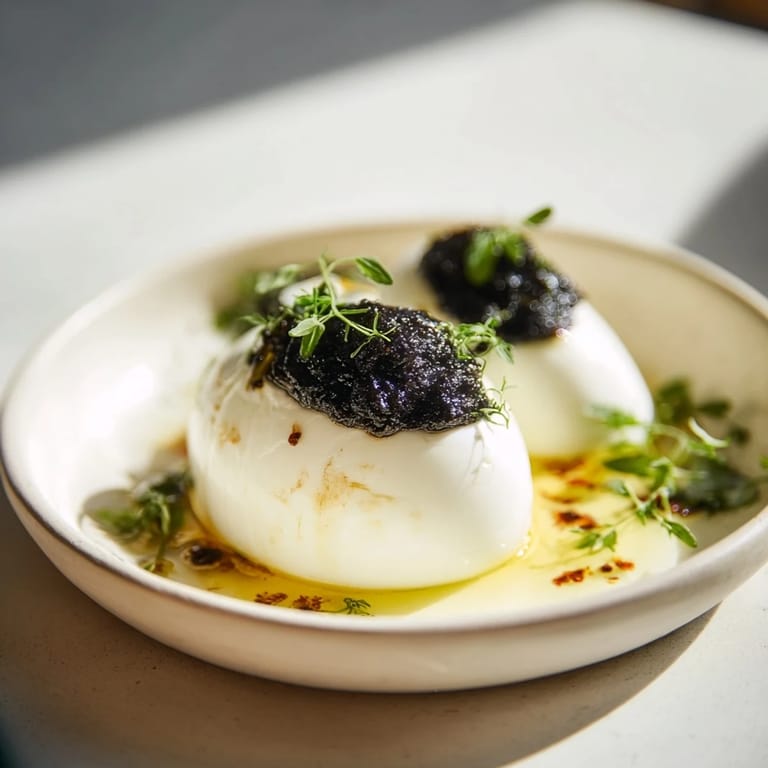
- Using the back of a spoon or a small butter knife, spread a thin layer of tapenade across each cheese oval—think of it like painting a silhouette or profile. You can go freehand with an artistic swirl, or if you're feeling fancy, use a stencil to create a more defined shape.
- Finish with light and color:
- Drizzle a little olive oil in a thin ring around each cameo, then scatter the fresh herbs across the top. This is your moment to make it look like something you'd find on a restaurant plate.
- Serve right away:
- These are best enjoyed immediately while the cheese is soft and the flavors are bright. Set them out with extra bread or crackers on the side if you'd like.
 Pin it
 I made these for my mother's book club last spring, and one of her friends asked for the recipe while holding a cameo up to the light like she was examining a piece of jewelry. That's when I realized this dish isn't really about cheese or olives—it's about creating a moment where food becomes something people want to look at and talk about before they taste it. That's rare, and it's worth honoring.
Making Your Own Tapenade
If you want to skip the jar, it's genuinely easy to make your own. Pulse 100 grams of pitted black olives with a small clove of garlic, a teaspoon of capers, a teaspoon of lemon juice, and a tablespoon of olive oil until it reaches a thick, spreadable paste. Taste it—if it feels too salty or one-note, add a tiny squeeze more lemon or a splash of water to soften it. The whole thing takes maybe three minutes, and you'll taste the difference immediately.
Scaling and Flexibility
This recipe is built for four, but the ratio is simple enough to scale up or down however you need. For a crowd, I just double the amounts and shape them assembly-line style while the guests arrive. You can also make these up to four hours ahead and keep them in the fridge, covered loosely—just add the oil and herbs right before serving so everything looks fresh and glistening.
Variations Worth Trying
Once you understand the basic formula of creamy base plus something dark and savory, you can play. I've made versions with walnut-mushroom pâté, roasted red pepper spread, even a smoked salmon and capers situation for brunch. The real magic is that contrast between soft and something with character—if you keep that balance, you're golden.
- For vegan guests, use a plant-based cream cheese alternative and you've lost nothing in the translation.
- If you can't find good black olives, a dark sun-dried tomato spread or even a beet and walnut mixture creates a similar visual and flavor effect.
- Gluten-free? Swap the baguette for gluten-free crackers or skip the bread entirely and just serve the cheese ovals as finger food.
 Pin it
 These little cameos sit somewhere between a cheese course and an appetizer, and they're perfect for people who want to feel like they're eating something special without you having spent all day in the kitchen. That's the whole point of cooking, sometimes—making people feel welcomed and delighted without sacrificing your own ease.
Recipe FAQs
- → What type of cheese works best for the Victorian Cameo?
Fresh goat cheese (chèvre) or cream cheese provide a creamy texture and mild flavor that complement the olive tapenade.
- → Can I make the tapenade at home?
Yes, blend pitted black olives with garlic, capers, lemon juice, and olive oil for a smooth homemade tapenade.
- → Is there a vegan alternative for this dish?
Using plant-based cream cheese substitutes the dairy cheese while maintaining similar texture and flavor.
- → What garnishes enhance the presentation?
Fresh herbs like thyme or chives add a fragrant touch and enhance the visual appeal of the dish.
- → What are suitable bases for serving the cheese and tapenade?
Rustic baguette slices or gluten-free crackers provide a sturdy and flavorful base for serving.