 Pin it
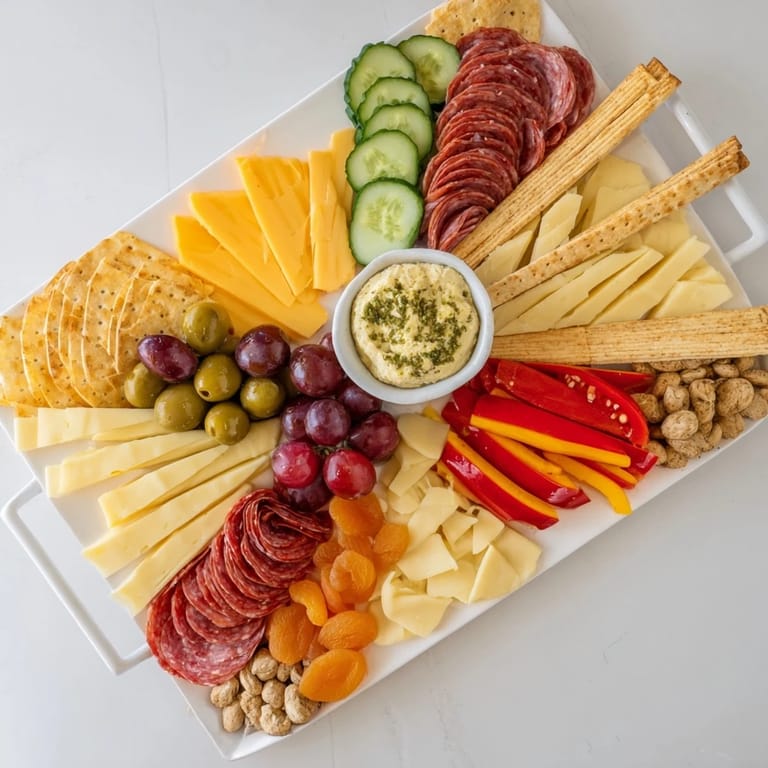
 I discovered the magic of directional boards at a dinner party where a friend arranged everything pointing toward a central dip like an edible compass. It was such a simple idea, but guests naturally followed those invisible lines, and suddenly everyone was gathered around the same focal point, laughing and reaching in the same direction. That moment taught me that the way we present food shapes how people experience it together.
I remember making this for my book club, and three different people asked me where I learned to style boards like this. The truth is, there's no secret technique—just the understanding that when everything points somewhere, it feels like the board was made with intention. That's when I realized presentation isn't about perfection; it's about creating a story your guests want to be part of.
Ingredients
- Aged Cheddar, 100 g cut into triangles: The sharpness cuts through rich dips beautifully, and triangular shapes naturally point in any direction you want them to go.
- Brie, 100 g sliced into wedges: Creamy and elegant, wedges are forgiving shapes that look intentional no matter how you angle them.
- Gouda, 100 g cut into strips: Its subtle sweetness balances savory meats, and strips are perfect for creating linear directional lines.
- Prosciutto, 100 g folded: Fold it loosely so it catches light and creates visual texture; skip it entirely for vegetarian boards.
- Salami, 100 g sliced and folded: Folded slices create little peaks that draw the eye—they're like tiny arrows themselves.
- Seedless grapes, 1 cup in small clusters: Clusters stay together naturally and fill gaps while adding color and sweetness.
- Cherry tomatoes, 1 cup halved: The flat cut side lets them sit stable and their red color anchors the whole arrangement.
- Cucumber, 1 small sliced diagonally: Diagonal cuts already feel directional, which is exactly what this board needs.
- Red bell pepper, 1 small sliced into strips: Strips are inherently directional and their brightness guides the eye naturally.
- Artisan crackers, 1 cup: Choose interesting shapes that already suggest movement—elongated ones work especially well.
- Baguette, 1 small sliced on the bias: Bias cuts create natural angles that echo your board's directional theme.
- Marcona almonds, ½ cup: They're buttery and fill small gaps while reinforcing the sense of flow between larger components.
- Dried apricots, ¼ cup: Their sweetness surprises and their irregular shape lets you nestle them anywhere.
- Olives, ¼ cup: Place them in a small bowl or scatter them between sections to guide movement.
- Herbed hummus or whipped feta dip, 100 ml: This is your focal point—the bowl where every angle converges, so choose a dip you genuinely love.
Tired of Takeout? 🥡
Get 10 meals you can make faster than delivery arrives. Seriously.
One email. No spam. Unsubscribe anytime.
Instructions
- Start with your dip and define your point:
- Place your bowl of herbed hummus or feta at one end or corner of your board—this is your arrowhead tip, the place where all eyes will naturally travel. Step back and imagine this spot pulling everything toward it like a magnet.
- Create your cheese base and establish direction:
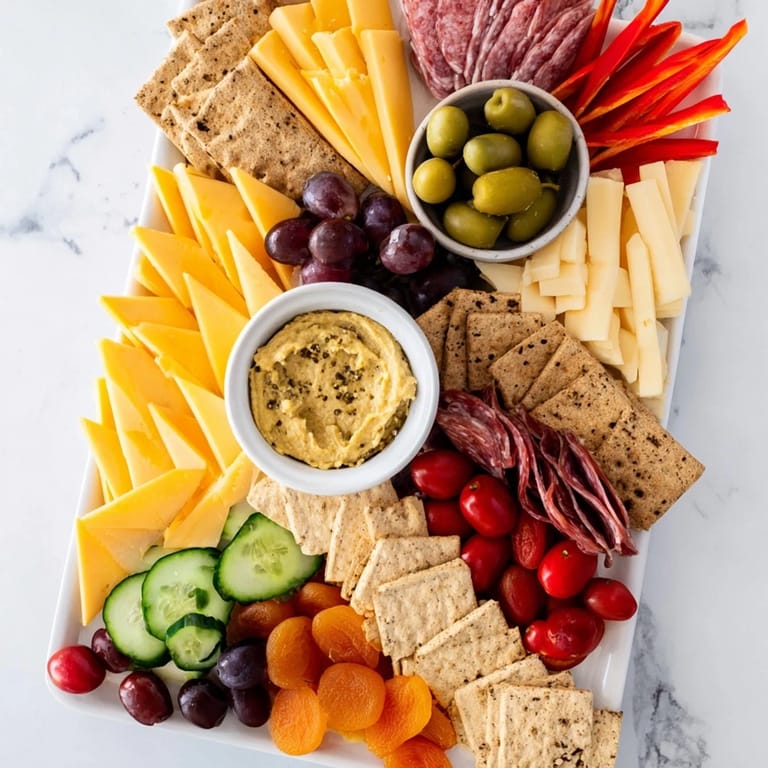
- Take your cheese triangles and wedges and arrange them in a fan pattern emanating from the opposite side, with all points aiming at your dip bowl. Think of them like a school of fish all swimming toward the same destination. This is where the board's personality starts to emerge.
- Layer in the meats for movement:
- If you're using prosciutto and salami, fold them loosely and position them in gentle lines that also flow toward your central dip. The folds should catch the light and create dimension, almost like brushstrokes on a canvas.
- Add vegetables and fruit to deepen the pattern:
- Lay your cucumber slices, bell pepper strips, and grape clusters diagonally across the board, making sure each piece angles toward that focal dip. This is where the magic happens—suddenly all those individual elements start speaking the same visual language.
- Build rhythm with crackers and bread:
- Arrange your crackers and bias-cut baguette slices in radiating lines, all oriented toward the dip. Think of them as guides leading guests exactly where you want them to go. They're not just functional; they're part of the choreography.
- Fill gaps and strengthen the flow:
- Scatter your marcona almonds, dried apricots, and olives along the lines between your main components. These small pieces reinforce the directional pattern and create rhythm—they're the punctuation marks of your edible composition.
- Step back and adjust:
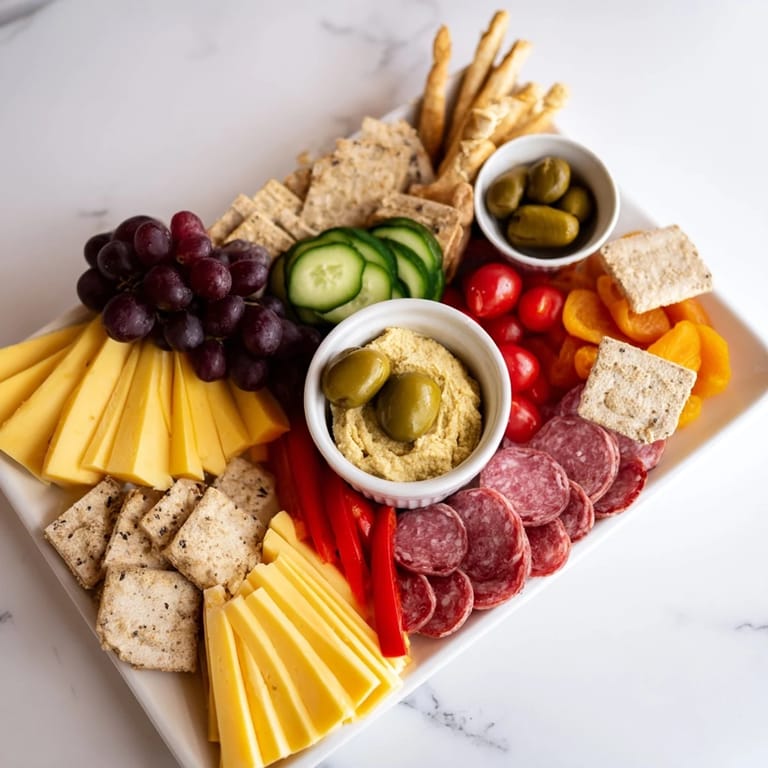
- Look at your board from above, as guests will. Every element should feel like it's pointing somewhere. Adjust spacing for balance, fill any awkward gaps, and make sure the directional flow feels natural, not forced. You're aiming for intentional, not overthought.
 Pin it
 There was a moment at a recent dinner when a guest noticed how everything pointed toward the dip and said, 'This board is telling us a story.' That's when I understood that food arranged with intention becomes more than sustenance—it becomes a conversation starter, a moment of connection, a small work of art.
Choosing Your Dip Wisely
The dip you choose is the gravitational center of your entire board, so spend a moment thinking about it. Herbed hummus is fresh and light, but whipped feta is luxurious and tangles beautifully with crackers. I've also had success with beet hummus for drama, tzatziki for brightness, and whipped ricotta for pure, simple richness. The dip should feel like a reward at the end of those directional lines—something that makes people want to follow them.
Color and Contrast Make the Magic
I used to arrange boards thinking ingredients were enough, but I learned that color is the real director. The deep orange of apricots against pale brie, the jewel tones of grapes next to cream-colored cheese, the green of cucumber against deep red tomatoes—these contrasts make the board leap off the table. When you're placing items, pause and ask yourself if the next piece adds visual interest or if it fades into what's already there. That small pause makes all the difference between a nice board and one people photograph.
Make It Your Own
This board is a template, not a rule. I once made one with figs instead of apricots because that's what I had, and it was even better. The directional principle works with whatever beautiful things you gather—aged white cheddar instead of orange, burrata instead of brie, roasted red peppers instead of fresh. The power isn't in specific ingredients; it's in the intentional way you arrange them.
- For a vegetarian version, simply omit the meats and add more cheese varieties, nuts, or roasted vegetables in their place.
- If you're serving it with wine, a crisp Sauvignon Blanc or light Pinot Noir echoes the board's freshness and elegance.
- Prep all your components an hour ahead and refrigerate them separately—assemble the board 15 minutes before guests arrive so everything looks fresh and the cheese isn't sweating.
 Pin it
 There's something deeply satisfying about a board where everything points somewhere, where chaos becomes choreography, and where food becomes an invitation. Every time I make one, I remember that moment at my friend's dinner party and smile.
Recipe FAQs
- → How do I create the directional flow on the board?
Place the dip bowl as the focal point, then arrange cheeses, meats, vegetables, crackers, and nuts so their shapes and lines point inward toward the dip, enhancing the sense of motion.
- → Can I make this without meats?
Yes, omit the meats and add extra cheeses or fresh vegetables to maintain variety and texture while keeping a vegetarian-friendly option.
- → What dips pair well with this board?
Herbed hummus or whipped feta complement the flavors well, but alternatives like beet hummus, tzatziki, or whipped ricotta also work beautifully.
- → What drink pairs best with this snack board?
A crisp Sauvignon Blanc or a light Pinot Noir nicely balance the rich cheeses and salty meats, enhancing the overall experience.
- → How can I add visual interest to the presentation?
Use contrasting colors and textures—like bright grapes, vibrant peppers, and rustic crackers—to create an appealing and dynamic display.