 Pin it
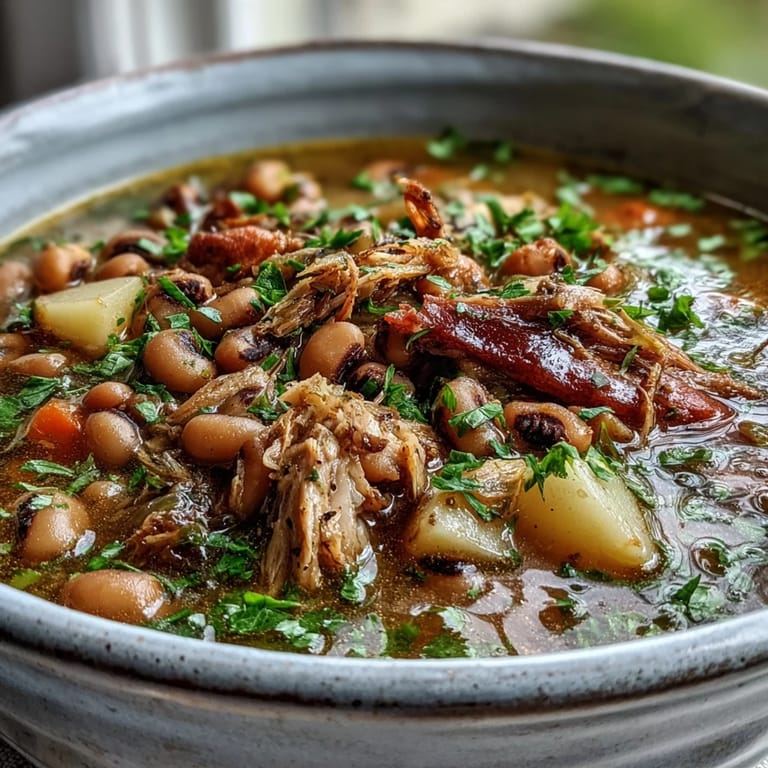
 There's something about the smell of ham hocks hitting hot oil that stops you mid-thought—suddenly you're not just cooking dinner, you're channeling generations of kitchen wisdom in a single Dutch oven. My neighbor mentioned this stew offhandedly while we were both wrestling groceries up three flights of stairs, and I was intrigued enough to ask for the gist of it. What started as a casual weeknight experiment became the thing I reach for when I want comfort that feels earned, not rushed. The black-eyed peas soften into something almost creamy, the vegetables meld into the broth, and the ham hocks give everything this quiet, smoky depth that you can't fake.
I made this for my book club on a January evening when everyone was pretending to discuss the novel but really just wanted something warm and real. The stew came out of the oven in this deep, burnished state—everyone's spoons clinked against bowls for twenty minutes straight, barely a word spoken. That's when I knew it wasn't just about the ingredients; it was about the generosity of slow cooking, the kind that says 'I made something for you.'
Ingredients
- Smoked ham hocks (2, about 1.5 lbs): These are the backbone of the broth—they release collagen and flavor that box stock could never achieve, so don't skip them or swap them lightly.
- Dried black-eyed peas (2 cups, soaked overnight, or 4 cups canned): Soaking overnight matters if you're using dried; it cuts cooking time and makes them digest easier, though canned works beautifully if you're short on time.
- Onion, carrots, celery (1 large onion, 2 carrots, 2 stalks): This is your holy trinity—diced the same size so they cook evenly and blend into the background as a flavor base.
- Potatoes (2 medium, 1-inch cubes): They thicken the stew naturally as they break down, so cut them uniform or they'll cook unevenly.
- Diced tomatoes (1 can, 14.5 oz with juice): The acid balances the richness and brightens what could otherwise feel heavy.
- Garlic (3 cloves, minced): Added after the soffritto so it doesn't burn and turn bitter—this timing makes a real difference.
- Broth (6 cups low-sodium chicken or vegetable): Low-sodium lets you control the salt and lets the ham hocks' flavor take center stage.
- Bay leaves (2), dried thyme (1 teaspoon), smoked paprika (1/2 teaspoon): These three do the quiet work of depth; don't rush past them.
- Black pepper and cayenne (1/2 teaspoon black, 1/4 teaspoon cayenne, optional): The cayenne adds heat without announcing itself, so taste as you go.
- Fresh parsley (2 tablespoons, optional) and hot sauce for serving: Parsley adds brightness at the end; hot sauce lets everyone customize their heat level.
Tired of Takeout? 🥡
Get 10 meals you can make faster than delivery arrives. Seriously.
One email. No spam. Unsubscribe anytime.
Instructions
- Soak the peas if using dried:
- If you're using dried black-eyed peas, cover them generously with water the night before and let them sit on the counter—this step cuts cooking time significantly and makes them tender rather than mealy. In the morning, drain and rinse them well.
- Build your flavor base:
- Heat a splash of oil in your Dutch oven over medium heat, then add the onion, carrots, and celery together. Cook for about five minutes, stirring occasionally, until the vegetables soften and release their sweetness—you'll notice the smell changes from raw to almost caramelized.
- Wake up the garlic:
- Stir in the minced garlic and cook for just one minute until it becomes fragrant but not brown; this is where patience matters because garlic burns fast and tastes acrid if you let it.
- Build the stew:
- Add the ham hocks, drained peas, potatoes, canned tomatoes with their juice, broth, bay leaves, thyme, smoked paprika, black pepper, and cayenne if you're using it. Stir everything together so nothing sticks to the bottom.
- Simmer low and slow:
- Bring the whole pot to a boil, then immediately lower the heat to low, cover it, and let it bubble gently for two hours. Stir every thirty minutes or so—not because it needs it, but because checking on it keeps you connected to what's happening. The peas will soften, the ham will start pulling from the bone, and the broth will deepen in color.
- Shred the ham and taste:
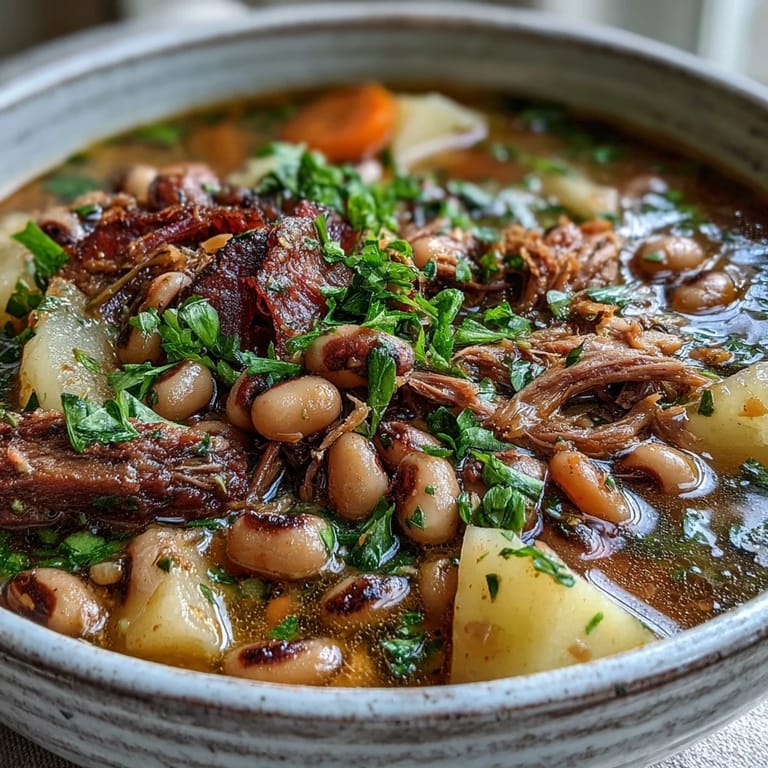
- Remove the ham hocks carefully with tongs and set them on a cutting board to cool slightly. Pull the meat away from the bone and skin, shredding it into bite-sized pieces, then return the meat to the pot. Taste the broth now and add salt carefully—the ham was already salty, so you might not need much.
- Finish if you like:
- If the stew feels too brothy, simmer it uncovered for ten to fifteen minutes to reduce it and concentrate the flavors. This is optional—some people like it brothier, some like it thicker.
- Serve and celebrate:
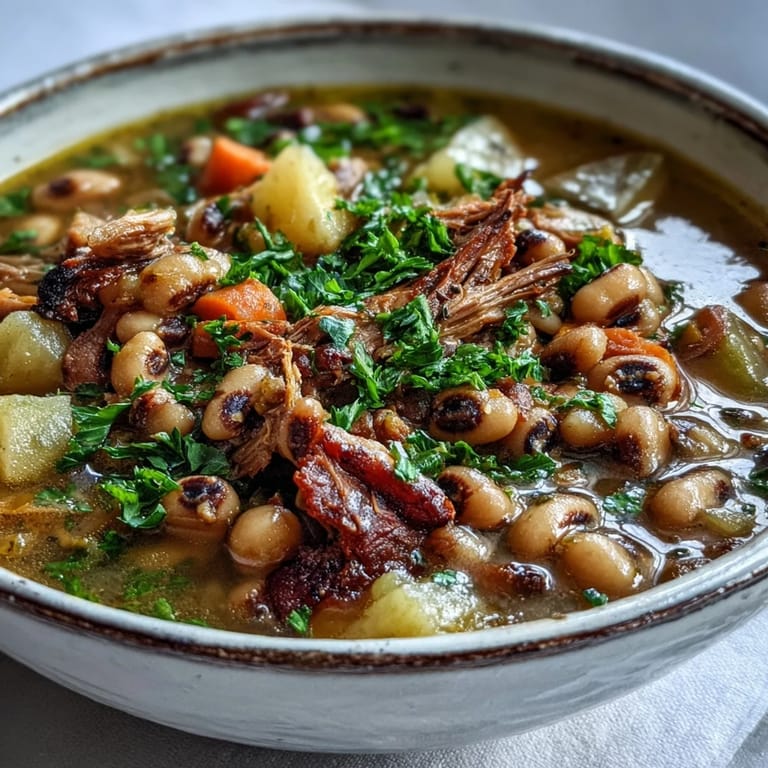
- Remove the bay leaves, ladle into bowls, top with a sprinkle of fresh parsley if you have it, and set out hot sauce for people to add their own heat. This is the kind of food that makes people slow down.
 Pin it
 My mother tasted this once and immediately asked if I'd use it for the holidays; now it shows up on our table every January like an old friend. It's become less about the recipe and more about the ritual—the way the kitchen steams up, the way everyone eats slower, the way a simple stew becomes an excuse to be together.
Variations and Swaps
If ham hocks aren't calling to you, smoked turkey legs work beautifully and feel slightly lighter, though you'll lose a tiny bit of that deep pork richness. For vegetarians, omit the ham entirely and add a teaspoon of liquid smoke and maybe a splash of soy sauce to build that savory depth—it's not identical, but it honors the spirit of the dish. You can also swap the potatoes for sweet potatoes, which adds sweetness and changes the whole mood of the stew in a way that's surprisingly welcome in cold months.
Storage and Make-Ahead
This stew is one of those rare dishes that improves after sitting in the fridge overnight—the flavors meld and deepen, so if you can make it the day before, absolutely do. It keeps well for up to three days refrigerated in a covered container, and reheats gently on the stovetop without losing anything. You can also freeze it for up to three months; just thaw it in the fridge overnight and warm it slowly so the peas don't split.
What to Serve Alongside
Cornbread is the classic pairing—the slight sweetness and crumbly texture play perfectly against the savory depth of the stew. Some people spoon it over rice, which transforms it into something almost creamy; others just eat it in bowls with a hunk of butter-slathered bread on the side.
- Cornbread with a little honey butter is the move if you want to go traditional.
- Crusty bread for dunking never disappoints if cornbread feels like too much effort.
- Rice underneath softens the stew's intensity and makes it stretch further for bigger crowds.
 Pin it
 This is the kind of stew that teaches you something about cooking just by making it—that slow heat and patience create flavors that rushing could never reach. Make it once and you'll understand why people come back to it.
Recipe FAQs
- → Do I need to soak the black-eyed peas overnight?
Yes, if using dried black-eyed peas, overnight soaking ensures even cooking and tender texture. Alternatively, you can use canned peas to skip this step entirely.
- → Can I make this vegetarian?
Absolutely. Simply omit the ham hocks and add extra smoked paprika or a few drops of liquid smoke to maintain that savory depth of flavor.
- → What should I serve with this stew?
Cornbread is the classic pairing, but it also pairs beautifully with steamed rice or crusty bread to soak up the flavorful broth.
- → How long do leftovers last?
Leftovers keep well refrigerated for up to 3 days and actually improve in flavor as the ingredients continue to meld together.
- → Can I freeze this stew?
Yes, this freezes well for up to 3 months. Cool completely before transferring to freezer-safe containers, leaving some space for expansion.
- → How do I know when the ham hocks are done?
The meat should be falling off the bone easily and shred readily with a fork. This typically takes about 2 hours of gentle simmering.