 Pin it
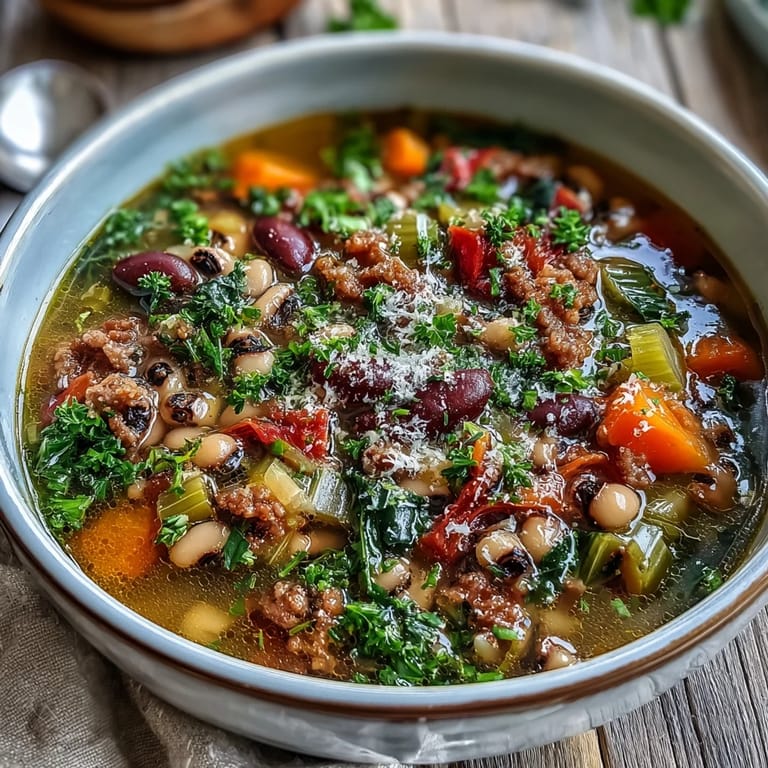
 My neighbor showed up at my door one crisp October afternoon with a bag of fresh black-eyed peas from her garden and a story about her grandmother's soup pot. I'd never made black-eyed peas before, but something about her enthusiasm made me want to try. That evening, as the sausage sizzled and the kitchen filled with the aroma of thyme and garlic, I understood what she meant—this wasn't just soup, it was comfort in a bowl.
I made this soup for my book club last winter, and it became the reason people actually wanted to come back. One guest, who'd grown up eating black-eyed peas her entire life, took a spoonful and got quiet—the good kind of quiet. She later told me it reminded her of Sunday dinners at her dad's house, which meant everything to me.
Ingredients
- Italian sausage, 450 g (1 lb), casings removed: This is your flavor foundation, and whether you choose mild or spicy depends on how much heat you want in your bowl—I lean toward mild because the red pepper flakes add punch if you need it.
- Yellow onion, 1 medium, diced: Dice it a touch smaller than usual; the pieces soften into the broth and create little bursts of sweetness.
- Carrots, 2, peeled and sliced: Keep them on the thicker side so they stay intact through the simmer and add texture to each spoonful.
- Celery stalks, 2, sliced: Don't skip this—it's the quiet player that rounds out the vegetable foundation.
- Garlic, 3 cloves, minced: Fresh garlic makes all the difference; I learned the hard way that jarred garlic gets lost in the broth.
- Red bell pepper, 1, diced: This adds brightness and a subtle sweetness that balances the richness of the sausage.
- Diced tomatoes, 1 can (400 g/14 oz), with juices: Use canned tomatoes in their juices—they're cooked down to perfection already and add acidity that lifts the whole soup.
- Black-eyed peas, 2 cans (400 g/14 oz each), drained and rinsed: Canned is completely fine here; rinsing them removes excess sodium and prevents the soup from becoming cloudy.
- Low-sodium chicken broth, 1.25 liters (5 cups): Low-sodium lets you control the salt levels as you taste, which is essential for getting this right.
- Dried thyme, 1 tsp: This herb does heavy lifting in the background; it's earthy without overpowering.
- Dried oregano, 1 tsp: Oregano nods to the Italian sausage and ties the whole dish together.
- Bay leaf, 1: Nestle this in as you add the broth; don't forget to fish it out before serving.
- Crushed red pepper flakes, ½ tsp, optional: Add this if you enjoy a gentle kick, but the soup is lovely without it too.
- Salt and freshly ground black pepper: Taste as you go near the end; this is where the magic of seasoning happens.
- Fresh parsley, 2 tbsp, chopped, for garnish: The green pop at the end makes the soup look alive on the plate.
- Parmesan cheese, grated, for serving: Optional but genuinely transformative—a little sprinkle adds umami and richness.
Tired of Takeout? 🥡
Get 10 meals you can make faster than delivery arrives. Seriously.
One email. No spam. Unsubscribe anytime.
Instructions
- Brown the sausage first:
- Heat your pot over medium and crumble the sausage straight into the pan, breaking it apart with your wooden spoon as it cooks. You'll hear it sizzle and pop, and after about 5 to 7 minutes, it should be cooked through and lightly browned. If there's excess fat, pour it off—but leave a little behind for flavor.
- Build your vegetable base:
- Add the onion, carrots, celery, bell pepper, and garlic to the pot with the sausage and sauté for about 5 minutes until the vegetables start to soften and smell absolutely wonderful. You're not trying to fully cook them; you're just waking them up and letting them release their flavors.
- Add the broth and legumes:
- Stir in the tomatoes with their juices, drained black-eyed peas, chicken broth, thyme, oregano, bay leaf, and red pepper flakes if using. Give everything a good stir so nothing sticks to the bottom of the pot.
- Simmer gently until flavors marry:
- Bring the soup to a boil over medium-high heat, then drop the temperature to low, cover the pot, and let it bubble gently for about 20 minutes. Stir occasionally and listen—you want a peaceful simmer, not a rolling boil that breaks down the vegetables too much.
- Season to perfection:
- After the simmer, taste the soup and adjust salt and black pepper until it sings. Remove that bay leaf, and you're nearly done.
- Serve with love:
- Ladle the soup into bowls, garnish with fresh parsley, and pass the Parmesan cheese around the table. Each bowl is a chance to make it your own.
 Pin it
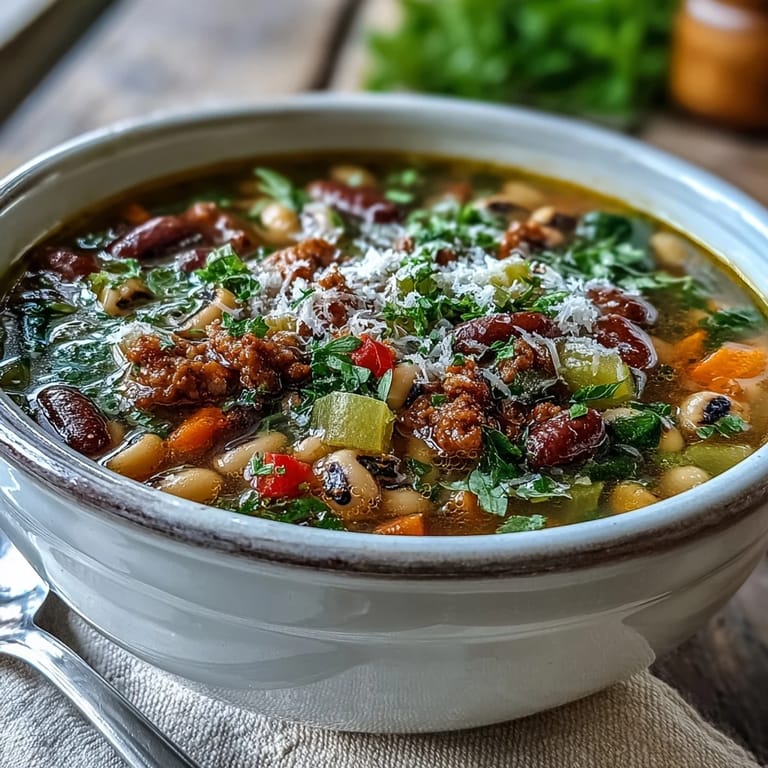
 There's something deeply satisfying about stirring a pot of soup and watching the broth turn golden as it simmers. My daughter once asked why I was staring at it so intently, and I realized I wasn't just cooking—I was thinking about who would eat it and whether they'd feel the care in each spoonful.
The Story Behind Black-Eyed Peas
Black-eyed peas show up in Southern tradition tied to New Year's celebrations, symbolizing luck and prosperity. But beyond superstition, they're simply a humble ingredient with an earthy, slightly nutty flavor that becomes almost creamy when simmered. Pairing them with Italian sausage might seem like an odd choice, but it works because the sausage's savory richness complements rather than overwhelms the delicate bean flavor.
Making It Your Own
This soup is forgiving and encourages improvisation. I've added spinach in the last few minutes for extra nutrition, swapped the red bell pepper for yellow when that's what I had on hand, and even thrown in a splash of balsamic vinegar when I wanted deeper complexity. The skeleton of sausage, black-eyed peas, and broth stays the same, but everything around it can shift based on your pantry and mood.
Serving Suggestions and Pairings
Serve this soup with crusty bread for dipping, or ladle it over a scoop of steamed rice to make it even heartier. The flavors pair beautifully with a light red wine like Pinot Noir or a crisp white if you prefer something lighter. On cold days, I sometimes double the batch and freeze half—it reheats beautifully and feels like finding treasure in your freezer weeks later.
- Crush some red pepper flakes into your individual bowl if you like extra heat without committing the whole pot to spice.
- A dollop of sour cream or Greek yogurt stirred in adds unexpected creaminess and tang.
- Leftover soup thickens as it cools; thin it with broth or water when reheating for that perfect consistency again.
 Pin it
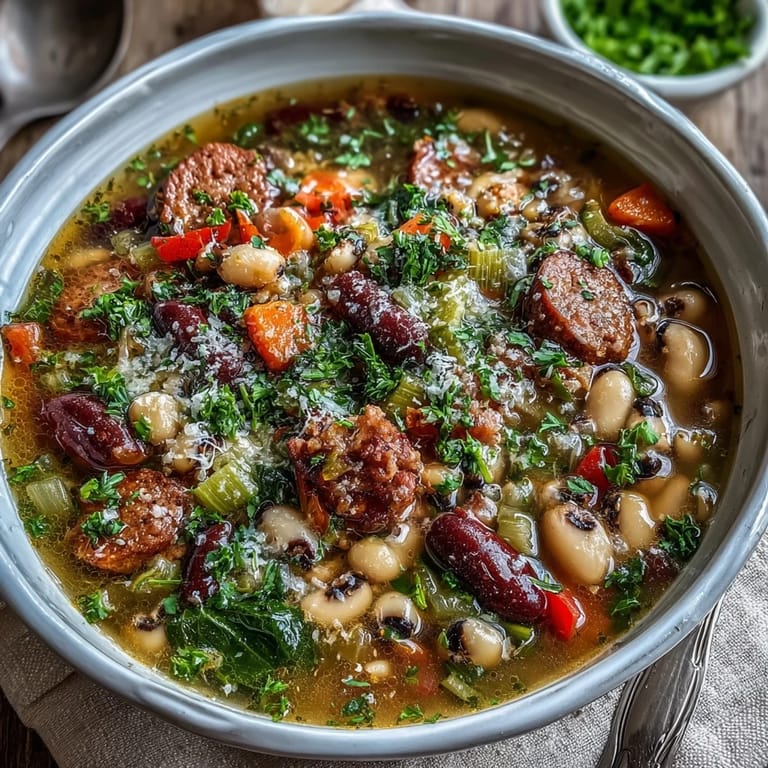
 This soup has become my answer when someone asks what I should bring or what I should make. It's the kind of dish that feels homemade in the truest sense—not complicated, but made with attention and served with warmth.
Recipe FAQs
- → Can I make this vegetarian?
Yes, simply omit the Italian sausage and use vegetable broth instead of chicken broth. Add extra vegetables or smoked paprika to maintain depth of flavor in the broth.
- → How do I store leftovers?
Store cooled soup in an airtight container in the refrigerator for up to 4 days. The flavors often improve overnight. Reheat gently on the stovetop, adding a splash of broth if needed.
- → Can I use dried black-eyed peas instead of canned?
Yes, soak 1 cup dried black-eyed peas overnight, then cook until tender before adding to the soup. This adds about 1-2 hours to preparation time but yields excellent texture.
- → What can I serve with this soup?
Crusty bread, cornbread, or garlic knots pair perfectly. For a heartier meal, serve over steamed rice. A light Chianti or Pinot Noir complements the rich flavors nicely.
- → Can I freeze this soup?
Absolutely. Cool completely, then freeze in portion-sized containers for up to 3 months. Thaw overnight in the refrigerator and reheat gently on the stovetop.
- → How can I make the soup thicker?
Mash about a cup of the black-eyed peas against the side of the pot before serving. This releases starch and creates a creamier, more substantial broth.