 Pin it
 Last Tuesday, I stood in my kitchen watching the afternoon sun pour through the window, and something clicked—I was tired of sad desk lunches that left me hungry by 3 p.m. So I grabbed four mason jars, some chickpeas, and whatever fresh herbs were still alive in my fridge, and built these layers like I was creating edible architecture. The first bite, with that bright citrus hitting the crisp cucumber, felt like a small rebellion against every depressing plastic container lunch I'd ever packed.
I brought these to a work potluck expecting polite nods, but watching my coworker shake the jar and actually smile while eating—not just surviving through lunch, but genuinely enjoying it—that's when I realized this wasn't just another salad recipe. It became the thing people asked me to bring to picnics.
Ingredients
- Extra-virgin olive oil (4 tbsp): Use the good stuff you actually enjoy tasting, because it's the backbone of everything here and poor quality oil makes a noticeable difference in how the dressing tastes.
- Lemon juice (2 tbsp fresh): Bottled will work in a pinch, but fresh squeezed keeps that brightness alive and prevents the salad from tasting muted after a day in the fridge.
- Orange juice (2 tbsp fresh): This is the secret weapon that makes people ask what's different about this dressing—it adds warmth without being sweet.
- Dijon mustard (1 tsp): The emulsifier that holds everything together and adds that subtle tang that makes your taste buds wake up.
- Garlic (1 clove, finely minced): Don't skip the mincing step; big chunks get harsh after sitting, but when it's fine it melds beautifully into the dressing.
- Fresh parsley (1 tbsp for dressing, plus more for topping): It brightens everything and honestly makes you feel like you're eating something special rather than just vegetables.
- Fresh mint (1 tbsp): This is optional in theory but transformative in practice—it adds a cooling note that makes the whole salad feel Mediterranean and intentional.
- Sea salt and black pepper: Taste as you go because you want enough to season everything properly but not so much that it becomes the main flavor.
- Cooked chickpeas (2 cups drained): If using canned, rinse them thoroughly because the liquid makes dressings taste metallic and weird.
- Cucumber (2 cups diced): Cut it into bite-sized pieces because uneven chunks look sloppy and make the jar wobble when you're layering.
- Cherry tomatoes (1 cup halved): These go in the middle layers where they won't crush everything else, and halving them prevents those weird bursts when you're eating.
- Red onion (1/2, finely diced): The acid in the dressing mellows it out over time, so don't panic that it tastes sharp when you're prepping—it actually becomes perfect.
- Red bell pepper (1 cup diced): This adds sweetness and crunch, and the color makes the jars look beautiful through the glass, which matters more than you'd think.
- Shredded carrots (1/2 cup): Buy them pre-shredded if you're short on time; they soften slightly by day three or four, which actually improves the texture of the whole salad.
- Fresh dill (1/4 cup chopped): This is where the Mediterranean feel really comes through—it's brighter than parsley and tastes almost coastal.
- Feta cheese (2 tbsp crumbled, optional): Leave it out for vegan, but if you use it, crumble it fresh into the jar rather than pre-crumbling because it stays drier that way.
Tired of Takeout? 🥡
Get 10 meals you can make faster than delivery arrives. Seriously.
One email. No spam. Unsubscribe anytime.
Instructions
- Make the dressing while you're thinking clearly:
- Pour olive oil into a small bowl or jar, add the citrus juices and mustard, and whisk until it starts to look slightly thicker and emulsified. Stir in the minced garlic, parsley, mint, salt, and pepper until everything is combined and smells absolutely alive with possibility.
- Layer like you mean it:
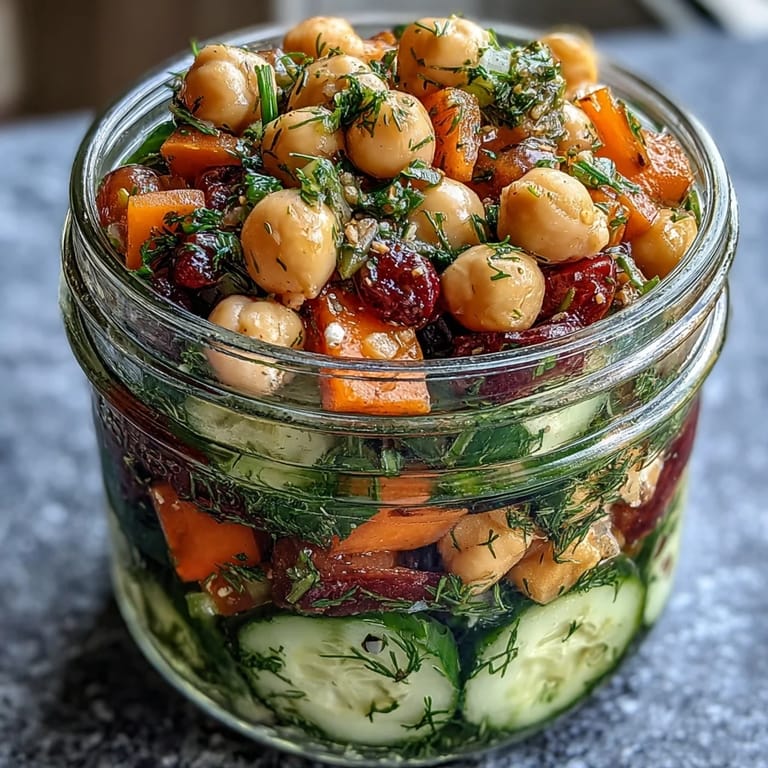
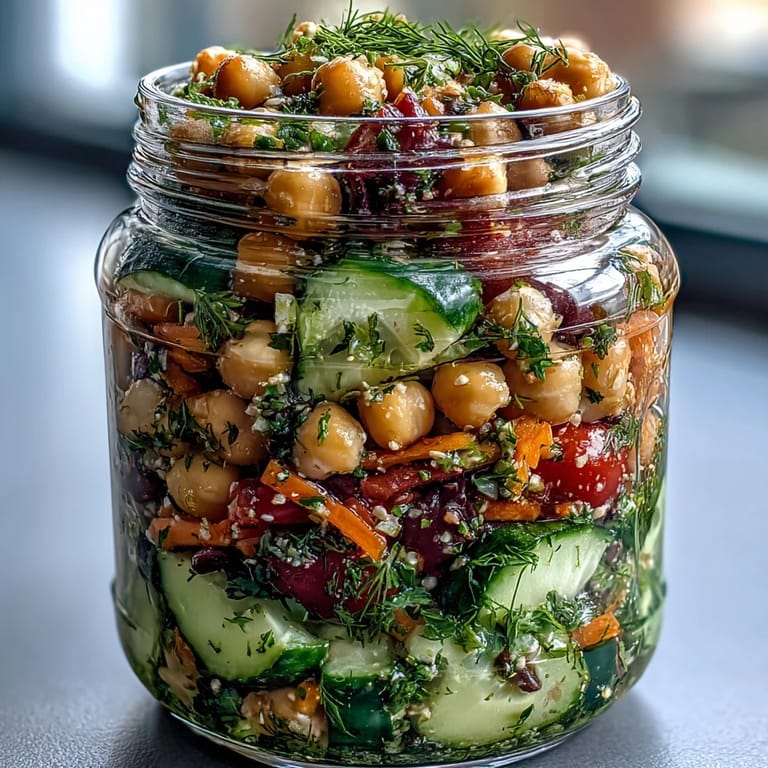
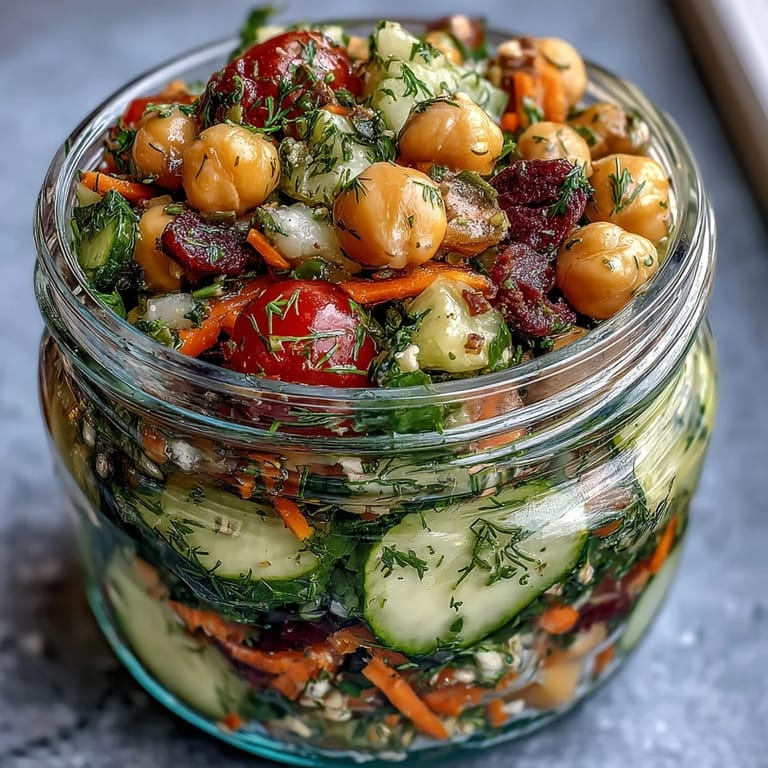
- Pour about 1.5 tablespoons of dressing into the bottom of each wide-mouth mason jar—this is crucial because the dressing sits at the bottom and keeps the vegetables fresh while they all marinate together. Add your chickpeas next (they can handle the moisture), then cucumber, bell pepper, red onion, tomatoes, and carrots in whatever order feels right—the point is that denser vegetables go lower and delicate herbs go on top where they stay bright.
- Crown your jars:
- Top each jar with a generous handful of fresh dill and parsley, and add crumbled feta if you're using it. Seal them tight and slide them into the fridge, where they'll get better over the next 24 hours as everything gets to know each other.
- Shake and eat:
- When you're ready to lunch, either shake the sealed jar until the dressing coats everything, or pour it into a bowl and toss gently so nothing gets crushed. Either way, you're about to eat something that took fifteen minutes to prepare but tastes like you actually cared.
 Pin it
 There was this moment when I realized I'd stopped buying sad desk salads from that place near the office, not because I was being virtuous, but because these jars genuinely tasted better and made my afternoon feel intentional. Food that makes you feel good about yourself, without the guilt—that's when you know you've found something worth keeping.
The Layering Strategy That Actually Works
The order matters more than it sounds because wet ingredients at the bottom keep everything hydrated while delicate herbs at the top stay vibrant and visible. I learned this by accident when I reversed the layers once and ended up with crushed parsley and sad cucumber by day two. Now I think of it like building a salad that respects each ingredient's strengths—the chickpeas love marinating, the cucumber needs some distance from the dressing, and the herbs need to stay fresh-looking because eating with your eyes first is half the experience.
Making It Your Own
The beauty of jar salads is that you can swap almost anything and they still work—I've used cilantro instead of dill when I had it, added avocado between layers (though it browns faster), and once threw in some shredded beets because I was feeling adventurous and it turned out beautifully. The citrus dressing is forgiving enough to work with different herb combinations, so don't feel locked into the exact recipe if your fridge has different ideas that day.
Storage and Beyond
These jars live happily in the refrigerator for up to four days, which means you can make them on Sunday and actually eat them Wednesday without them falling apart. The dressing keeps the ingredients preserved naturally, and by day three or four the flavors have deepened and married together in a way that's honestly better than day one. If you want extra volume or are serving this as a main course rather than a side, toss it over mixed greens or add some grilled chicken or tofu for protein that goes beyond the chickpeas.
- Make the dressing the night before if you're prepping in a rush, because it actually tastes better once the garlic has had time to settle in.
- Pack these in your bag the night before work and they'll stay cold for hours without needing an ice pack because mason jars are basically edible thermal technology.
- Double the dressing recipe and keep it in a jar in your fridge for the rest of the week because you'll want to pour it on other things.
 Pin it
 These jars have become my quiet win—the thing I'm known for at potlucks, the lunch I actually look forward to eating, the proof that healthy food doesn't have to taste like you're punishing yourself. That's worth fifteen minutes on a Sunday.
Recipe FAQs
- → How should I store the layered salad jars?
Keep the jars sealed tightly in the refrigerator for up to 4 days to maintain freshness and crispness.
- → Can I substitute the herbs used in the dressing?
Yes, basil or cilantro can replace parsley and mint to customize flavor according to preference.
- → How do I best mix the ingredients before eating?
Simply shake the jar vigorously to combine the dressing with the salad layers or pour contents into a bowl and toss gently.
- → Is it possible to add more protein to this dish?
Adding grilled chicken, tofu, or crumbled feta cheese can increase protein content and enhance flavor complexity.
- → What makes the dressing flavorful yet light?
The blend of freshly squeezed lemon and orange juices, garlic, Dijon mustard, and fresh herbs creates a bright and zesty dressing without heaviness.