 Pin it
 My cousin texted me three weeks before her graduation with a photo of a cake she'd pinned—all gold leaf and delicate flowers cascading down the sides. She didn't ask me to make it, but somehow I knew that's what she needed. I'd never worked with edible flowers before, and gold leaf felt intimidating, but something about the elegance of it pulled me in. That's when I learned that celebration cakes aren't just about taste; they're about the moment you set them down and watch someone's face light up.
I baked this cake at six in the morning on graduation day, the kitchen still quiet except for the mixer humming. My hands were shaking a little as I carefully placed each violet and pansy, worried I'd ruin something so beautiful. When my cousin walked in and saw it on the table, she didn't say anything for a moment—just stood there. That silence told me everything.
Ingredients
- All-purpose flour (2 1/2 cups): This is your structure, so don't sift it unless you like airy uncertainty; just whisk gently to combine with the baking powder.
- Baking powder (2 1/2 tsp): The lift that keeps your cake tender and cloud-like, not dense.
- Salt (1/2 tsp): A quiet ingredient that makes every other flavor sing louder.
- Unsalted butter (1 cup for cake, 1 1/2 cups for buttercream): Room temperature is non-negotiable; cold butter won't cream properly and will sabotage your texture.
- Granulated sugar (2 cups for cake, 1 1/4 cups for buttercream): The sweetness and structure that holds everything together.
- Large eggs (4 for cake, 5 for buttercream): Room temperature eggs incorporate better and create a lighter crumb; cold eggs are stubborn.
- Vanilla extract (1 tbsp for cake, 2 tsp for buttercream): The soul of this cake, so use good vanilla, not the imitation kind.
- Whole milk (1 cup): The moisture that keeps each crumb tender and prevents dryness.
- Edible gold leaf: Buy the real sheets, not the flakes; they're easier to apply and look infinitely more elegant.
- Edible flowers (pansies, violets, roses): Verify they're pesticide-free and grown specifically for eating; your local farmer's market or specialty grocer is your friend.
- Food-safe paintbrush: A soft brush helps you position gold leaf without mangling it.
Tired of Takeout? 🥡
Get 10 meals you can make faster than delivery arrives. Seriously.
One email. No spam. Unsubscribe anytime.
Instructions
- Prepare your workspace:
- Grease three 8-inch round pans and line the bottoms with parchment; this prevents sticking and makes removal clean. Preheat your oven to 350°F so it's ready when the batter is.
- Mix the dry ingredients:
- Whisk flour, baking powder, and salt together in a bowl; this distributes the leavening evenly so you don't get pockets of dense cake.
- Cream butter and sugar:
- Beat them together for about three minutes until the mixture is pale, fluffy, and looks like wet sand; this incorporates air that will lighten your cake. Listen to the mixer; when it sounds less aggressive, you're done.
- Add eggs carefully:
- One at a time is the rule; each egg needs to be fully incorporated before the next one arrives, or the batter gets greasy and unstable. Wait for the mixture to look smooth between additions.
- Alternate wet and dry:
- Start with the flour mixture, then milk, then flour again, mixing just until you can't see streaks of white; overmixing develops gluten and toughens the cake. The batter should look smooth but not dense.
- Divide and bake:
- Split the batter evenly among the three pans and smooth the tops so they bake evenly. Bake for 28 to 32 minutes until a toothpick comes out clean and the tops spring back when you touch them.
- Cool properly:
- Leave the cakes in the pans for ten minutes so they set, then turn them out onto wire racks to cool completely; rushing this step makes the layers fragile.
- Make the Swiss meringue buttercream:
- Whisk egg whites and sugar over simmering water until the sugar dissolves and the mixture reaches 160°F, which takes about five minutes and kills any bacteria concerns. The mixture should feel smooth to the touch, not grainy.
- Whip to stiff peaks:
- Transfer to a mixer and beat on high for eight to ten minutes until the bowl is cool and peaks stand tall when you lift the beater; this adds volume and stability. This is where patience pays off.
- Add butter gradually:
- Add butter a few cubes at a time on medium speed, which prevents the buttercream from breaking into greasy little flakes; if it starts looking curdled, don't panic, keep mixing and it'll come together. Finish with vanilla and a pinch of salt.
- Assemble the cake:
- Place the first layer on your serving plate, spread buttercream on top, repeat with the second and third layers, then coat the whole cake with a thin crumb coat and chill for twenty minutes. This seals in the crumbs so your final layer looks pristine.
- Apply the final frosting:
- Smooth the buttercream over the entire cake using an offset spatula and a gentle hand; this is where imperfections become character, not mistakes. Work in long strokes rather than short ones.
- Add the gold leaf:
- Use a soft paintbrush to carefully place sheets of edible gold leaf onto sections of the frosting; it sticks to the buttercream without adhesive, so be gentle. Work one section at a time so you don't smudge previous applications.
- Arrange the flowers:
- Position your edible flowers decoratively across the cake, tucking them into the frosting or laying them flat depending on the effect you want. Step back and look at it from different angles.
 Pin it
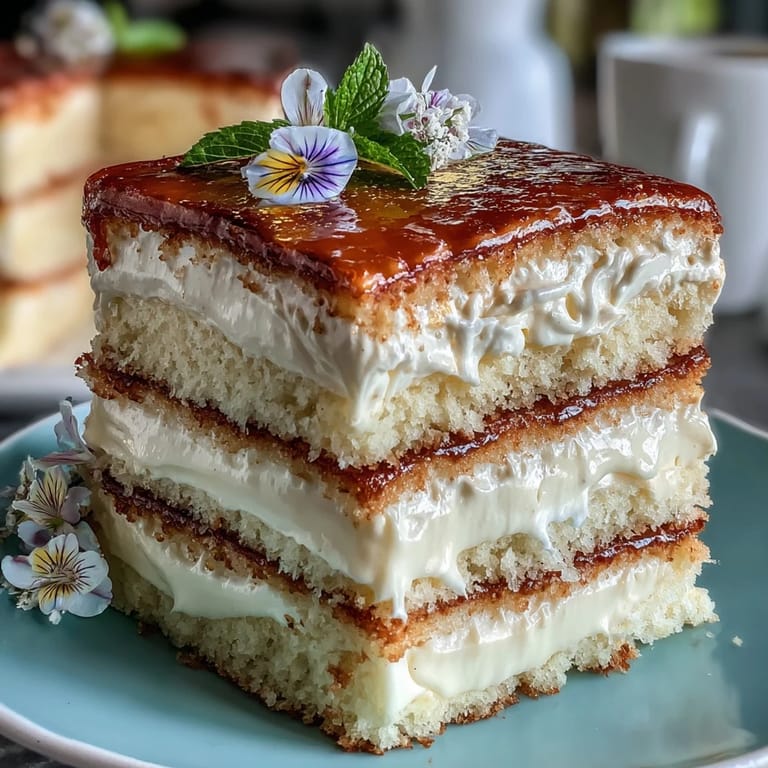
 I watched my cousin cut into that cake at the garden reception, and the vanilla sponge was golden and tender, the buttercream so smooth it slid across the plate like butter. That cake wasn't just dessert; it was proof that she'd accomplished something worth celebrating, something worth the care and intention.
Making the Buttercream Without Fear
Swiss meringue buttercream has a reputation for being temperamental, but it's really just about temperature and patience. The moment you're whisking the egg whites over the water, you're watching for the sugar crystals to dissolve completely, which feels like nothing's happening until suddenly it's smooth and warm. Once it's cool and fluffy, adding the butter is where most people hesitate, but if you do it slowly and trust the process, it transforms into something glossy and cloud-like. I used to think I needed to add all the butter at once, which created a greasy mess; now I know each cube needs time to integrate, and it's worth the extra two minutes.
Why Edible Flowers Matter
There's something about the realness of edible flowers that makes a cake feel less like a bakery product and more like a garden party. Pansies add soft, velvety texture and come in purples and whites; violets are delicate and slightly sweet; roses are classic and romantic. I learned the hard way that farmers market flowers aren't always edible, so now I ask directly and never assume. The flowers should be applied close to serving time, but seeing their real colors and imperfect beauty against the gold leaf is what transforms this from a nice cake into a moment.
Flavor Variations and Personal Touch
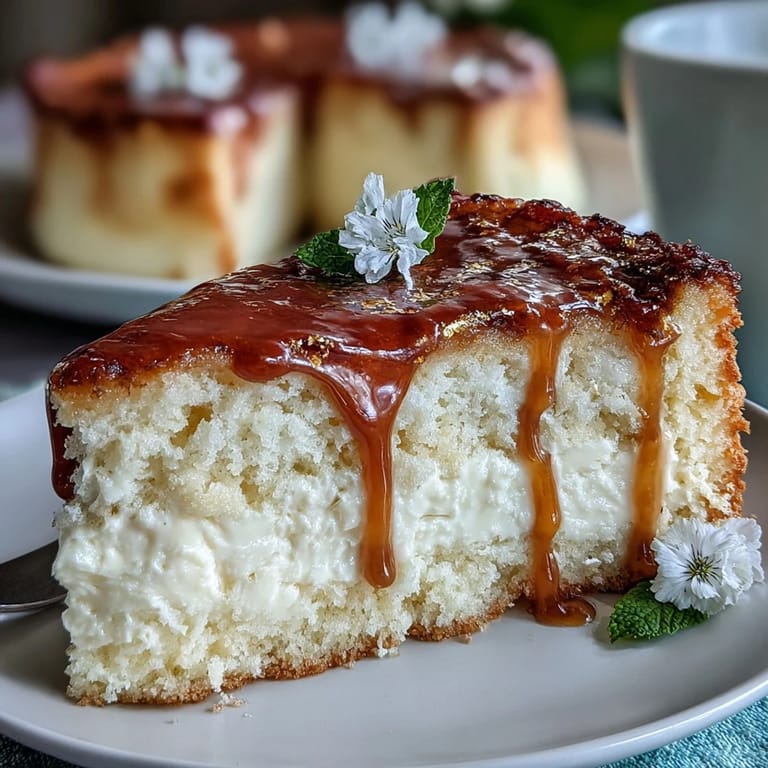
This cake is vanilla-forward, which is elegant and clean, but you can absolutely make it your own. If chocolate feels more celebratory, replace half a cup of flour with cocoa powder and reduce the milk slightly so the batter stays balanced. I've also added a quarter teaspoon of almond extract to the batter, which gives vanilla a mysterious depth that guests always try to identify. The buttercream can be infused too—a tablespoon of lemon zest, a teaspoon of rose water, or even crushed freeze-dried berries stirred in at the end add personality. The gold leaf and flowers are the canvas, but the flavor is where you tell the real story.
- Lemon or citrus zest in the buttercream brightens the whole cake without competing with the flowers.
- A light brush of simple syrup between layers keeps the sponge moist and prevents drying out.
- Gold dust mixed into the buttercream itself creates shimmer even on the hidden layers.
 Pin it
 This cake became something I make whenever someone needs to feel celebrated, and now it's become a tradition. The combination of soft vanilla, silky buttercream, and the unexpected luxury of gold and real flowers says what words sometimes can't: you matter, and your moment deserves beauty.
Recipe FAQs
- → What type of sponge is used in the cake?
A classic vanilla sponge made with all-purpose flour, butter, sugar, eggs, vanilla extract, and milk forms the base of the cake.
- → How is the buttercream made silky and smooth?
The Swiss meringue buttercream is prepared by heating egg whites and sugar, whisking to stiff peaks, then gradually folding in butter and vanilla for a creamy texture.
- → Are the flowers safe to use on the cake?
Only edible flowers grown without pesticides and labeled safe for consumption are used for decorative purposes.
- → How is the gold leaf applied to the cake?
Edible gold leaf sheets are carefully applied using a food-safe paintbrush to add a shimmering finish to the surface.
- → Can this cake be modified for chocolate lovers?
Yes, substituting half a cup of flour with cocoa powder creates a chocolate variation of the vanilla sponge.
- → What tools are needed for baking and decorating?
Essential items include 8-inch cake pans, electric mixer, mixing bowls, offset spatula, a food-safe paintbrush, and wire racks for cooling.