 Pin it
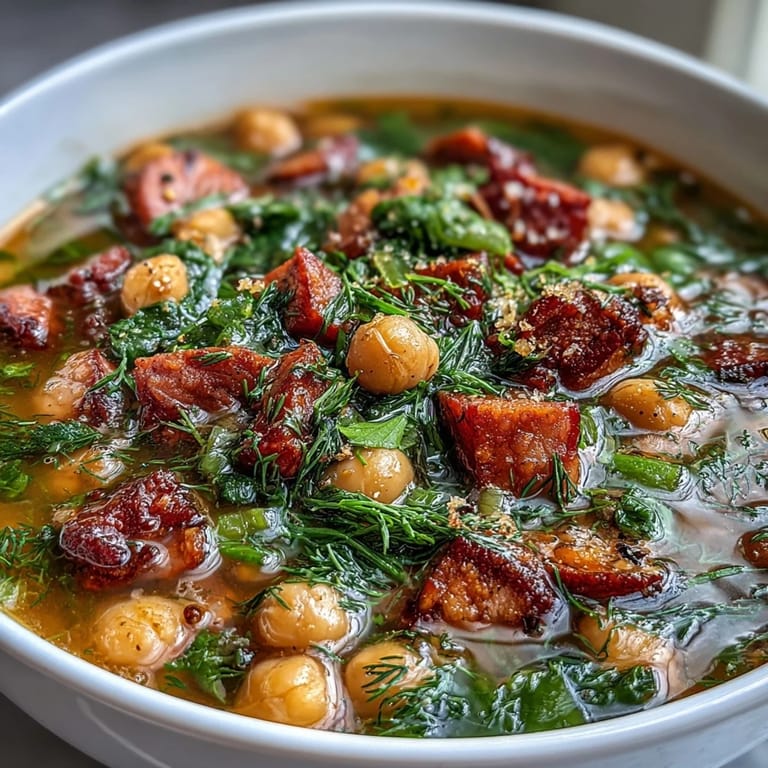
 My neighbor stopped by one autumn afternoon with a ham bone from Sunday dinner, asking if I had any ideas. That single gesture sparked an entire soup tradition in our kitchen—one where ham transforms into something warm and alive with lemon brightness. There's something magic about how a few pantry staples, some fresh herbs, and a little time can turn leftovers into something you'll actually crave on cold evenings.
I made this soup for my sister when she was going through a rough patch, and watching her face soften at that first spoonful reminded me why I cook at all. She asked for the recipe that night, and now it's become her go-to when she needs something that tastes like hope. Food has this quiet power to say what words sometimes can't.
Ingredients
- Cooked ham, diced (250 g or about 9 oz): This is your umami anchor—don't skip quality ham here, and if you only have a ham bone, simmer it in the broth first for deeper flavor.
- Chickpeas, drained and rinsed (1 can, 400 g or 14 oz): Rinsing them removes that tinny taste and keeps your broth clear and clean.
- Onion, finely chopped (1 medium): The flavor foundation—take your time softening it in the oil, as this builds everything that comes after.
- Carrots, diced (2 medium): They sweeten the pot gently and give you something substantial to chew on.
- Celery stalks, diced (2): Often overlooked, but celery is what makes this taste like real soup rather than broth with stuff in it.
- Garlic cloves, minced (2): Bloom this in the hot oil for just a moment—rushing it or burning it changes everything.
- Low-sodium chicken or vegetable broth (1.2 liters or 5 cups): Use vegetable broth if you're skipping ham, and taste as you go since broths vary wildly in salt.
- Olive oil (2 tbsp): Good oil makes a difference in the opening sauté—this is where the flavor starts.
- Lemon juice and zest (from 1 lemon): The zest adds perfume, the juice adds punch—both matter equally.
- Fresh dill, finely chopped (2 tbsp, plus extra for garnish): Dill is delicate, so add most of it at the end to keep its brightness from cooking away.
- Bay leaf (1): Subtle but essential for depth—don't forget to fish it out before serving.
- Dried thyme (1/2 tsp): A whisper of earthiness that ties everything together.
- Salt and freshly ground black pepper: Taste constantly throughout cooking and adjust at the very end.
Tired of Takeout? 🥡
Get 10 meals you can make faster than delivery arrives. Seriously.
One email. No spam. Unsubscribe anytime.
Instructions
- Build your base:
- Heat olive oil in a large soup pot over medium heat, then add onion, carrots, and celery. You're looking for soft edges and translucent onions after 5 to 6 minutes—the moment they smell sweet rather than sharp, you're ready to move on.
- Wake up the garlic:
- Stir in minced garlic and let it toast for just one minute until the kitchen smells incredible. This is your signal to keep moving—garlic burns faster than you'd think.
- Introduce the ham:
- Add diced ham and stir it around the pot for 2 to 3 minutes, letting it warm through and infuse the oil with its flavor. You're not cooking the ham here, just getting it acquainted with everything else.
- Bring it together:
- Pour in broth, add drained chickpeas, bay leaf, and thyme. Bring everything to a boil, then lower the heat and let it simmer gently for 20 minutes—this is when the flavors start marrying and the soup develops personality.
- Add the brightness:
- Remove the bay leaf, then stir in lemon juice, lemon zest, and fresh dill. Taste it now—this is when you adjust salt and pepper because lemon and salt are partners. Simmer for 2 to 3 more minutes just to let everything get acquainted.
- Serve with intention:
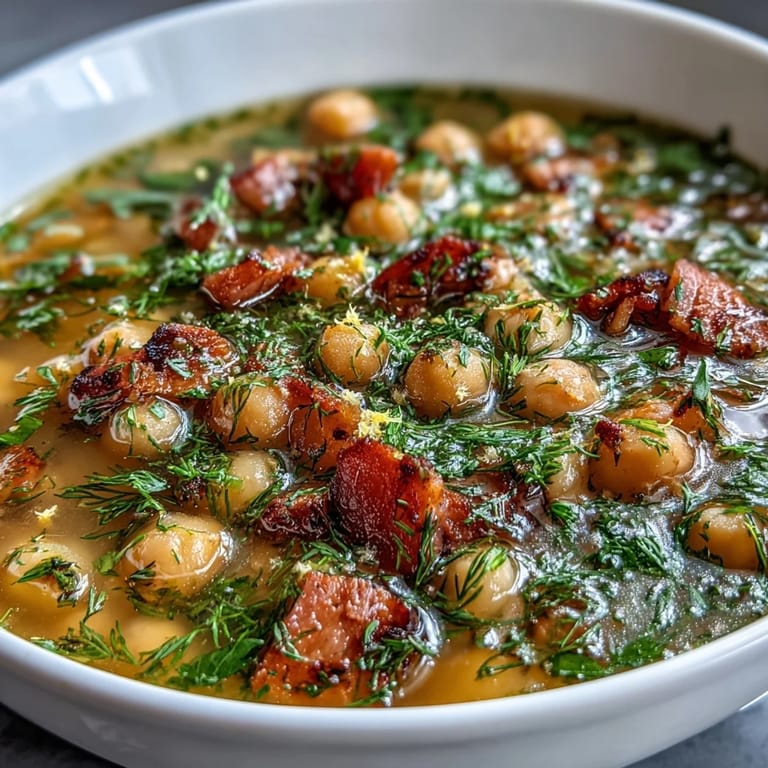
- Ladle into bowls and finish with a small handful of fresh dill on top. The heat releases the herb's aroma right at the moment someone brings the spoon to their mouth.
 Pin it
 My son came home from school one day and walked straight to the stove without even taking off his backpack, asking if that was the soup I'd mentioned. He ate three bowls and never once mentioned his homework—I'll take that as a win. Sometimes the best meals are the ones that make people forget they have somewhere else to be.
When to Make This Soup
This soup is perfect on those unpredictable autumn days when the morning is warm but the evening needs a sweater. It's also ideal when you're feeding a group but don't want to spend your entire day cooking, or when you need something that tastes thoughtful without being complicated. Spring works too—the lemon and dill feel especially right when everything around you is coming back to life.
Variations That Actually Work
If you're vegetarian, skip the ham entirely and use vegetable broth—the lemon and dill are flavorful enough that you won't miss the meat, though smoked paprika adds a lovely savory note if you want it. Swap ham for smoked turkey or roasted chicken if you want something lighter, or add a handful of spinach at the very end for color and nutrition without changing the character of the soup. I once threw in diced potatoes instead of some of the chickpeas and it became something entirely new but equally wonderful—proof that this soup is flexible enough to adapt to what's actually in your kitchen.
Serving and Pairing Ideas
Crusty bread is non-negotiable here—something with a crispy exterior that can handle being dunked without falling apart. A crisp white wine like Sauvignon Blanc works beautifully if you're in that mood, but honestly, a cold glass of water or something warm to sip between spoonfuls is equally perfect. The soup itself is complete enough to stand alone, but if you want to add something, keep it simple and bright.
- Serve it in wide bowls rather than tall ones so the garnish of fresh dill stays visible and aromatic.
- Make it ahead and reheat gently—it actually tastes better the next day after flavors have had time to get to know each other.
- Freeze it without the lemon juice, then add fresh lemon when you reheat, so the brightness doesn't fade during storage.
 Pin it
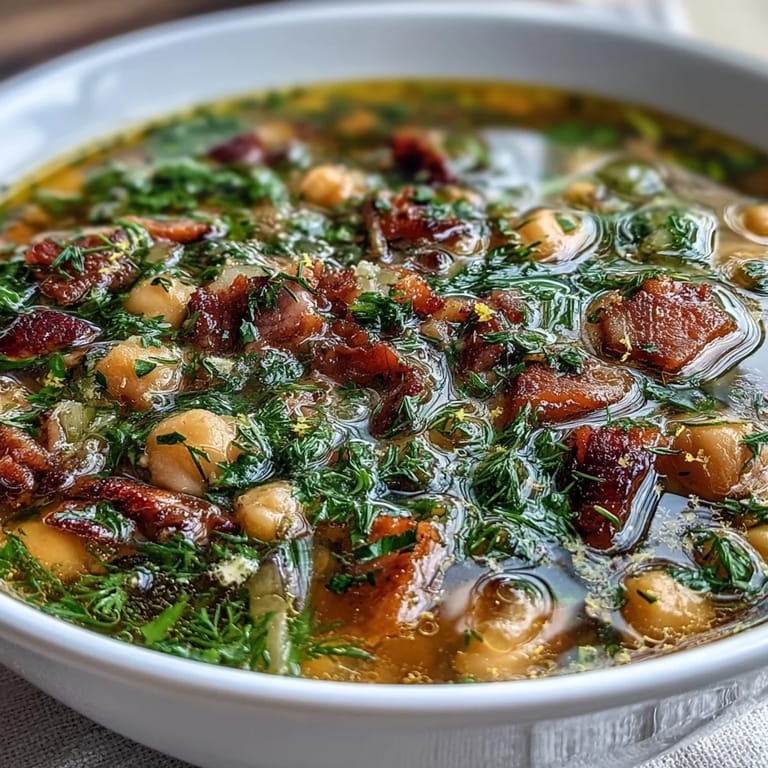
 This soup has become my answer to so many kitchen questions: What do I make when time is short? When I want comfort without heaviness? When I need to feed people something that tastes like I care? That's the kind of recipe worth making again and again.
Recipe FAQs
- → Can I substitute the ham with another protein?
Yes, smoked turkey or other cooked meats work well, or omit meat for a vegetarian option using vegetable broth.
- → How can I thicken the soup?
Mash some chickpeas before adding to the pot to create a creamier texture without extra ingredients.
- → What herbs enhance the flavor best?
Fresh dill adds brightness while bay leaf and thyme contribute subtle depth to the broth.
- → Is lemon juice added before or after cooking?
Lemon juice and zest are stirred in near the end to preserve their fresh, zesty flavor.
- → What side pairs well with this dish?
Crusty bread and a crisp white wine, like Sauvignon Blanc, complement the flavors perfectly.