 Pin it
 I discovered the Infinity Loop Flow on a quiet evening in a small Copenhagen restaurant, where the chef plated salmon and vegetables in an elegant figure-eight that seemed to dance across white porcelain. The moment I tasted it, I realized this wasn't just beautiful to look at—each bite was a deliberately choreographed journey of flavors. I came home that night determined to recreate it, and after a few attempts, I found that this dish became my meditation in the kitchen, a reminder that food can be both nourishing and art.
The first time I made this for my sister's birthday dinner, I was nervous about the plating. But as I arranged that first figure-eight of couscous, something clicked. By the time I nestled the salmon flakes into place and scattered those toasted pine nuts, she walked in and actually gasped. That's when I knew this dish had become more than a recipe—it was a way to show people I cared through the language of flavor and presentation.
Ingredients
- Fresh salmon fillets (300 g): The star of this dish—buy from a fishmonger if you can and ask for skinless fillets. Salmon's richness plays beautifully against the bright vegetables, and it cooks so quickly that timing is forgiving.
- Pearl couscous (1/2 cup): Unlike regular couscous, pearl couscous has a slight chew and holds the yogurt dressing better. It's the structural foundation of your figure-eight.
- Zucchini, carrot, and fennel: Slice these paper-thin—a mandoline is your friend here. The blanching step matters because it sets the color and softens them just enough without turning them to mush.
- Baby spinach (1 cup): Fresh and unwilted, these leaves tuck beautifully into the curves of your design and add an earthy contrast to the sweetness of the other vegetables.
- Greek yogurt (2 tbsp): This becomes your creamy anchor. The lemon zest and dill transform it from plain to something that tastes like you've been stirring it for hours.
- Lemon zest, fresh dill, capers, and toasted pine nuts: These are your finishing details, the ones that make someone lean in and really taste what's in front of them.
- Vegetable broth (1 cup): Use good quality broth—it's what flavors the couscous foundation.
- Olive oil, salt, and black pepper: Never skip seasoning the salmon itself. It makes all the difference.
Tired of Takeout? 🥡
Get 10 meals you can make faster than delivery arrives. Seriously.
One email. No spam. Unsubscribe anytime.
Instructions
- Heat your oven and set the stage:
- Preheat to 180°C (350°F). This temperature is gentle enough to cook salmon through without drying it out. While it's heating, gather all your ingredients and arrange them near your workspace. You're about to orchestrate several components that come together at different times, so having everything ready means you can focus on the artistry of assembly.
- Coax the couscous to fluffy perfection:
- Bring your vegetable broth to a rolling boil in a small saucepan, then stir in the pearl couscous. Once it returns to a boil, reduce the heat low, cover, and let it simmer gently for 10 minutes. The couscous will absorb all that flavorful broth. When the time's up, fluff it with a fork—you'll feel the individual grains separate. This is your foundation, so let it cool slightly before plating.
- Blanch vegetables to preserve their jewel tones:
- Bring a pot of salted water to a boil and gently lower in your thinly sliced zucchini, carrot, and fennel. You're not cooking them, just kissing them with heat for 1–2 minutes until they're tender-crisp. The moment they feel slightly soft, fish them out with a slotted spoon and plunge them into an ice bath. This stops the cooking and sets their color so they stay vibrant on the plate. Pat them completely dry with paper towels—any excess water will blur your arrangement.
- Bake the salmon until it flakes like snow:
- Pat your salmon fillets dry with paper towels, then rub them gently with olive oil and season generously with salt and pepper. Place them on a parchment-lined baking tray and slide into the oven. You're looking for 12–15 minutes, until the fish is just cooked through—you'll know it's ready when it flakes easily with a fork and the center is opaque. Don't overcook it. Let it cool for a minute, then gently break it into large, beautiful flakes with your fingers or a fork. These pieces will nestle into your figure-eight.
- Create your yogurt dressing:
- In a small bowl, combine the Greek yogurt with lemon zest and finely chopped fresh dill. Stir gently until evenly combined. Taste it—you might want a tiny pinch more salt. This creamy mixture is your flavor anchor, the thing that ties all the disparate elements together into a cohesive bite.
- Arrange your infinity loop with intention:
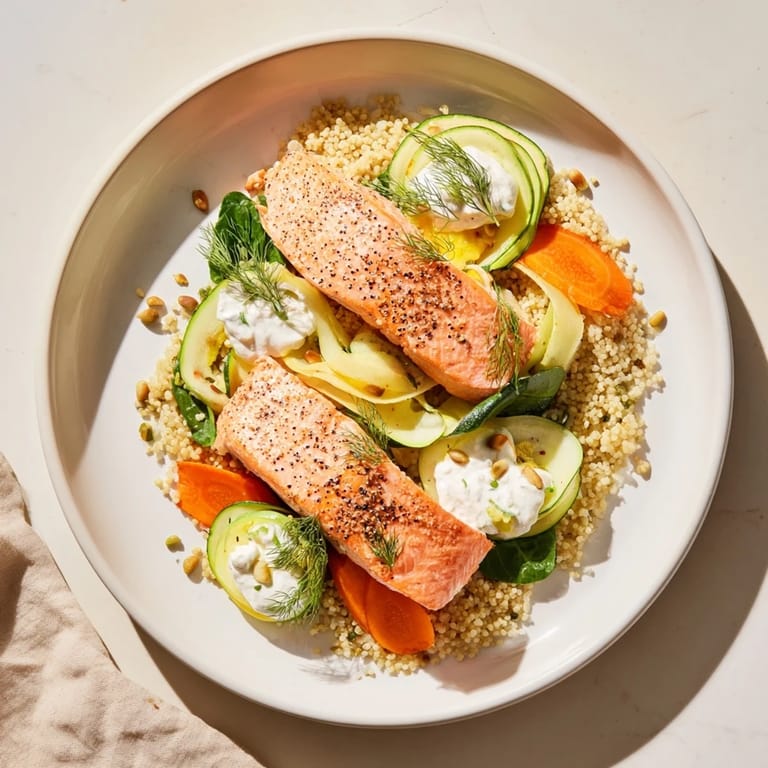
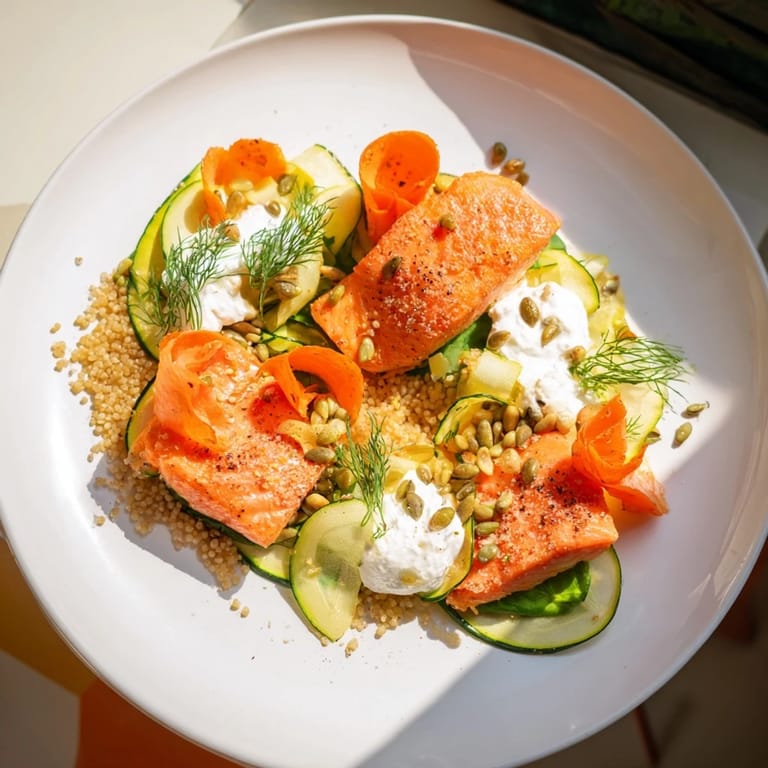
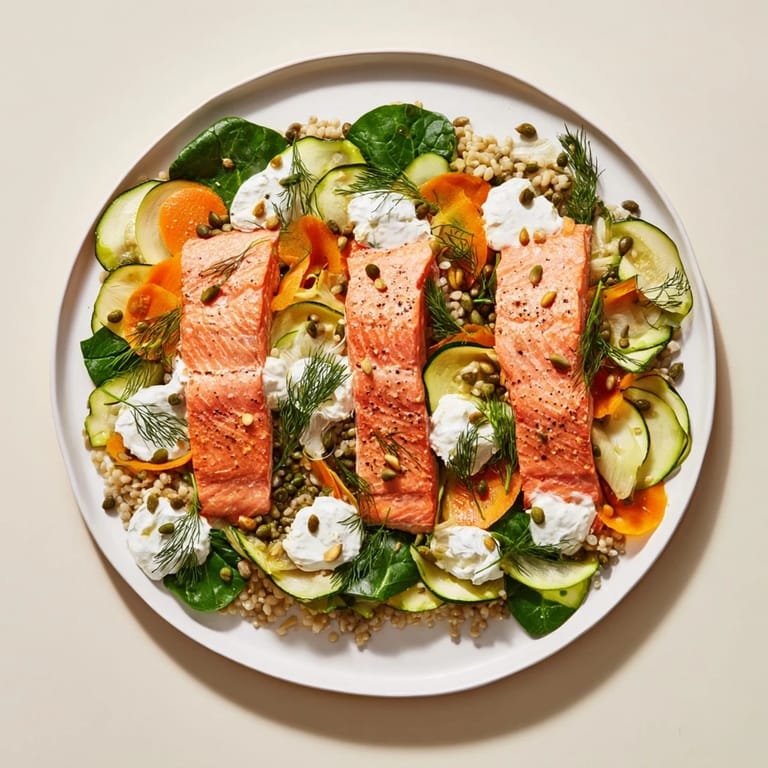
- On a large platter, spoon the pearl couscous in a graceful figure-eight pattern, creating two connected loops. Now, take a breath and slow down. Along this couscous foundation, arrange your blanched vegetable slices, alternating colors—zucchini green, carrot orange, fennel white—following the curves of your figure-eight. Tuck the baby spinach leaves between the vegetables, letting them drift naturally. Now comes the salmon: nestle those beautiful flakes into the curves and crevices of the couscous. Dot small spoonfuls of the yogurt dressing at strategic points—think of these as punctuation marks. Finally, scatter the rinsed capers and toasted pine nuts over the entire composition. Step back and look at it. You've just created something beautiful.
- Serve with ceremony:
- Bring the platter to the table so everyone can see your creation before you plate it. When you do plate individual portions, try to capture the entire journey of the figure-eight on each plate, so everyone tastes that seamless transition from one element to the next. Serve immediately while the couscous is still warm and the vegetables are at their peak crispness.
 Pin it
 There was a moment during that birthday dinner when the table fell quiet except for the soft sounds of forks and small delighted sighs. No one was talking because they were too busy savoring each bite, and I realized that's when food becomes memory. This dish stopped being about technique and started being about connection.
The Philosophy Behind the Figure-Eight
The infinity symbol isn't just a pretty visual—it's actually a meditation on how to think about plating. When you arrange food in a continuous loop, you're not just feeding people, you're inviting them into a conversation where every element matters equally. The figure-eight ensures that no single ingredient dominates; instead, they dance together. This approach has changed how I think about cooking entirely. I now see every plate as an opportunity to tell a small story, and this dish is my favorite story to tell.
Pairing and Timing Wisdom
The beauty of this dish is that nearly every component can be prepared in advance, and the final assembly takes only a few minutes. I usually prepare the couscous and vegetables an hour or two before serving, keep them at room temperature, and cook the salmon only 15 minutes before plating. This means you're not stressed in the kitchen right as your guests arrive—you're calm and present. The crisp Sauvignon Blanc or light Pinot Gris mentioned in the original notes truly complements this dish because neither wine overshadows the delicate salmon or the bright vegetables. The acidity in the wine cuts through the richness of the yogurt dressing beautifully.
Variations and Personal Touches
Once you've made this dish once or twice, you'll start seeing it as a template for your own creativity. I've made it with thinly sliced radishes and roasted beets for extra earthiness, and I've substituted trout for salmon on nights when that's what looked beautiful at the market. The couscous can be swapped for farro if you want more texture, or even a very thin risotto if you're feeling ambitious. The point is to keep the philosophy—a lovely grain foundation with vegetables and protein arranged with intention—and make it yours. That's when a recipe becomes a practice, and a practice becomes part of who you are as a cook.
- Try adding a very thin slice of radish or roasted beet for earthy sweetness and extra color contrast.
- Substitute the salmon with fresh trout or cod if that's what calls to you or what your fishmonger recommends.
- Experiment with different herbs in your yogurt dressing—chives, tarragon, or a combination can completely shift the flavor profile.
 Pin it
 The Infinity Loop Flow taught me that some of the most memorable meals aren't the most complicated ones—they're the ones made with attention and love. I hope this dish becomes something you return to again and again, each time adding your own small flourishes until it feels like yours.
Recipe FAQs
- → How do I cook the salmon for this dish?
Rub salmon fillets with olive oil, season with salt and pepper, then bake at 180°C (350°F) for 12-15 minutes until just cooked through. Let cool slightly before flaking.
- → What is the best way to blanch the vegetables?
Briefly boil thin slices of zucchini, carrot, and fennel in salted water for 1-2 minutes. Drain and immediately cool in ice water to preserve color and texture.
- → How do I prepare the pearl couscous base?
Simmer pearl couscous in vegetable broth for 10 minutes until tender, then fluff with a fork and set aside for plating.
- → What ingredients create the dressing?
The dressing combines Greek yogurt, lemon zest, and fresh dill, which adds a creamy, tangy note without overpowering the other components.
- → Can I substitute the fish in this dish?
Yes, trout or cod can replace salmon depending on preference without changing the overall flavor profile significantly.