 Pin it
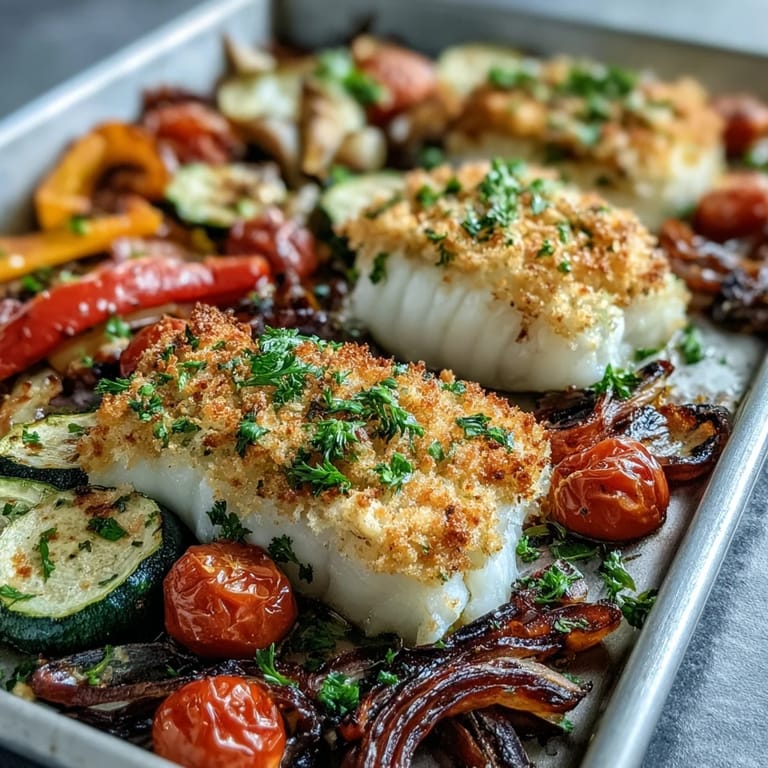
 There's something about the sound of a sheet pan sliding into a hot oven that makes weeknight dinner feel almost effortless. My neighbor mentioned offhandedly that she'd been making this Parmesan-crusted cod lately, and I was skeptical at first—wouldn't the cheese just burn? But that first night when I pulled it out, the crust had turned this deep golden amber, crispy at the edges but still tender where it met the fish, and the whole kitchen smelled like a rustic Italian seaside restaurant. Now it's become my go-to move when I want something that looks restaurant-quality but requires almost no fuss.
I made this for my sister last month when she was stressed about a presentation, and watching her face when she tasted it was worth more than any compliment. She kept asking what fancy restaurant I'd secretly ordered from, and I got to admit sheepishly that it took me less time than her drive home from work. That's when I realized this dish isn't just about feeding people—it's about giving them a moment where they feel genuinely cared for without anyone breaking a sweat.
Ingredients
- Cod fillets: You want them skinless and boneless, and roughly equal in thickness so they cook evenly; if your fillets vary wildly, pound the thicker ones slightly to level things out.
- Panko breadcrumbs: Regular breadcrumbs get dense and soggy, but panko stays light and crispy; the larger flakes are the secret to that texture you're after.
- Parmesan and Asiago cheese: The combination of these two gives you depth—Parmesan brings the sharp, umami punch while Asiago adds a creamy nuttiness that softens it.
- Fresh parsley: This isn't just for looks; it adds a brightness that cuts through the richness of the cheese and helps the whole thing taste fresh rather than heavy.
- Garlic powder and paprika: Keep these measured carefully because they can easily overpower the delicate fish if you're heavy-handed.
- Olive oil: Use extra virgin for drizzling on the vegetables, but regular olive oil works fine for mixing with the coating since heat breaks down the subtler flavors anyway.
- Bell peppers, zucchini, and onion: Choose vegetables that are roughly the same size when cut so they finish roasting at the same moment; smaller pieces caramelize faster.
- Cherry tomatoes: Halving them keeps them from rolling around the pan and helps their natural sweetness concentrate in the oven.
Tired of Takeout? 🥡
Get 10 meals you can make faster than delivery arrives. Seriously.
One email. No spam. Unsubscribe anytime.
Instructions
- Set up your stage:
- Crank your oven to 220°C and line a large sheet pan with parchment paper—this prevents sticking and makes cleanup almost laughably easy. A hot oven is essential because you want that crust to brown quickly and the vegetables to caramelize without everything turning dry.
- Build the coating:
- In a mixing bowl, combine panko, both cheeses, parsley, garlic powder, paprika, pepper, and salt, then drizzle in the olive oil and mix with your fingers until it looks like coarse wet sand. This oil is what keeps the coating from burning and helps it adhere to the fish rather than sliding off in the oven.
- Prepare your fish:
- Lay the cod fillets on one side of the sheet pan and pat them absolutely dry with paper towels—any moisture on the surface prevents the coating from sticking properly. Give each fillet a light brush of olive oil, which creates a sticky surface for the cheese-panko mixture to cling to.
- Press on the crust:
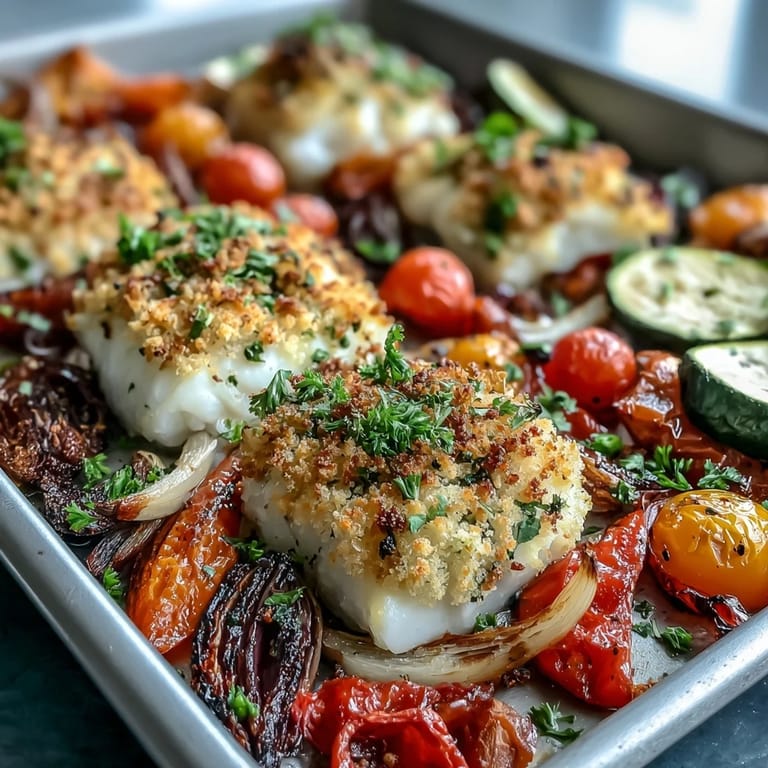
- Take a generous handful of the cheese mixture and press it firmly onto the top of each fillet, using the heel of your hand to really encourage it to adhere. Don't be timid here; you want a thick, confident layer that will turn golden and crispy.
- Prepare the vegetables:
- Toss your sliced peppers, zucchini, onion, and tomato halves in a bowl with olive oil, oregano, salt, and pepper, then spread them in a single layer on the empty side of the pan. Arrange them so they have breathing room and aren't piled on top of each other, which helps them brown rather than steam.
- Roast everything together:
- Slide the whole pan into your hot oven and set a timer for 20–25 minutes, depending on the thickness of your fillets. The fish is done when it's opaque all the way through and flakes easily with a fork, and the vegetables should have charred edges and softened centers.
- Finish and serve:
- Pull the pan out carefully and let everything rest for just a minute so the crust sets firm. Plate it up right away while the textures are still crisp and the vegetables are still warm, and if you want to be fancy, garnish with a squeeze of fresh lemon.
 Pin it
 The moment that really solidified this as a keeper was when my teenager, who usually protests anything vaguely healthy, asked me to make it again the very next week. Food has this quiet power to shift a mood or bring people back to the table, and this dish does exactly that without any pretense or fuss.
Why This One-Pan Approach Wins
There's real wisdom in cooking the fish and vegetables together on a single sheet pan. The fish gently perfumes the vegetables with its delicate briny notes while they roast, creating this subtle flavor conversation that wouldn't happen if you cooked them separately. Plus, from a practical standpoint, you're looking at one pan to wash and maybe two mixing bowls—the time you save on cleanup is time you get back in your evening, which honestly matters more than most recipes acknowledge.
The Secret of That Crispy Crust
The panko-cheese crust works because of a few small choices working in harmony. The oil mixed into the coating keeps it from drying out or burning, while the panko itself has larger flakes than regular breadcrumbs, which means it stays light and textured rather than becoming a dense, soggy paste. The Asiago brings a creaminess that prevents the Parmesan from being too sharp and one-note, and the parsley adds a subtle freshness that makes you taste everything rather than just cheese.
Timing, Temperature, and When to Trust Your Instincts
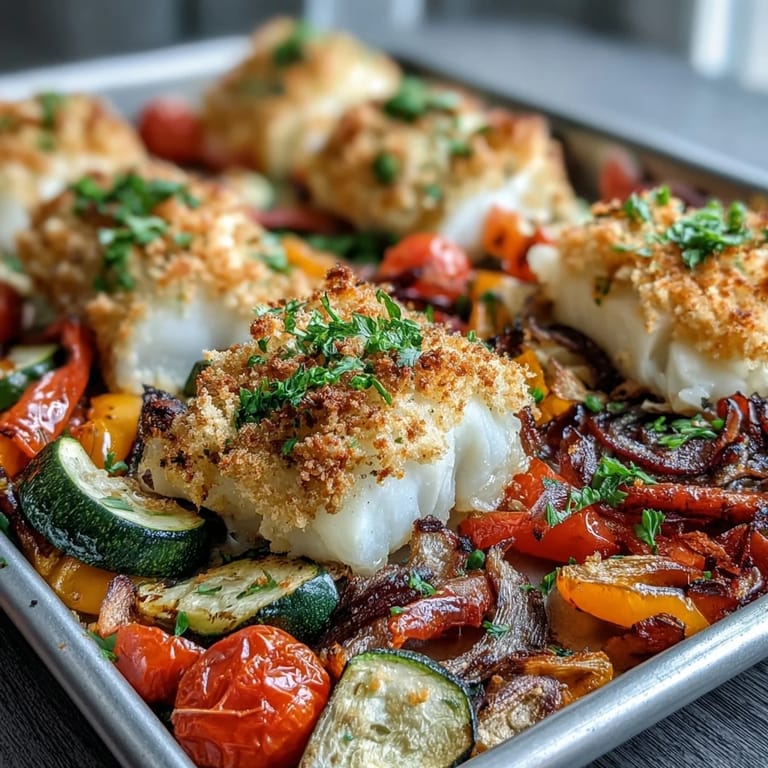
Oven temperatures vary wildly, and I've learned not to blindly follow the timer but to actually watch and listen. At around the 20-minute mark, peek in—you're looking for the fish to have that deep golden-brown crust on top and the vegetables to have slightly darkened, charred edges. If your oven runs cool, give it an extra few minutes; if it runs hot, you might be done closer to 20 minutes.
- The fish is done when it flakes easily with a fork and the flesh has turned opaque all the way through, not when the crust reaches a certain color.
- Your vegetables don't need to be perfectly soft; a little resistance when you bite into them means they've caramelized rather than turned mushy.
- A squeeze of fresh lemon juice right before serving brightens everything and cuts through the richness of the cheese in a way that feels almost essential.
 Pin it
 This is the kind of dinner that reminds you why cooking at home matters: it's fast enough for a Tuesday night but elegant enough that you don't feel like you've settled. Every time I make it, I'm grateful for how something this simple manages to feel a little special.
Recipe FAQs
- → Can I use different fish for this dish?
Yes, you can substitute cod with haddock, tilapia, or any other mild white fish fillets that hold their shape well during roasting.
- → How do I know when the fish is done?
The fish is ready when it flakes easily with a fork and the crust is golden brown. The internal temperature should reach 145°F (63°C).
- → Can I make this gluten-free?
Yes, simply replace regular panko breadcrumbs with gluten-free panko or crushed cornflakes for the coating mixture.
- → What vegetables work best in this dish?
Bell peppers, zucchini, red onion, and cherry tomatoes roast beautifully together. You can also add asparagus, broccoli florets, or Brussels sprouts.
- → Can I prepare the coating ahead of time?
You can mix the cheese-panko coating up to a day in advance and store it in an airtight container in the refrigerator until ready to use.