 Pin it
 I discovered the magic of pesto chicken wraps on a Tuesday when I had leftover rotisserie chicken and a pot of basil pesto that had been sitting in my fridge, slowly darkening. My roommate was coming over for lunch with barely thirty minutes' notice, and I realized I could turn those simple ingredients into something that tasted far more intentional than it actually was. That moment taught me that the best meals often come from working with what you have, not waiting for a perfect grocery list.
The first time I made these wraps for a group, I was catering a small picnic, and I remember the nervous moment just before serving when I realized I'd made them all an hour early and worried they'd get soggy. They didn't—something about the pesto and cheese holding everything together meant they stayed crisp and fresh. That's when I understood these wraps weren't just convenient; they were reliable.
Ingredients
- Cooked chicken breast: Two cups shredded or sliced gives you enough protein to feel substantial without overwhelming the wrap. If you don't have leftovers, rotisserie chicken saves time and adds flavor you won't get from boiled chicken.
- Basil pesto: A third cup is the sweet spot—enough to coat everything and taste vivid, but not so much it becomes overwhelming. Store-bought is fine; homemade is a joy if you have fresh basil.
- Shredded mozzarella: Half a cup melts slightly from the warm chicken and creates little pockets of creaminess. Fresh mozzarella can be torn into pieces if that's what you have.
- Baby spinach: Use it as your base layer; it wilts just slightly from the warm chicken and adds a quiet earthiness.
- Tomato: One medium tomato, sliced thin—the moisture and acidity brighten everything. A slightly underripe tomato holds its shape better than one that's completely soft.
- Red onion: Half a small one, sliced thin, adds a sharp snap that cuts through the richness. Don't skip it thinking it's optional.
- Roasted red peppers: These are optional but honestly worth seeking out; they add sweetness and a silky texture that elevates the whole wrap.
- Large flour tortillas: Ten-inch wraps give you enough surface area to layer everything without overstuffing. If they're cold and brittle, warming them makes all the difference.
- Salt and black pepper: Finish with both because the other flavors will seem flat without this final seasoning.
Tired of Takeout? 🥡
Get 10 meals you can make faster than delivery arrives. Seriously.
One email. No spam. Unsubscribe anytime.
Instructions
- Mix the chicken with pesto:
- In a medium bowl, combine your chicken with the pesto and toss until every piece is coated. This is where the flavor happens—don't be shy about mixing; you want that basil and garlic reaching every bite.
- Warm your tortillas:
- Place them in a dry skillet for ten to fifteen seconds per side, or microwave them wrapped in a damp towel. A warm tortilla is flexible and forgiving; a cold one tears and fights you.
- Build your wrap:
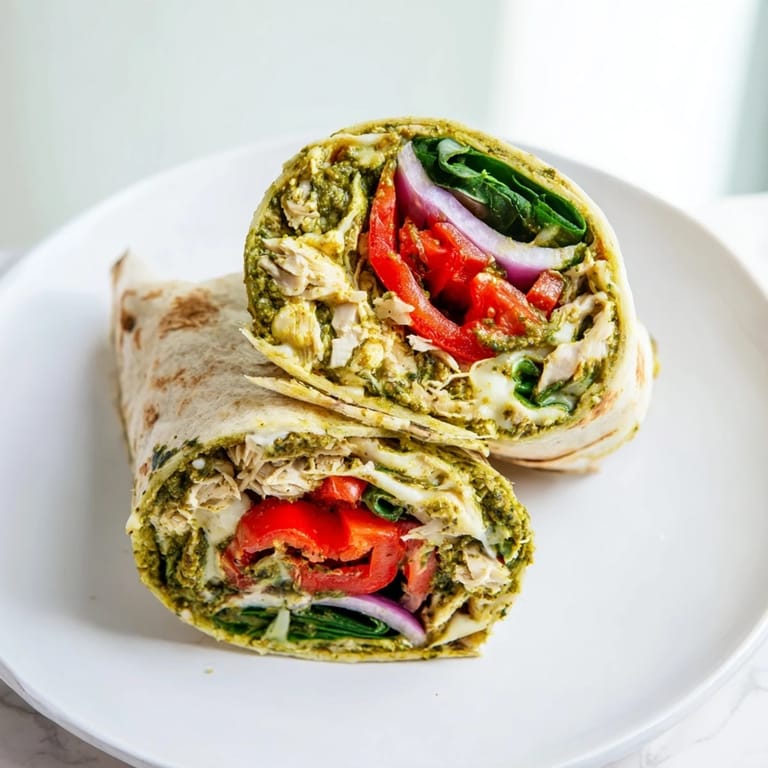
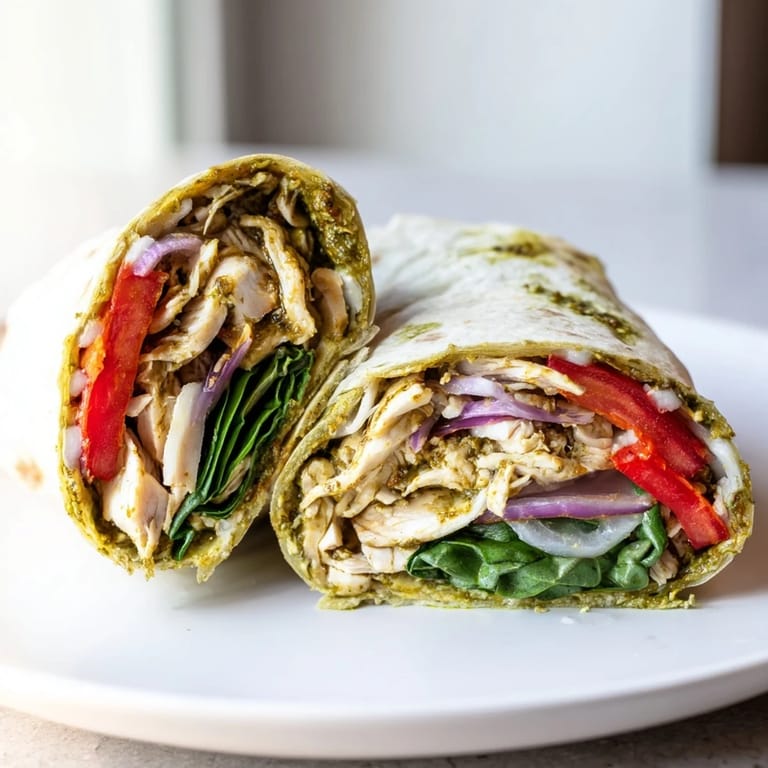
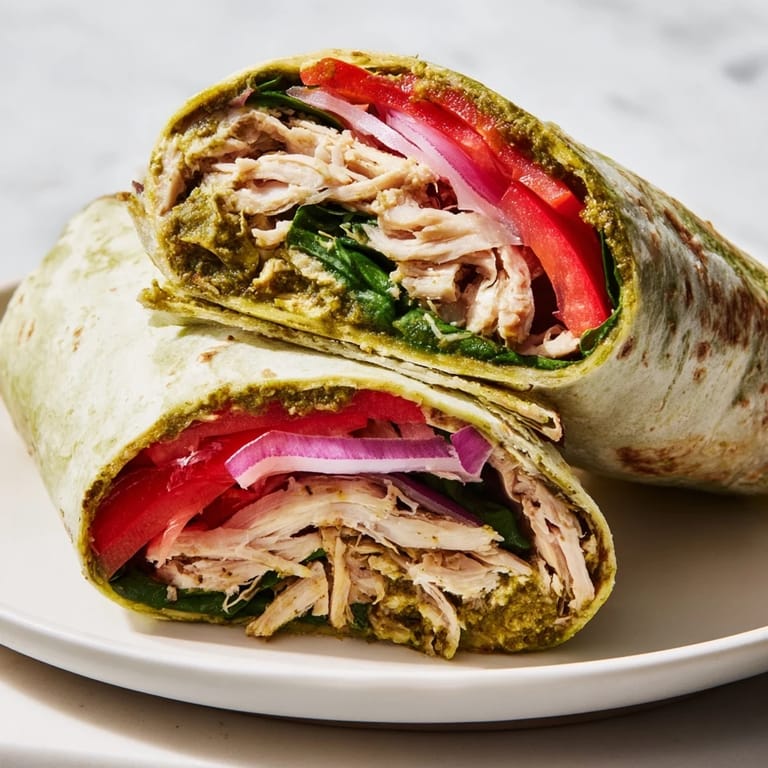
- Lay a tortilla flat on your work surface and layer spinach down the center, then the pesto chicken, mozzarella, tomato, red onion, and peppers if you're using them. The spinach acts as a barrier so the warm chicken doesn't make the tortilla soggy right away.
- Season and roll:
- Sprinkle with salt and pepper, then fold in the sides and roll tightly, tucking as you go. A tight roll holds together when you slice it and feels intentional rather than haphazard.
- Slice and serve:
- Cut in half and serve immediately, or wrap tightly in foil or parchment if you're eating it later. The foil keeps it warm and helps it stay together.
 Pin it
 There's something wonderful about handing someone a wrap that looks restaurant-quality and watching them realize it took you less time than ordering takeout. That moment feels like a small win in an otherwise ordinary lunch.
Why Pesto Is the Secret
Pesto eliminates the need for separate dressing, seasoning, or sauce—it handles all of that at once. The basil, garlic, pine nuts, and oil create a flavor that makes simple rotisserie chicken taste like you've been cooking all morning. I've learned that a good pesto can save a weeknight dinner before it even starts.
Storage and Make-Ahead Ideas
These wraps are best served fresh, but you can absolutely prep the components ahead. Shred your chicken, slice your vegetables, and make or gather your pesto the night before, then assemble the wraps just before eating. If you do assemble them early, keep them in the refrigerator and eat within an hour or two—the cold will keep things crisp longer than room temperature.
Variations That Work
This wrap template is flexible enough to work with what you have on hand. I've made versions with feta instead of mozzarella, added avocado when it's in season, swapped cilantro-lime pesto for basil, and even used leftover grilled chicken instead of rotisserie. The core idea—tender protein, bright pesto, fresh vegetables, and something creamy—stays the same.
- Grill the assembled wrap on a panini press for a warm, slightly crispy exterior.
- Use whole-wheat or gluten-free tortillas to suit your preferences.
- Substitute feta, provolone, or even goat cheese for a different flavor profile.
 Pin it
 This wrap has become my go-to when I need lunch that feels special without fussing—it's proof that simple ingredients and a little intention make all the difference.
Recipe FAQs
- → Can I use homemade pesto for this wrap?
Absolutely! Homemade basil pesto adds a fresh and personalized flavor, enhancing the overall taste.
- → What cheeses work well besides mozzarella?
Feta or provolone can be great alternatives, each adding a unique twist to the wrap’s flavor.
- → How can I make the wrap gluten-free?
Swap the flour tortillas for gluten-free wraps available in most stores to accommodate dietary needs.
- → Is it better to warm the tortilla before assembling?
Warming tortillas for 10–15 seconds makes them more pliable and easier to roll without cracking.
- → Can this wrap be grilled after assembly?
Yes, grilling briefly on a panini press adds a crispy texture and deeper flavor to the wrap.