 Pin it
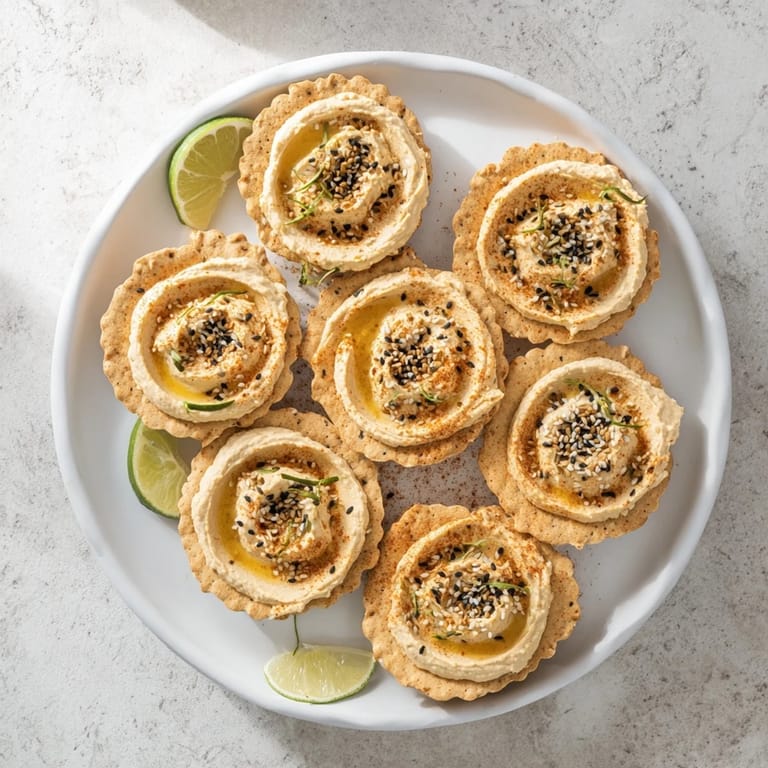
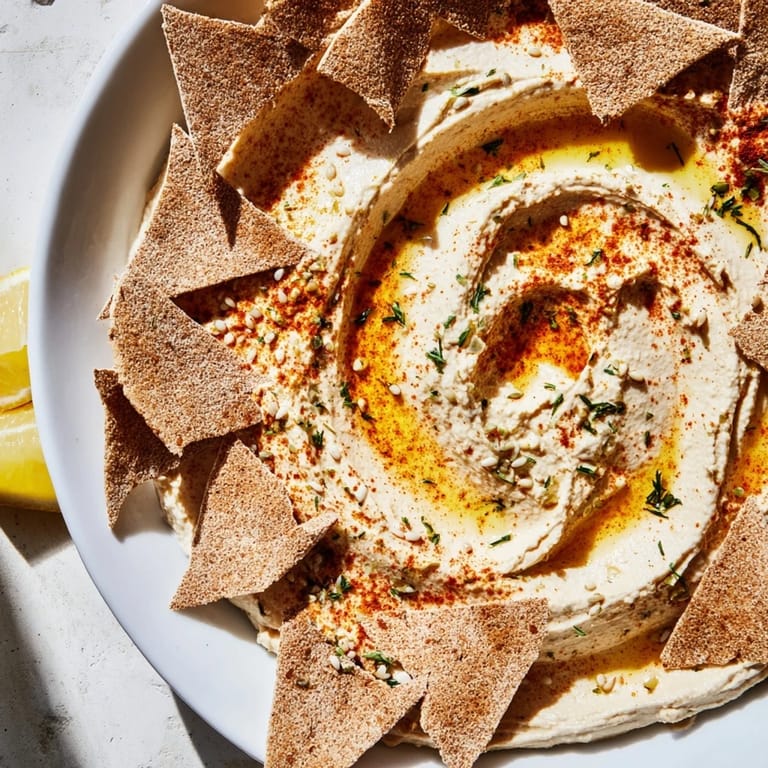
 The first time I arranged hummus and crackers on a platter for a dinner party, I wasn't thinking about edible art—I was just trying to make something look a little nicer than the usual bowl-and-chips situation. But as I spread the hummus in wavy lines and started standing crackers upright like little canyon walls, something clicked. The layers caught the light differently, the beige tones deepened and shifted, and suddenly it looked like an actual landscape on the plate. Now whenever I make this, I'm thinking about ancient rock formations and how food can tell a story without saying a word.
I made this for my sister's book club last spring, and I watched someone actually photograph it before touching a single cracker. That moment—when food stops being fuel and becomes something worth remembering—that's when I knew this dish had legs. She's been asking me to bring it to every gathering since.
Ingredients
- Classic hummus: The foundation of everything here; this is where quality matters since there's nowhere to hide, so grab something you'd actually want to eat straight from the container.
- Smoked paprika: This is the secret that makes people ask what's different about your hummus—it adds warmth and a whisper of smokiness.
- Extra-virgin olive oil: Don't skip the good stuff; it's the shine that catches light and makes the whole thing look polished.
- Ground cumin: A grounding spice that ties everything together without announcing itself too loudly.
- Cayenne pepper: Optional, but I always add just a pinch because food should have a little personality.
- Beige crackers: The variety matters more than you'd think; whole wheat adds earthiness, sesame brings nuttiness, water crackers stay crisp.
- Toasted sesame seeds: These catch light the same way the crackers do, creating visual rhythm across the whole platter.
- Fresh parsley: The green brings contrast and a whisper of freshness that balances the richness below.
- Lemon wedges: A squeeze adds brightness and keeps the palate from getting heavy as you work your way through the layers.
Tired of Takeout? 🥡
Get 10 meals you can make faster than delivery arrives. Seriously.
One email. No spam. Unsubscribe anytime.
Instructions
- Season and mix your hummus base:
- Combine the hummus with smoked paprika, olive oil, cumin, and cayenne in a bowl, stirring until the color is even and the spices are fully distributed. This is where the flavor foundation gets built, so take a moment to taste and adjust—you want enough paprika to be noticed but not so much that it overpowers the earthiness.
- Create the first wavy layer:
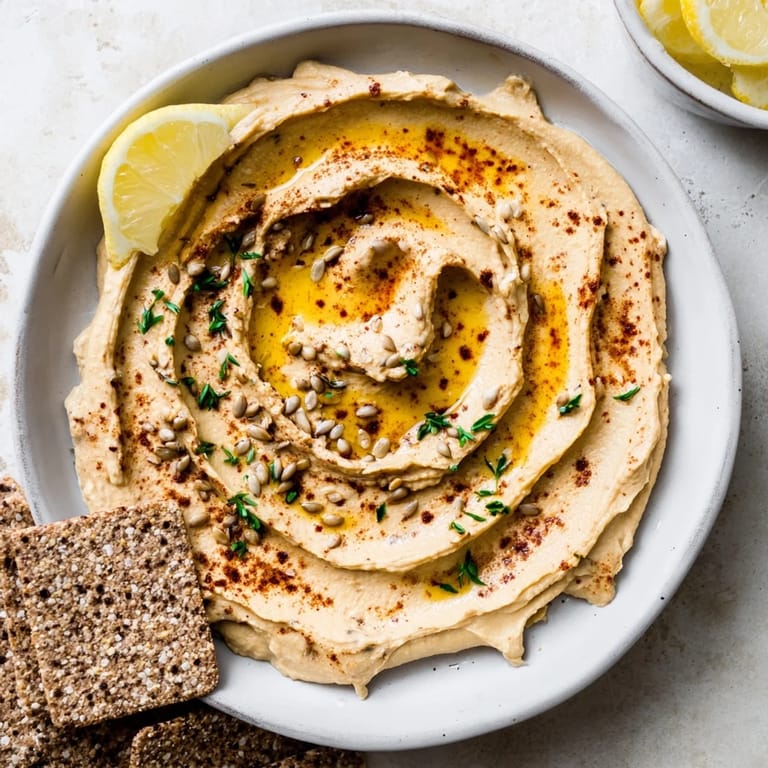
- Spread hummus across your platter using a spatula or offset knife in gentle, undulating lines, creating ridges and valleys that actually look like terrain. The irregularity is the whole point here; perfection is boring, but intentional imperfection feels artful.
- Build the canyon walls:
- Stand crackers upright in the hummus, following the contours of your waves, slightly overlapping them so you see layers of texture. This is where you're balancing function with form—they need to stand firm enough to eat from but arranged loose enough to feel organic.
- Layer in rhythm:
- Alternate between spreading another thin layer of hummus and standing more crackers in it, building 3–4 layers total. Each layer should feel a little lighter than the last, so the whole thing doesn't topple and actually stays structurally sound.
- Crown it with garnish:
- Scatter toasted sesame seeds and chopped parsley across the top, letting some fall into the crevices so there's texture and color surprise at every angle. The final touch should feel generous but not overdone.
- Finish and serve:
- Place lemon wedges nearby and bring it to the table while everything is still fresh and the crackers haven't started absorbing too much moisture from the hummus.
 Pin it
 There's a moment right after you finish arranging this when you step back and realize you've created something that looks like it belongs in a food magazine, using ingredients you probably already had on hand. It's a small kitchen victory that tastes even better when shared.
The Story Behind the Layers
I started thinking about this dish as visual storytelling because that's how I experience good entertaining—it's not just about feeding people, it's about creating a moment they'll remember. The name came after I'd already made it a few times; I kept looking at those wavy lines and thinking about red rock formations, about how nature builds things in layers, about texture and depth. When you approach a cracker to the hummus, you're literally descending into a landscape. That intentionality, even if it's subtle, changes how people engage with what you've made.
Customizing Your Canyon
The beauty of this dish is that it's a template, not a strict mandate. Some nights I'll swirl in a dollop of roasted red pepper hummus between layers for color contrast, other times I'll stick with one pure flavor and let the structure do the talking. You could scatter toasted chickpeas for crunch, add paper-thin cucumber slices for freshness, or even layer in different hummus varieties to create an actual color gradient. The core idea—building something beautiful and layered—stays the same regardless of what you choose to put inside.
Serving and Pairing
I've learned that this works best as part of a spread rather than the main event; it's an opener, a conversation starter, the thing people graze on while waiting for the next course. A crisp white wine cuts through the richness beautifully, and iced herbal tea works if you're keeping things alcohol-free. Set it on the table and watch people hesitate for a second before breaking into it, that small pause where they recognize something a little more thoughtful happened in your kitchen.
- Serve at room temperature or slightly chilled for the best texture contrast.
- If you're making this ahead, cover the finished platter loosely with plastic wrap and store in the fridge, then let it come to room temperature before serving.
- Double or triple the hummus mixture if you're feeding a crowd; this scales beautifully as long as you keep the layering intentional.
 Pin it
 This dish proved to me that entertaining doesn't need to be complicated to feel special. The magic is in showing up a little more thoughtfully than usual.
Recipe FAQs
- → How do you create the layered effect?
Spread hummus in wavy layers and stand crackers upright, alternating to mimic canyon ridges and valleys.
- → Can different flavors be added to the hummus?
Yes, roasted red pepper or sun-dried tomato hummus can be swirled between layers for extra taste.
- → What type of crackers work best?
Beige whole wheat, sesame, or water crackers with a firm texture hold well between layers.
- → Is this suitable for vegan diets?
Using vegan crackers makes this dish fully plant-based and suitable for vegan preferences.
- → How should it be served?
Serve immediately with lemon wedges on the side for a zesty finish and freshness.
- → Can this be prepared in advance?
It’s best assembled just before serving to maintain cracker crispness and hummus texture.