 Pin it
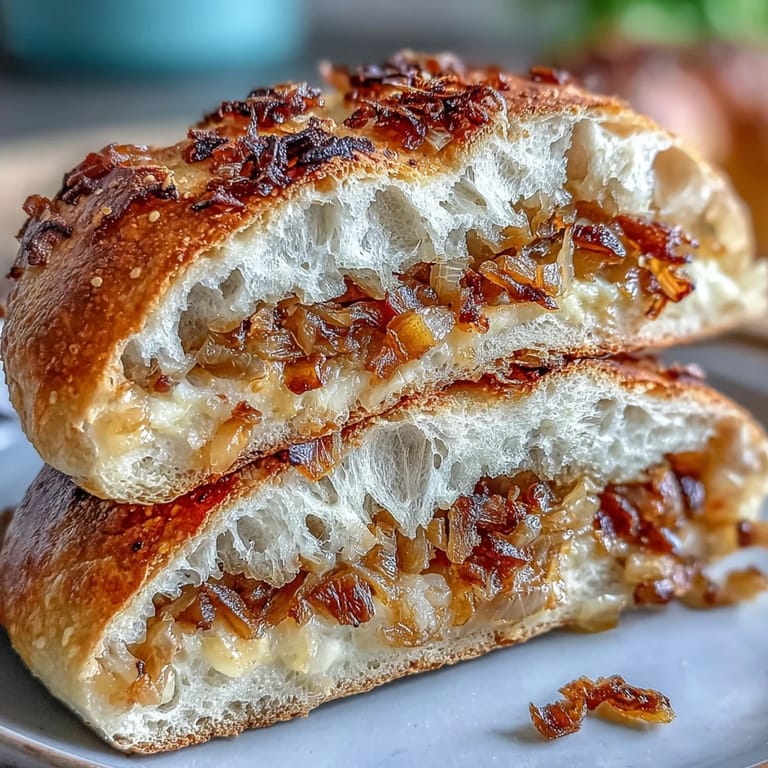
 There's something almost meditative about shaping bagels on a Sunday morning, especially when your kitchen smells like caramelized onions and sourdough tang. My first batch turned out dense and flat, but then I learned the secret was patience—not just in the fermentation, but in respecting that tangy starter and giving it time to work its magic. These sourdough onion bagels became my answer to those bakery visits, and honestly, they're better because I can taste my own time in every chewy bite.
I made these for a friend who'd been craving proper bagels, and watching her face light up when she bit into one warm from the oven reminded me why I love cooking—it's these small victories that matter. She immediately asked for the recipe, which is always the best compliment you can get in my book.
Ingredients
- Active Sourdough Starter (100 g): This is your flavor foundation, giving these bagels that distinctive tang and natural rise; make sure yours is bubbly and at peak activity before you start.
- Bread Flour (400 g): Don't skimp here—bread flour gives you the chewy structure that makes a bagel feel substantial, not bread-like.
- Whole Wheat Flour (50 g): Just enough to add subtle nuttiness and depth without overwhelming the sourdough character.
- Sea Salt (10 g for dough, 1/2 tsp for onions): Salt strengthens gluten and brings out the sourdough's complexity; use it intentionally.
- Granulated Sugar (25 g): Feeds the starter and helps with browning, creating those gorgeous golden crusts.
- Lukewarm Water (240 ml): Temperature matters—too hot kills the starter, too cold slows fermentation.
- Yellow Onion (1 large, finely chopped): Slice thinly and sauté slowly until they're deeply golden; rushing this step means missing out on that sweet caramel effect.
- Olive Oil or Unsalted Butter (1 tbsp): Butter brings richness, but olive oil works if that's what you have on hand.
- Barley Malt Syrup (1 tbsp): This is what gives bagels that authentic chew and color, though honey is a legitimate substitute if you can't find it.
- Baking Soda (1 tsp): Creates that slightly alkaline boiling bath that develops the bagel's characteristic chewy exterior and dark crust.
Tired of Takeout? 🥡
Get 10 meals you can make faster than delivery arrives. Seriously.
One email. No spam. Unsubscribe anytime.
Instructions
- Start Your Onions Early:
- Heat oil or butter in a skillet over medium heat and add your finely chopped onions with a pinch of salt. They'll take about 8–10 minutes to turn golden and sweet, and you want them cooling while you work on the dough so they're ready when you need them.
- Mix Your Dough:
- In a large bowl, combine your active sourdough starter, both flours, salt, sugar, and lukewarm water, stirring until everything comes together into a shaggy mass. There shouldn't be any dry flour lurking at the bottom—get it all incorporated.
- Knead and Rest:
- Knead for 8–10 minutes until the dough feels smooth and elastic, then cover it and let it sit for 4 hours at room temperature. During the first 2 hours, perform two stretch-and-folds (every 30 minutes), gently pulling the dough up and folding it over itself—this builds strength without aggressive kneading.
- Cold Fermentation (The Game Changer):
- Cover the dough and refrigerate overnight for 8–12 hours; this slow, cold fermentation is where the sourdough flavor develops and the dough becomes easier to shape. You'll notice it's more relaxed and flavorful when you pull it out.
- Shape Your Bagels:
- Divide the cold dough into 8 equal pieces and gently shape each into a ball. Push your thumb through the center of each ball to create a hole, then stretch the dough outward until you have a ring with roughly a 2-inch diameter hole in the center—don't stress about perfection here.
- Let Them Puff Up:
- Place shaped bagels on a parchment-lined baking sheet, cover loosely, and let them rise for 1–2 hours at room temperature until they're slightly puffy but not doubled in size. They should feel airy but still hold their shape.
- Prepare Your Boiling Bath:
- Preheat your oven to 220°C (425°F) and bring 2 liters of water, barley malt syrup, and baking soda to a rolling boil in a large pot. The soda will make it bubble up—that's exactly what you want.
- Boil Bagels One or Two at a Time:
- Gently drop a bagel into the boiling water and let it float; after about 1 minute, flip it over with a slotted spoon and boil for another minute. The bagels will sink, then float back up—that's your cue they're done.
- Top While Damp:
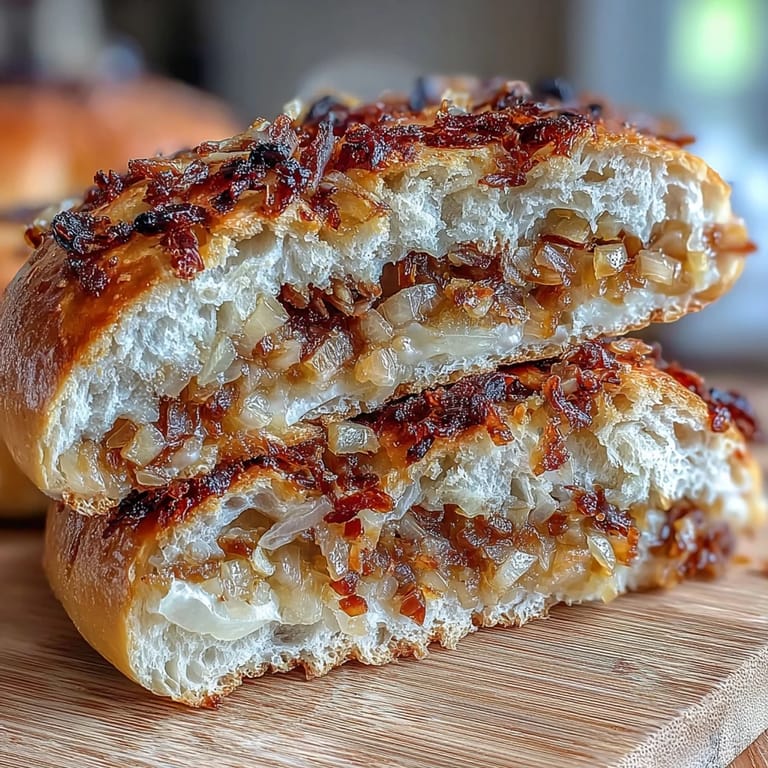
- Remove bagels with a slotted spoon and return them to your parchment-lined baking sheet while they're still wet. Immediately press the sautéed onions onto the top of each bagel so they stick.
- Bake Until Golden:
- Bake for 20–25 minutes until the bagels are deep golden brown and feel firm when you tap them. The bottoms should sound hollow, which means they're cooked through.
- Cool Completely:
- Transfer to a wire rack and let them cool before slicing—I know it's tempting, but warm bagels are still setting internally.
 Pin it
 These bagels taught me that some of the best things in cooking can't be rushed, and that's oddly comforting in a world that moves so fast. Sharing warm, chewy bagels with people you care about is one of those quiet moments that reminds you why cooking matters.
Why Sourdough Starter Changes Everything
A living starter brings complexity and tang that you simply can't fake with commercial yeast, and it creates a natural fermentation that develops flavor over time instead of racing against the clock. The longer fermentation also makes these bagels easier to digest and gives them better keeping quality—mine stay fresh for several days in a paper bag, which is honestly rare for homemade bagels.
The Boiling Bath Secret
That boiling step is what separates bagels from just really dense bread rolls; it creates the slightly alkaline environment that gelatinizes the starch on the outside and gives you that signature chewy crust. The barley malt syrup isn't just flavor—it browns the exterior and adds subtle sweetness, though if you're in a pinch, honey works fine.
Toppings and Variations
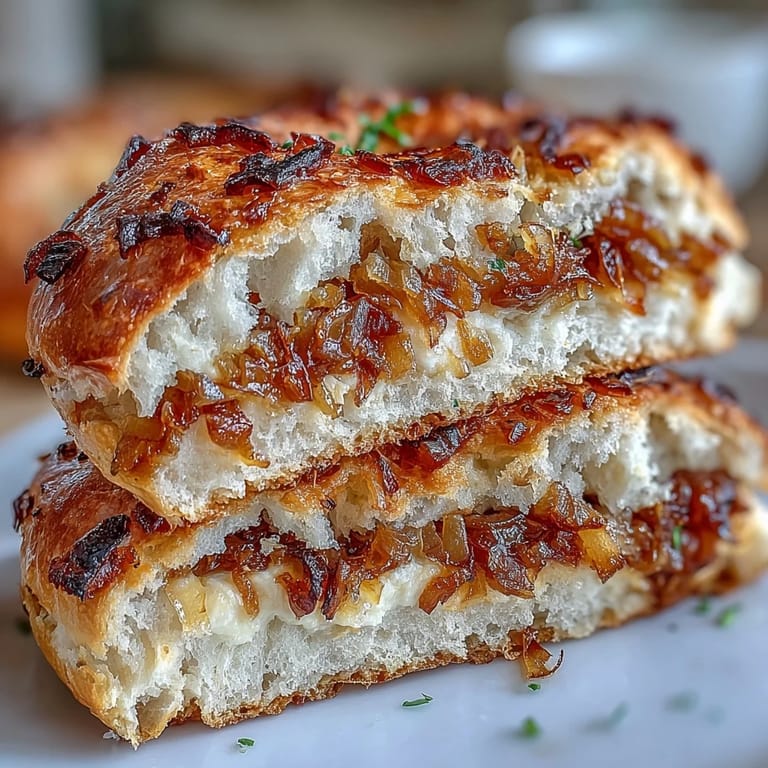
Once you master the base, these bagels are your canvas for creativity and experimentation. Beyond the sweet onion topping, you can press poppy seeds, sesame seeds, everything bagel seasoning, or even crispy bacon bits onto the damp bagels before baking.
- Try a combination of caramelized onions and crispy sage for a more savory, herbaceous version.
- For a sweeter angle, swap the onions for a sprinkle of cinnamon sugar and a touch of honey drizzle after baking.
- Always keep your toppings ready before the bagels come out of the boiling water, since they need to stick to the damp surface while it's still hot.
 Pin it
 Making sourdough onion bagels from scratch is an investment in time, but it's the kind of investment that pays dividends every single morning. These bagels remind me that the simple things—good flour, patience, and a living starter—are often the most rewarding.
Recipe FAQs
- → Why is sourdough starter used in these bagels?
Sourdough starter ferments the dough naturally, adding a tangy flavor and improving texture and shelf life.
- → How does boiling affect the bagels?
Boiling creates a chewy crust by gelatinizing the starch on the surface, essential for classic bagel texture.
- → What is the purpose of sautéing the onions?
Sautéing softens the onions and develops their sweetness, creating a flavorful, golden topping.
- → Can I substitute barley malt syrup in the boiling water?
Yes, honey can be used as a natural alternative to add sweetness and aid in browning.
- → How long should the dough ferment for best results?
Overnight fermentation (8-12 hours) allows flavors to develop fully and improves dough structure.
- → What flours are best for chewy bagels?
A combination of bread flour and whole wheat flour gives the right balance of strength and flavor.