 Pin it
 My kitchen fills with the most unexpected aroma when I make this sweet and sour chicken—that precise moment when the sauce hits the hot skillet and everything caramelizes at once. It happened by accident one weeknight when I was craving takeout but had chicken thawing and a can of pineapple sitting on the shelf, so I decided to improvise something that tasted nothing like what I expected, in the best way possible. The combination of tangy vinegar, sweet pineapple, and tender chicken taught me that sometimes the most satisfying meals come from working with what's already in your kitchen.
I remember making this for my sister who was going through a rough phase and wanted something comforting but not heavy, something that felt like care in a bowl. She watched the transformation happen in the skillet, saw the pale chicken pieces turn golden and the sauce deepen to this beautiful amber color, and something shifted in her expression. Food has this quiet power, and this dish proved it to me that evening.
Ingredients
- Chicken breast, cut into 1-inch cubes: One and a half pounds of boneless, skinless pieces give you tender bites that cook evenly and absorb the sauce beautifully, so don't rush the cutting process.
- Cornstarch for coating: Two tablespoons helps create a delicate crust that seals in moisture and thickens the sauce naturally when everything comes together.
- Salt and black pepper: Half a teaspoon and a quarter teaspoon season the chicken without overpowering the other flavors.
- Vegetable oil: Two tablespoons total for cooking ensures the chicken browns properly without drying out.
- Red and green bell peppers: One of each, cut into one-inch pieces, adds both sweetness and a slight crunch that contrasts with the tender chicken.
- Red onion, cut into wedges: One small onion brings a gentle sharpness that balances the sweetness of the pineapple and sauce.
- Fresh pineapple chunks: One cup of either fresh or canned and drained fruit provides juicy bursts of natural sweetness and tropical character.
- Garlic and ginger: Two cloves of minced garlic and one inch of grated ginger add warmth and depth that elevate the entire dish beyond basic sweet and sour.
- Rice vinegar: One-third cup creates the tangy backbone of the sauce, giving it brightness without harshness.
- Ketchup: A quarter cup might seem unexpected, but it adds umami and helps balance the vinegar's bite.
- Brown sugar: One-quarter cup sweetens the sauce with a subtle molasses note that's more sophisticated than white sugar.
- Soy sauce: Three tablespoons deepen the savory notes and tie all the flavors together with salty depth.
- Pineapple juice: Two tablespoons reserved from the can or freshly pressed connects the fruit flavor throughout the sauce.
- Cornstarch slurry: One tablespoon mixed with two tablespoons water creates the silky texture that makes the sauce cling to every piece.
Tired of Takeout? 🥡
Get 10 meals you can make faster than delivery arrives. Seriously.
One email. No spam. Unsubscribe anytime.
Instructions
- Coat the chicken with cornstarch:
- Toss the cubes in a bowl with cornstarch, salt, and pepper until every piece is evenly dusted—this creates a delicate seal that keeps the chicken moist while it browns. Don't skip this step even if it feels unnecessary, because it makes a real difference.
- Brown the chicken in batches:
- Heat one tablespoon of oil in your large skillet over medium-high heat and add half the chicken, letting it sit for a minute before turning so the coating gets golden and crispy on each side. Work with patience here; rushing this step means missing out on those caramelized edges that add real flavor, and then repeat with the remaining chicken and another tablespoon of oil.
- Sauté the aromatics and vegetables:
- In the same skillet, add the minced garlic, grated ginger, onion wedges, and bell pepper pieces, stirring constantly for three to four minutes until they soften slightly but still have a bit of structure. The kitchen will smell incredible at this point, and you'll know it's right when the garlic and ginger release their fragrance fully.
- Add the pineapple and return the chicken:
- Fold in the drained pineapple chunks and nestled the browned chicken back into the skillet, distributing everything evenly so it cooks together from here on. This is when the dish really starts to come alive visually.
- Build and pour the sauce:
- Whisk together the rice vinegar, ketchup, brown sugar, soy sauce, and pineapple juice in a small bowl, then pour it over everything in the skillet. Take a moment to appreciate how the liquid immediately starts mingling with the chicken and vegetables.
- Thicken and finish:
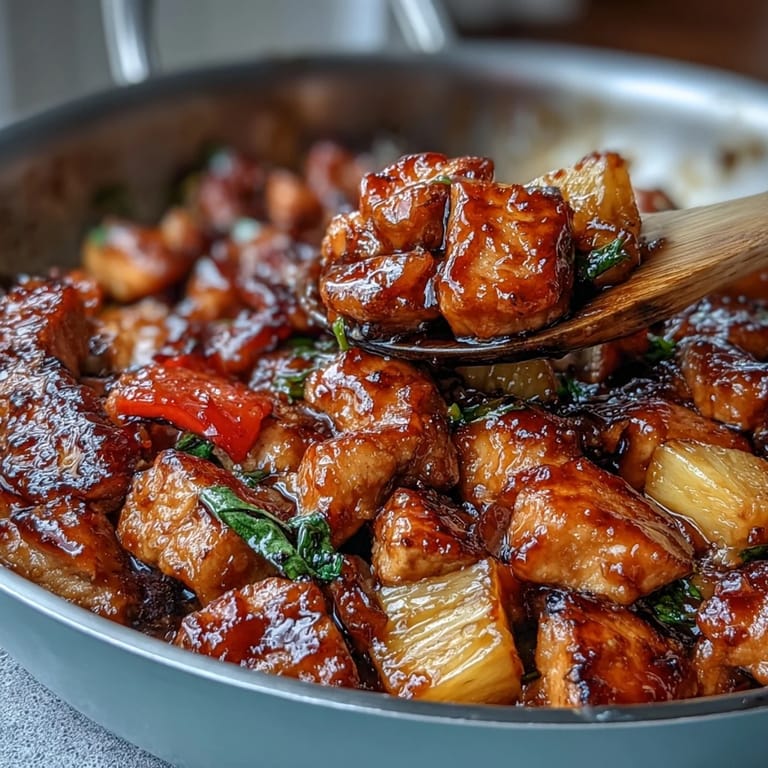
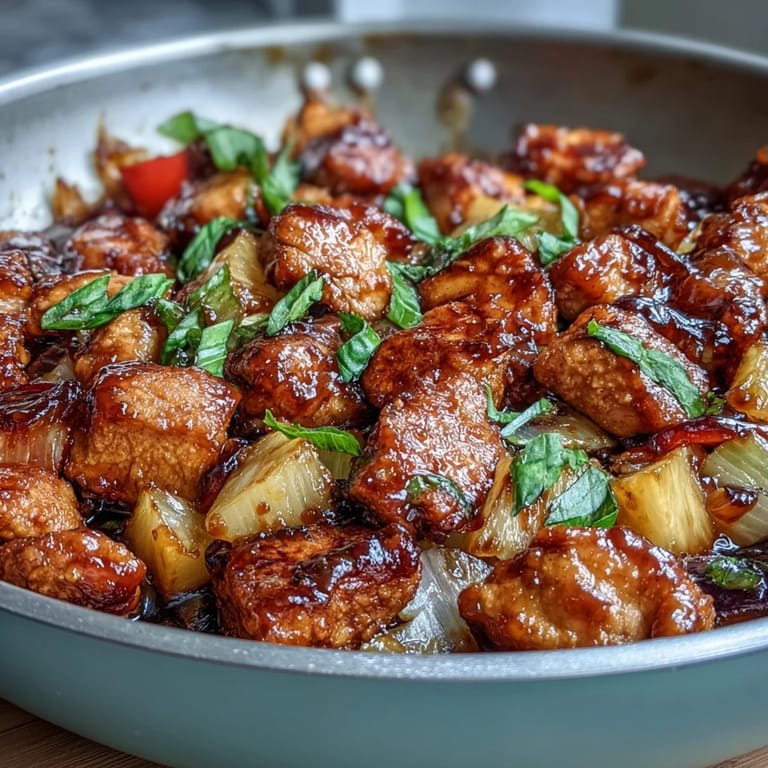
- Bring everything to a simmer, then stir in the cornstarch slurry while stirring constantly, cooking for another two to three minutes until the sauce turns glossy and coats the back of a spoon. You'll see the raw-looking liquid transform into something rich and silky that clings beautifully to every ingredient.
 Pin it
 There's a moment right before serving when you taste the sauce and realize you've created something that rivals your favorite restaurant version, and that's when you understand why this skillet becomes a regular rotation in your kitchen. It's the kind of meal that makes people ask for the recipe, and sharing it feels like passing along a small piece of weeknight comfort.
Serving Suggestions That Work
Steam a pot of white or brown rice alongside this skillet, and let the sauce pool around the grains—that's the traditional way and it's classic for a reason. If you're watching carbs, cauliflower rice soaks up the flavors beautifully and doesn't disappear under the weight of the sauce like some alternatives do. I've also served it over noodles on nights when I wanted something more substantial, and the sauce clings to them in the most satisfying way.
Variations Worth Trying
Boneless, skinless chicken thighs swap in seamlessly if you prefer darker meat with more natural juiciness, though they take about thirty seconds longer to cook through. A pinch of red pepper flakes stirred into the sauce transforms the whole dish into something with subtle heat that builds as you eat. For a gluten-free version, tamari or coconut aminos replace soy sauce without changing the flavor profile noticeably, so you won't feel like you're missing anything.
Kitchen Moments and Final Thoughts
The best part of cooking this dish is watching it come together in real time, seeing how the individual components become something more cohesive and delicious than they were separately. There's something deeply satisfying about a one-skillet meal that tastes impressive but doesn't require you to stand at the stove for hours or create a mountain of dishes.
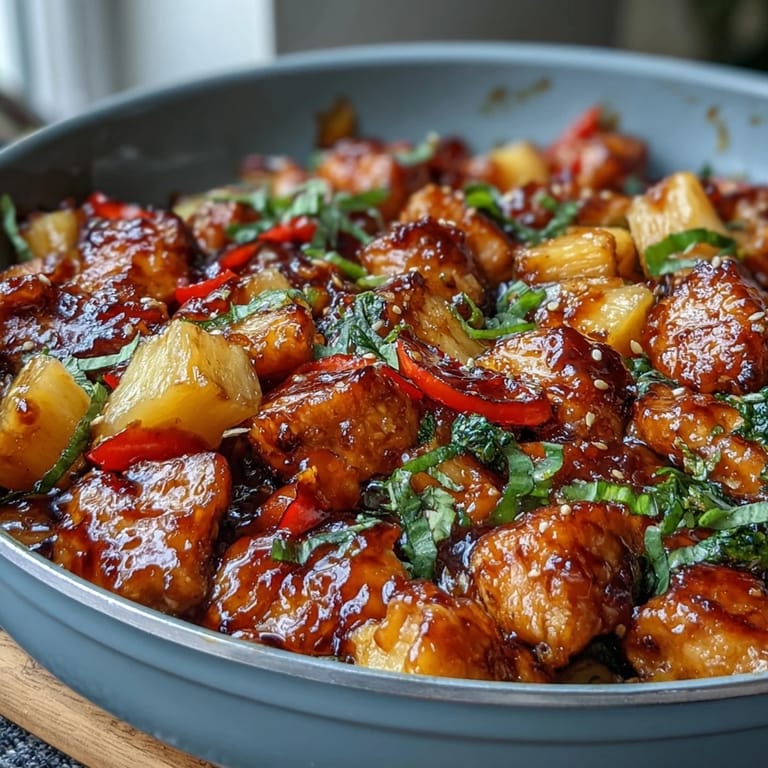
- Green onions or sesame seeds scattered on top right before serving add a fresh brightness and textural contrast that makes the presentation feel intentional.
- Leftover sauce keeps in the refrigerator for three days and tastes even better reheated, so don't hesitate to make extra.
- This meal freezes well if you store the sauce and chicken separately from the vegetables, so you can prep ahead for nights when cooking feels like too much.
 Pin it
 This sweet and sour chicken skillet has become the meal I reach for when I want something that tastes like celebration but feels easy enough for any weeknight. It's proof that simple ingredients, when treated with a little care and attention, create something that nourishes both body and spirit.
Recipe FAQs
- → How can I ensure the chicken stays tender?
Coating the chicken pieces with cornstarch before sautéing helps lock in moisture, resulting in tender, juicy bites.
- → Can I use frozen pineapple instead of fresh?
Yes, just thaw and drain frozen pineapple chunks to avoid excess liquid in the skillet.
- → What is a good substitute for ketchup in the sauce?
Tomato paste mixed with a bit of vinegar and sugar can replace ketchup while maintaining the sauce's flavor balance.
- → How thick should the sauce be?
The sauce should thicken enough to coat the chicken and vegetables smoothly, achieved by stirring in the cornstarch slurry towards the end.
- → Is there a way to add heat to this dish?
Adding red pepper flakes to the sauce or alongside the vegetables introduces a subtle but pleasant spice.