 Pin it
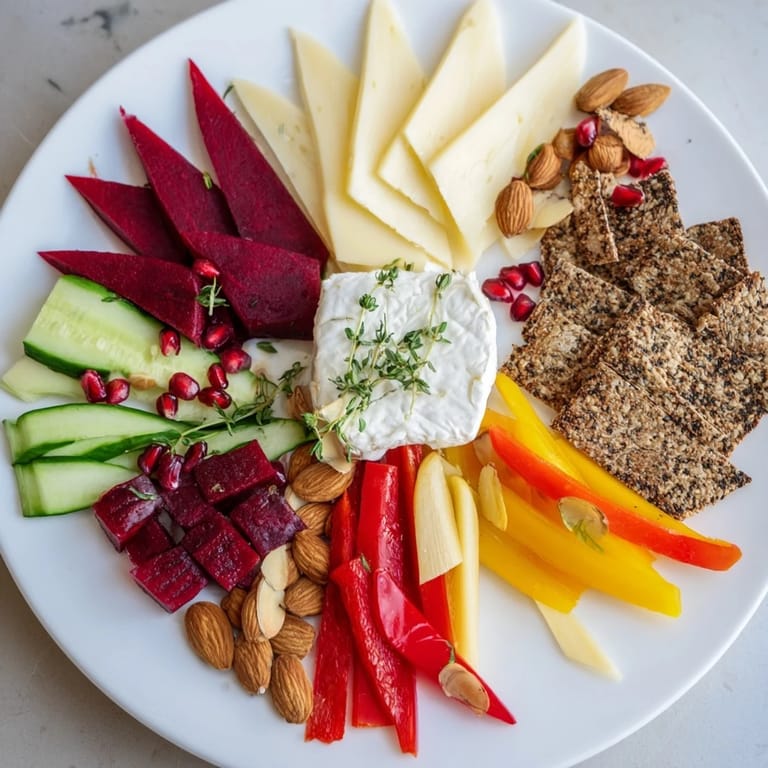
 I'll never forget the moment I decided to transform a grazing board into art. I was preparing for a dinner party, and while arranging ingredients, something clicked—what if every single piece could fit together like a puzzle? That's when I created the Tessellation Triangle, a board where mathematics and flavor dance together in perfect geometric harmony. The first guest to see it actually gasped, then couldn't decide whether to admire it or eat it. That's the magic of this appetizer.
The real test came when I made this for my sister's gallery opening. She's an artist, so I knew the visual presentation had to be impeccable. Watching her face light up when she saw the interlocking triangles—it reminded me that food is more than sustenance. It's a conversation starter, a moment of beauty before it becomes a memory on the palate.
Ingredients
- Aged Cheddar, 100 g: The sharpness here provides an anchor for sweeter elements. Slice it carefully because thinner pieces bend slightly, which actually helps them nestle together beautifully.
- Manchego, 100 g: This Spanish cheese has a subtle nuttiness that bridges the gap between sharp and mild. It's firm enough to hold its triangular shape without crumbling.
- Goat Cheese, 100 g (chilled): Keep this one ice-cold until the last moment, then cut swiftly. Cold goat cheese holds its edges better and won't smear as you handle it.
- Cucumber, 1 medium: Peel it for elegance, then slice on a sharp angle. The water content means these pieces need the most careful handling—place them last if possible.
- Red Bell Pepper, 1 large: Remove all seeds and the white membrane. The color contrast is essential to your pattern, so this ingredient earns its place through pure visual impact.
- Beet, 1 small (cooked): Slice this paper-thin on a mandoline if you have one. Beets bleed slightly, so handle them after everything else to avoid staining your lighter-colored pieces.
- Pear, 1 large: Core it thoroughly, then slice immediately and toss gently in a tiny bit of lemon juice (not listed, but trust me) to prevent browning. Fresh pear brightness transforms the entire board.
- Watermelon, 1/2 cup: Cut into small triangles about the size of your pinky fingernail. These add juicy pops of sweetness and their vibrant red deepens the color story.
- Whole Grain Crackers, 100 g: Some will naturally break into triangle-ish shapes. Don't force them—imperfect triangles actually add character and texture variety.
- Roasted Almonds, 1/4 cup: These are your gap-fillers and texture saviors. They also provide protein and a satisfying crunch that guests always comment on.
- Pomegranate Seeds, 1/4 cup: Beyond garnish, these jewel-like arils fill the tiny spaces and add bright, tart flavor. They're the final touch that pulls everything together.
- Honey, 2 tbsp (optional): A light drizzle over the goat cheese adds sophistication. Warm it slightly so it flows freely without pooling.
- Fresh Herbs (Thyme or Mint): Sprinkle these last, just before serving. They brighten the entire composition with color and aroma.
Tired of Takeout? 🥡
Get 10 meals you can make faster than delivery arrives. Seriously.
One email. No spam. Unsubscribe anytime.
Instructions
- Gather Your Canvas:
- Choose a large wooden board or platter—ideally something with some depth so pieces don't slide around. Clean it thoroughly and let it dry completely. This board is about to become your masterpiece.
- Cut with Intention:
- Now comes the meditative part. Take each ingredient and cut it into triangles of similar size. Use a sharp chef's knife or mandoline for uniform shapes. I like to aim for triangles roughly 1.5 to 2 inches on each side, but let your board's proportions guide you. Stack cut pieces on separate small plates as you go—it keeps your workspace clear and prevents cross-contamination of flavors.
- Start from One Corner:
- Begin arranging from a single corner, as if you're completing a puzzle. Don't start in the middle or scatter pieces randomly. Your geometric pattern needs an anchor point and a rhythm to follow.
- Layer with Rhythm:
- Alternate colors and textures as you work outward—a pale cheese triangle next to a deep beet, then a bright pepper, then a creamy goat cheese. This alternation isn't just pretty; it ensures every bite includes multiple flavor and texture experiences.
- Fit Tightly Together:
- This is where patience matters. Press each triangle gently against its neighbors so gaps are minimal. You're not force-fitting—think of it as helping pieces find their natural resting place, like they were always meant to be side by side.
- Cover the Entire Board:
- Keep going until the wooden board underneath is barely visible. You should see mostly colorful triangles and just hints of the board's natural grain between pieces.
- Fill the Remaining Gaps:
- Once the major pattern is complete, scatter pomegranate seeds and roasted almonds into any remaining tiny spaces. These elements do double duty—they add color and flavor while solving your spacing challenges.
- Add the Final Touches:
- If using honey, drizzle it lightly over the goat cheese triangles just before serving. Scatter fresh herbs across the board so they're visible and fragrant. Step back and look at what you've created.
- Serve with Confidence:
- Bring it to the table immediately. This is a board that should be admired before it's devoured, and it's best enjoyed while all the pieces are at their peak freshness and coolness.
 Pin it
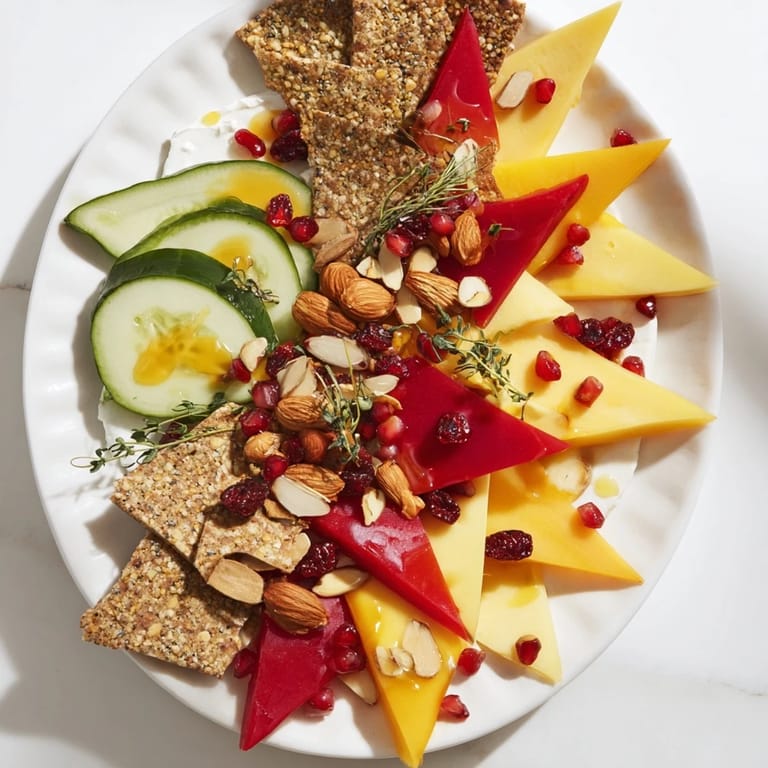
 What struck me most wasn't just the compliments about how it looked—it was watching people slow down around this board. In our hurried lives, this arrangement of triangles created a moment where folks paused, appreciated the intentionality, and actually tasted each component instead of just grabbing and eating. That's when I realized this wasn't just an appetizer board. It was permission to linger.
The Art of Geometric Arrangement
The tessellation concept transforms a grazing board from casual to gallery-worthy. When you commit to a geometric pattern, you're not just feeding people—you're creating an experience that speaks to their sense of beauty and order. I've found that the triangle shape works better than other geometric forms because it's forgiving enough to fit various ingredient sizes, yet strict enough to feel intentional. Start your arrangement with your crispest, most structurally sound ingredients (like firm cheeses and crackers) and save softer items for strategic placement. This approach has saved me from collapsed patterns more times than I care to admit.
Flavor Balancing Across the Board
One of my early attempts at this board was visually stunning but flavor-wise unbalanced—I'd placed all the sharp cheeses together by accident, creating pockets of intensity rather than harmony. The real magic happens when you intentionally group flavors. Pair bright, acidic fruits (like pear and watermelon) near rich, creamy cheeses. Place the earthiness of beet next to the sweetness of honey-touched goat cheese. When someone builds their own bite by taking three or four adjacent triangles, they're experiencing a complete flavor story rather than isolated components.
Hosting Moments and Variations
This board adapts beautifully to your needs and your guests' preferences. For a vegan version, swap in plant-based cheeses and ensure your crackers are certified vegan. If you're feeding omnivores, add prosciutto or other cured meats cut into triangles—they integrate seamlessly into the pattern. I once made a version for a holiday party using apples instead of pears, candied walnuts instead of roasted almonds, and it was equally stunning. The structure you're learning here is a framework, not a restriction. Play with it.
- Make a color scheme before you start—decide if you want rainbow chaos or sophisticated monochrome zones
- Cut your ingredients with fresh herb scissors for leaves and more delicate items if you want to add texture without the knife-cutting
- Consider your guests' dietary needs when selecting ingredients, and always label anything with common allergens
 Pin it
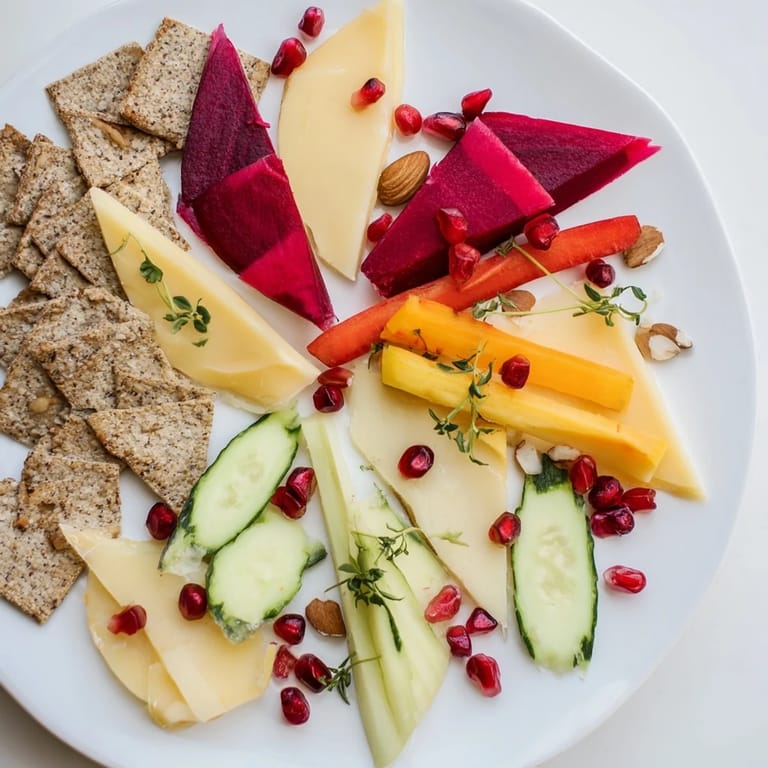
 Every time I create this board, I'm reminded that the most impressive dishes often require no cooking at all—just intention, respect for your ingredients, and a willingness to see food as both nourishment and art. Your guests will eat the triangles, but they'll remember the moment they saw them.
Recipe FAQs
- → What is the best way to cut the ingredients into uniform triangles?
Use a sharp chef’s knife or a mandoline slicer to ensure even and precise triangle shapes, which helps achieve the seamless tessellation effect.
- → Can the board be adapted for a vegan diet?
Yes, by substituting plant-based cheeses for dairy cheeses, this board can easily suit vegan preferences without compromising visual appeal.
- → How should the ingredients be arranged for the best impact?
Alternating colors and textures from corner to corner creates a striking geometric pattern with minimal gaps between pieces.
- → What accompaniments complement the flavors on this board?
Whole grain crackers, roasted almonds, and pomegranate seeds add crunch and bursts of flavor that elevate the tasting experience.
- → Is there a suggested beverage pairing for this board?
A crisp Sauvignon Blanc or sparkling water with citrus pairs wonderfully to balance the rich cheeses and fresh fruits.