 Pin it
 There's something about the smell of coconut milk hitting hot curry paste that instantly transports me to a small night market in Bangkok, where a vendor was stirring an enormous pot of exactly this soup. I watched her work with such ease, and years later, when I finally recreated it in my own kitchen, I realized the magic wasn't in exotic ingredients or complicated technique—it was in letting the aromatics bloom and the flavors get to know each other. This Thai coconut curry soup has become my go-to comfort meal when I want something that tastes like a culinary adventure but doesn't demand hours of my time.
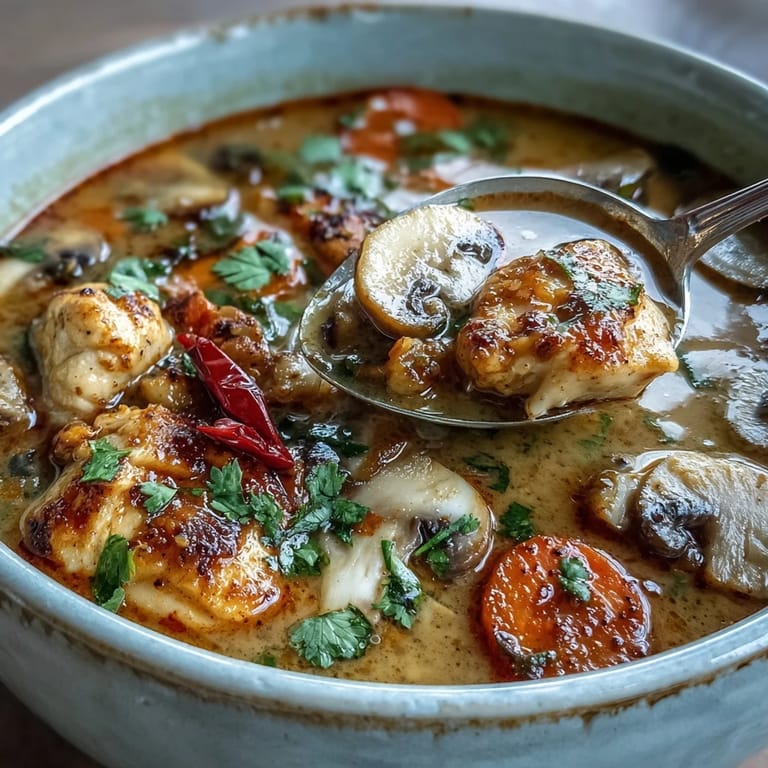
I made this for my sister during a surprise visit on a rainy Tuesday, and she sat at my kitchen counter just watching the transformation—how pale chicken pieces and humble vegetables turned golden and tender in that fragrant broth. By the time I ladled it into bowls, she was already reaching for the lime wedges, and we ended up staying at the table long after the soup was gone, just talking. That's when I knew this recipe had become something special to me, beyond just being delicious.
Ingredients
- Chicken thighs (500 g / 1.1 lb), cut into bite-sized pieces: Thighs stay tender and flavorful through the entire simmer, unlike breast meat which can turn dry—this is the real secret to a luscious soup.
- Mushrooms (200 g / 7 oz), sliced: They absorb the coconut and curry beautifully, and their earthiness grounds all those bright, bold flavors.
- Carrots (2 medium), peeled and sliced: A touch of natural sweetness that balances the spice and richness without any added sugar.
- Onion (1 small), finely chopped: The foundation of every great soup—this one becomes almost melting by the time the broth finishes cooking.
- Garlic (2 cloves), minced: Fresh garlic adds a sharp brightness that prevents the soup from feeling heavy or one-note.
- Ginger (1 tablespoon), grated: Warming and slightly peppery, it threads through every spoonful with a subtle kick.
- Jasmine rice (120 g / 2/3 cup), rinsed: Rinsing removes excess starch and keeps the broth clear instead of cloudy—a small step that makes a visible difference.
- Coconut milk (400 ml / 1 can), full fat: Full fat is non-negotiable here; it's what creates that silky mouthfeel and authentic flavor.
- Chicken stock (1 liter / 4 cups): Good quality stock makes the entire soup taste deeper and more complex.
- Red curry paste (2–3 tablespoons): This is where the magic lives—start with 2 tablespoons and taste as you go, since heat levels vary by brand.
- Kaffir lime leaves (2), optional: These add a citrus perfume that lime juice alone simply cannot replicate.
- Lemongrass (1 stalk), bruised and cut into 3 pieces: Bruising releases the oils; leave the pieces large so you can easily fish them out before serving.
- Fish sauce (1 tablespoon): It's pungent by itself but becomes the savory backbone of the entire broth—trust it.
- Brown sugar (1 teaspoon): Just enough to round out the spice and salt without making anything taste sweet.
- Lime juice (from 1 lime): Added at the very end to brighten everything and keep flavors from muddying together.
- Fresh cilantro, chopped: The herbaceous top note that finishes each bowl.
- Sliced red chili, optional: For people who want to push the heat beyond what the curry paste alone provides.
- Lime wedges: Let people adjust the brightness to their own taste.
Tired of Takeout? 🥡
Get 10 meals you can make faster than delivery arrives. Seriously.
One email. No spam. Unsubscribe anytime.
Instructions
- Build your aromatic base:
- Heat oil in a large pot over medium heat, then add onions, garlic, and ginger. Let them soften and become fragrant for 2–3 minutes—you want to see them turn translucent and catch just a hint of color on the edges. This foundation prevents raw sharpness from lingering in the finished soup.
- Bloom the curry paste:
- Stir in the red curry paste and let it cook undisturbed for about 1 minute, which unlocks its deeper flavors and oils. You'll notice the kitchen suddenly smelling intensely aromatic—that's the signal you're on the right track.
- Seal in the chicken:
- Add the chicken pieces and stir continuously for 2–3 minutes, coating each piece in the curry mixture. This brief cooking starts the browning process and helps the chicken absorb all that spiced flavor before the liquid goes in.
- Build the broth:
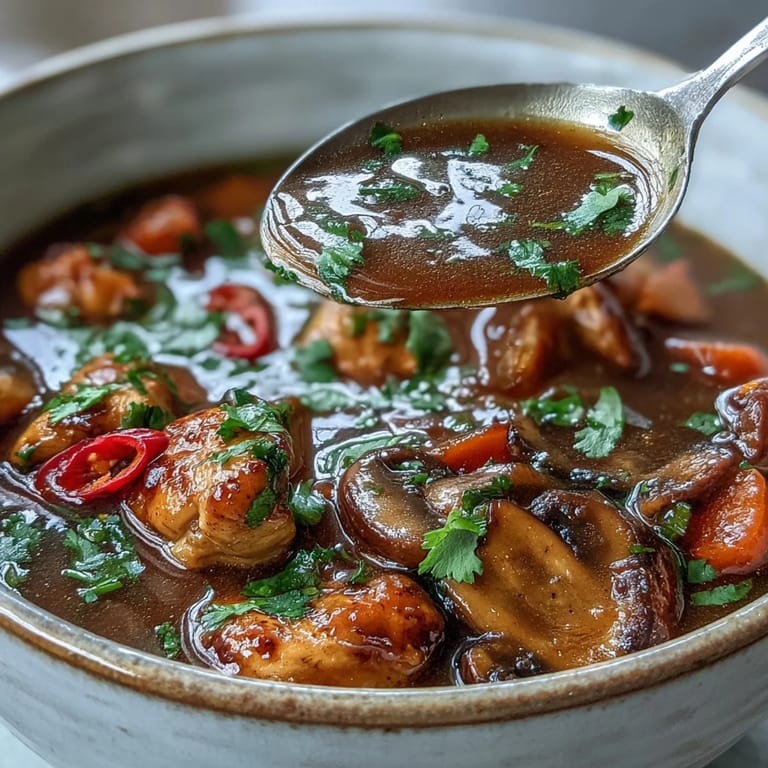
- Pour in the chicken stock and bring everything to a gentle simmer, then add carrots, mushrooms, lemongrass, and kaffir lime leaves. The broth will start turning a beautiful golden-amber color as it simmers.
- Cook the rice into the soup:
- Add the rinsed jasmine rice and stir well to distribute it evenly. Let everything simmer uncovered for 15–20 minutes until the rice is tender and the chicken is cooked through—the grains will soften and swell, absorbing all the curry and coconut flavors.
- Finish with coconut richness:
- Stir in the coconut milk, fish sauce, and brown sugar, then simmer gently for 5 more minutes without letting it boil hard. This keeps the coconut from breaking and maintains that creamy texture you're after.
- Season and balance:
- Remove the lemongrass stalks and kaffir lime leaves, then adjust seasoning with lime juice, extra fish sauce, or salt to taste. This is when you get to play chef—each bowl can be customized by the person eating it.
- Serve with intention:
- Ladle into bowls and let each person garnish with cilantro, chili, and lime wedges according to their preference. The lime especially should be squeezed fresh into each bowl right before eating.
 Pin it
 I'll never forget my neighbor's reaction when she tasted this—she closed her eyes and let out this satisfied sigh, then asked if I'd somehow brought it back from Thailand. That moment made me realize that cooking isn't just about feeding people; it's about creating a small window into somewhere warm and fragrant and full of possibility. This soup does that every single time.
Why Jasmine Rice Changes Everything
Most curry soups use noodles or keep the broth alone, but cooking jasmine rice directly in the pot transforms the entire experience. The grains swell and soften while drinking up all that coconut and curry flavor, creating a soup that's substantial enough to be a complete meal without feeling heavy. I learned this approach somewhat by accident—I was making rice on the side and simply forgot the extra pot, so I stirred it into the broth instead. Best mistake I ever made, because now it's the signature of this particular soup.
The Art of Balancing Heat and Richness
Thai cuisine is built on balance—heat against richness, spice against sweetness, brightness against depth. Start with 2 tablespoons of curry paste if you're unsure about heat levels, then taste and add more if you want a bolder kick. The coconut milk softens the spice, so the soup never feels harsh or overwhelming, but the lime juice at the end is what prevents it from becoming one-dimensional and rich. Think of lime juice less as a garnish and more as a final ingredient that wakes everything up.
Flexibility in the Bowl
This soup loves variations and substitutions without losing its soul. Swap chicken for shrimp or tofu, add baby corn or snap peas or bell peppers—whatever your kitchen has on hand works beautifully here. The base is strong enough to carry changes, and the coconut broth is forgiving enough that you can't really go wrong. I've made versions with different vegetables depending on season and mood, and they're all equally welcome at my table.
- Keep your curry paste jar nearby when serving so people can stir in extra heat if they want more spice.
- A squeeze of fresh lime into each bowl at the table tastes infinitely better than adding it all at once during cooking.
- Leftover soup keeps for three days in the refrigerator and tastes even better as flavors settle and meld together.
 Pin it
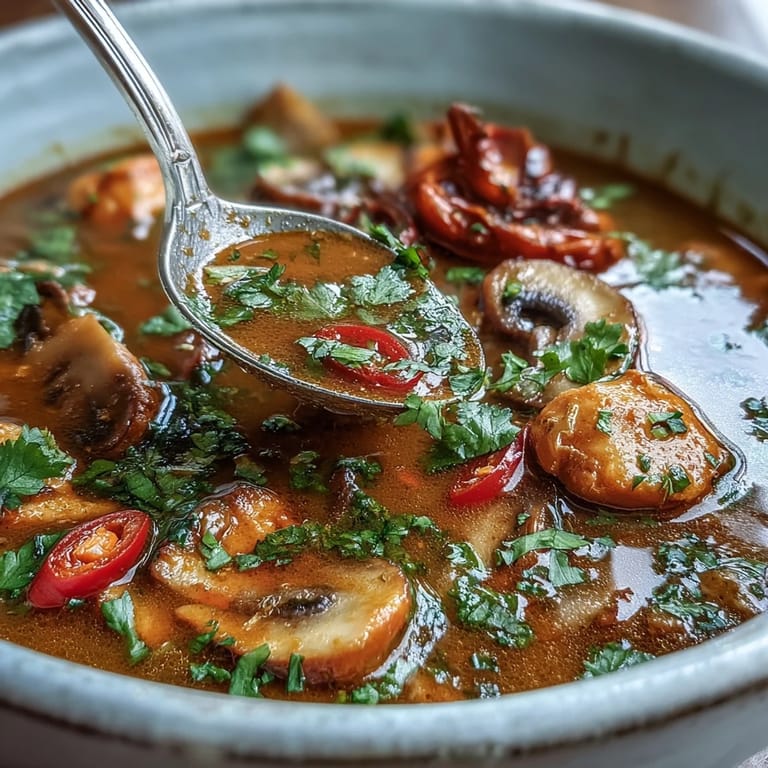
 Every bowl of this soup feels like a small gift to yourself or whoever you're feeding—something warm, aromatic, and satisfying that comes together without fuss. Make it often, and it'll become as natural to you as it has become to me.
Recipe FAQs
- → Can I make this soup vegetarian?
Yes, simply substitute the chicken with firm tofu or extra vegetables like baby corn, bell peppers, and snap peas. Replace the fish sauce with soy sauce or a vegetarian fish sauce alternative to maintain the savory depth.
- → How spicy is this Thai curry soup?
The spice level depends on the red curry paste brand and amount used. Start with 2 tablespoons for mild-medium heat, or increase to 3 tablespoons for a spicier kick. You can always add more paste later, but it's difficult to reduce heat once added.
- → Can I use brown rice instead of jasmine rice?
Absolutely, though brown rice requires longer cooking time. Add it at the beginning with the stock and simmer for 35-40 minutes, or use pre-cooked brown rice and add it in the last 10 minutes just to heat through.
- → How long does this soup keep in the refrigerator?
The soup stores well for 3-4 days in an airtight container in the refrigerator. The rice will absorb more liquid as it sits, so you may need to add a splash of coconut milk or broth when reheating. Reheat gently over medium-low heat.
- → Can I freeze this curry soup?
Yes, freeze for up to 3 months. For best results, freeze the soup without the rice, and cook fresh rice when serving. The texture of coconut milk can change slightly when frozen, but stirring well while reheating usually brings it back together.
- → What can I serve alongside this soup?
This soup makes a complete meal on its own, but you can serve it with extra jasmine rice, crispy spring rolls, or a fresh Asian salad with cucumber and peanuts. Naan bread or crusty bread also works well for soaking up the flavorful broth.