 Pin it
 There's something about manti that transported me back to a tiny kitchen in Istanbul where steam rose from a pot of boiling water while my host's mother worked her hands through a batch of dough as if she'd done it a thousand times before. She didn't measure anything, just folded and pinched with the kind of confidence that only comes from making something over and over for the people you love. When she finally plated those delicate little dumplings and poured that cool yogurt sauce over the top, then drizzled the spiced butter so it pooled around each one, I understood why this simple dish had survived generations. It wasn't fancy, but it was perfect.
I made this for friends one winter evening when everyone arrived exhausted from their week, and by the time we finished eating, the whole mood had shifted into something lighter and warmer. There was something about how everyone slowed down to really taste each bite, how the conversation became more genuine once we were halfway through the plate. Food like this does that—it creates a moment where rushing doesn't make sense anymore.
Ingredients
- All-purpose flour: The foundation of your dough; it needs to be strong enough to hold the filling without tearing, so don't skimp on kneading.
- Egg: This binds the dough together and gives it structure; it's why your manti stays sealed and doesn't burst open in the water.
- Turkish white cheese or feta: This is the star filling—creamy, slightly salty, and it melts into the most comforting texture as the dumpling cooks.
- Ricotta cheese: Adds a softer, creamier quality to the filling so it's not just salty cheese but something more luxurious.
- Fresh parsley: A small amount gives brightness and prevents the filling from tasting heavy or one-dimensional.
- Greek yogurt: Thick and tangy, it's the cooling element that makes every bite feel balanced and fresh.
- Unsalted butter: Melt it just right and it becomes a carrier for spices, creating that final layer of warmth and fragrance.
- Aleppo pepper or chili flakes: This gives a gentle heat and smoky depth that ties the whole dish together without overwhelming the cheese.
Tired of Takeout? 🥡
Get 10 meals you can make faster than delivery arrives. Seriously.
One email. No spam. Unsubscribe anytime.
Instructions
- Make the dough foundation:
- Mix flour and salt in a bowl, then create a well in the center like you're building a nest. Crack your egg into it, add water, and start pulling flour from the edges into the wet center until it comes together. Knead for about 8 minutes until the dough becomes smooth and elastic—you'll feel when it shifts from sticky to silky. This resting time isn't just tradition; it lets the gluten relax so your dough rolls thinner without tearing.
- Prepare the cheese filling:
- Crumble your cheeses together, fold in the parsley and black pepper, and taste a tiny pinch to make sure the seasoning feels right. This simple combination is forgiving, but don't skip the parsley—it really does make a difference.
- Mix the yogurt sauce:
- Stir minced garlic into yogurt slowly, then add salt and taste as you go. The sauce should taste cool and tangy with just enough garlic to know it's there, not so much that it burns your mouth.
- Roll and cut the dough:
- After the dough has rested, flour your surface generously and start rolling—go thin, about the thickness of a dime. Once it's stretched out, use a knife or pastry cutter to cut 1.5-inch squares; imperfect edges are fine and actually make the dumplings look more homemade.
- Fill and fold each manti:
- Place a small pinch of cheese—really just a half teaspoon—in the center of each square. Pinch all four corners together so they meet at the top, creating a little pouch that's sealed tight enough to survive the boiling water but tender enough to stay delicate.
- Cook the manti:
- Drop them into boiling salted water in batches so the pot isn't crowded, and wait for them to float—this usually takes 5 to 7 minutes. Once they're floating, give them another minute or two, then lift them out with a slotted spoon to a colander where they can drain completely.
- Make the spiced butter:
- While the manti cooks, melt butter in a small pan over medium heat, then quickly stir in the paprika and Aleppo pepper. Let it toast for just 30 seconds until the kitchen smells like warmth and spice, then take it off the heat so the color stays bright.
- Plate and finish:
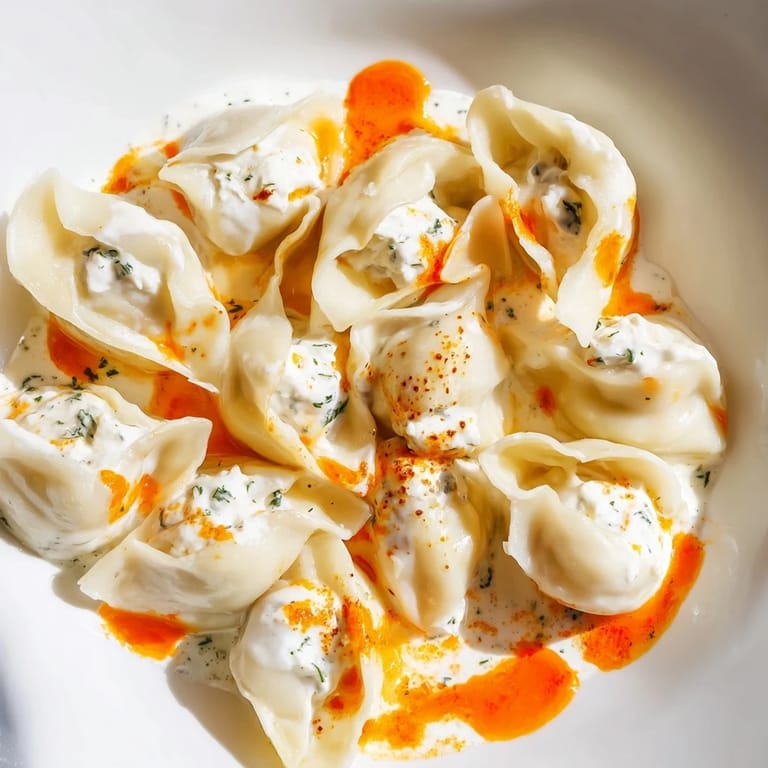
- Arrange your dumplings on plates, spoon the yogurt sauce over them generously, then drizzle the spiced butter so it catches the light and pools around each dumpling. A little extra parsley on top adds color and one more fresh note.
 Pin it
 The moment that really stayed with me was watching someone take their first bite and immediately go quiet, the kind of quiet that means they're really tasting it. There's something about the combination of cool yogurt, warm butter, and delicate dough that just works on a level that feels almost perfect.
The Magic of Simplicity
Turkish cooking teaches you that you don't need complicated techniques or endless ingredients to create something memorable. Manti proves this completely—just flour, cheese, yogurt, and butter, handled with patience and care. There's a philosophy in Turkish kitchens that respects each ingredient enough not to drown it out with competing flavors. The cheese isn't just filler; it's the main character, and everything else supports it.
Timing and Texture
The window between perfectly cooked and overcooked is small, but that's actually what makes this dish special. Once those dumplings float, they're close to done—another minute or two and they transform from chewy to tender. The cooling yogurt sauce is the reason everything works together; without it, the manti would feel heavy. With it, every bite feels balanced and complete.
Making It Your Own
While tradition is beautiful, there's room to play with this recipe if you want to make it feel personal to you. Some cooks add a touch of sumac for a bright citrus note, others fold in dried mint for a herbal quality. The spiced butter is forgiving too—if you love heat, add more Aleppo pepper; if you prefer subtlety, use less and let the paprika shine through.
- Try adding a whisper of fresh dill or mint to the yogurt sauce if you want extra brightness.
- If your cheese filling seems dry, a tablespoon of heavy cream mixed in makes it silkier without overwhelming the flavor.
- Make these ahead and freeze them uncooked, then cook straight from frozen—they'll take about 2 minutes longer to float.
 Pin it
 There's something deeply satisfying about making manti from scratch and watching someone's face light up when they taste it. This dish reminds me why cooking for people matters.
Recipe FAQs
- → What cheeses are used in this dish?
A blend of Turkish white cheese or feta and ricotta cheese forms the creamy filling, enhanced with parsley and a hint of black pepper.
- → How is the dough prepared for the dumplings?
The dough is made by mixing all-purpose flour, salt, egg, and water until smooth and elastic, then rested for 20 minutes before rolling out thinly.
- → What is the purpose of the yogurt sauce?
The yogurt sauce, combined with garlic and salt, provides a refreshing and tangy contrast to the rich cheese filling and buttery topping.
- → How do you cook the dumplings properly?
Dumplings are boiled in salted water until they float and become tender, usually 5 to 7 minutes, then drained carefully before serving.
- → What spices are used in the butter drizzle?
Unsalted butter is melted and infused with paprika and Aleppo pepper (or chili flakes) to add a smoky, mildly spicy finish.