 Pin it
 My neighbor knocked on my door one Tuesday evening with a bag of impossibly fresh cod from the fishmonger downtown, insisting I do something special with it that night. I'd been stuck in a rut of complicated weeknight dinners, so I decided to throw together whatever looked good in my pantry—cheese, breadcrumbs, whatever vegetables weren't wilting in the crisper drawer. Twenty-five minutes later, we were eating the crispiest, most golden fish I'd ever made, straight from one humble sheet pan. That single meal changed how I cook for people.
I made this for my sister's family on a Sunday when nobody felt like complicated cooking, and I watched her eight-year-old actually ask for seconds of roasted zucchini. That's when I knew this recipe had staying power—it satisfies the adults craving something restaurant-quality, but somehow feels effortless enough that even kids don't resist the vegetables.
Ingredients
- Cod filets (4 pieces, 5-6 oz each): Look for filets that smell like the ocean, not fishy, and feel firm when you press them gently—this ensures they'll stay moist under that golden crust.
- Panko breadcrumbs (1/2 cup): Regular breadcrumbs get dense, but panko stays airy and crispy, which is the whole point here.
- Asiago cheese (1/4 cup grated): This one surprised me—it adds a nutty, slightly sharper flavor than Parmesan alone, though you can skip it and double the Parmesan if that's all you have.
- Parmesan cheese (1/4 cup grated): Always grate it fresh if you can; the pre-shredded stuff contains anti-caking agents that prevent that beautiful melting action.
- Fresh parsley (2 tbsp chopped): This isn't just garnish—it brightens the whole crust mixture and adds a subtle herbaceous note that makes people wonder what's in there.
- Garlic powder (1 tsp): One teaspoon is enough to flavor without overpowering; I learned this the hard way after a particularly garlicky mistake.
- Black pepper (1/2 tsp) and salt (1/2 tsp): Season boldly—the crust needs to taste good on its own before it hits the oven.
- Olive oil (2 tbsp for crust, plus 2 tbsp for vegetables, plus extra for drizzling): The oil in the breadcrumb mixture is what makes it crispy rather than dusty, so don't skip this step.
- Egg (1 large): This is your glue; it's what holds that crust to the delicate fish without tearing it.
- Red and yellow bell peppers (1 each, sliced): The color matters here—it makes the plate look alive, and the slight sweetness balances the savory fish.
- Red onion (1 small, cut into wedges): Wedges char at the edges and stay slightly firm inside, unlike diced onions which can turn mushy.
- Cherry tomatoes (1 cup, halved): These burst slightly during roasting, releasing their juices into the surrounding vegetables—it's actually the best part.
- Zucchini (1 small, sliced): Slice it on the thicker side so it doesn't turn into mush before the fish is done.
- Dried oregano (1/2 tsp): This Mediterranean herb ties the whole dish together and prevents it from tasting one-note.
Tired of Takeout? 🥡
Get 10 meals you can make faster than delivery arrives. Seriously.
One email. No spam. Unsubscribe anytime.
Instructions
- Heat your oven and prep your pan:
- Crank the oven to 425°F and line a large sheet pan with parchment paper—this single step saves you from scrubbing cheese crust off metal later. Your future self will be grateful.
- Make the coating mixture:
- Combine panko, both cheeses, parsley, garlic powder, pepper, and salt in a bowl, then drizzle in the olive oil and stir with a fork until it looks like damp sand with little clumps. This texture is everything; it means the coating will stay crispy rather than turning into a dense crust.
- Coat the fish:
- Beat an egg in a shallow bowl, then dip each filet quickly—you want it wet but not dripping—and press it firmly into the cheese mixture on both sides like you're giving it a gentle hug. Place the coated filets on one half of your sheet pan, leaving room for vegetables on the other side.
- Toss the vegetables:
- In a large bowl, tumble your peppers, onion, tomatoes, and zucchini with olive oil, oregano, salt, and pepper until everything glistens. Spread them on the empty side of the sheet pan in a single layer—crowding them will steam them instead of roast them.
- Drizzle and roast:
- Give the fish a light drizzle of extra olive oil to help the crust brown, then slide the whole pan into the oven for 20 to 25 minutes. Halfway through, give the vegetables a quick stir with a spatula so they brown evenly, but don't touch the fish.
- Check for doneness and serve:
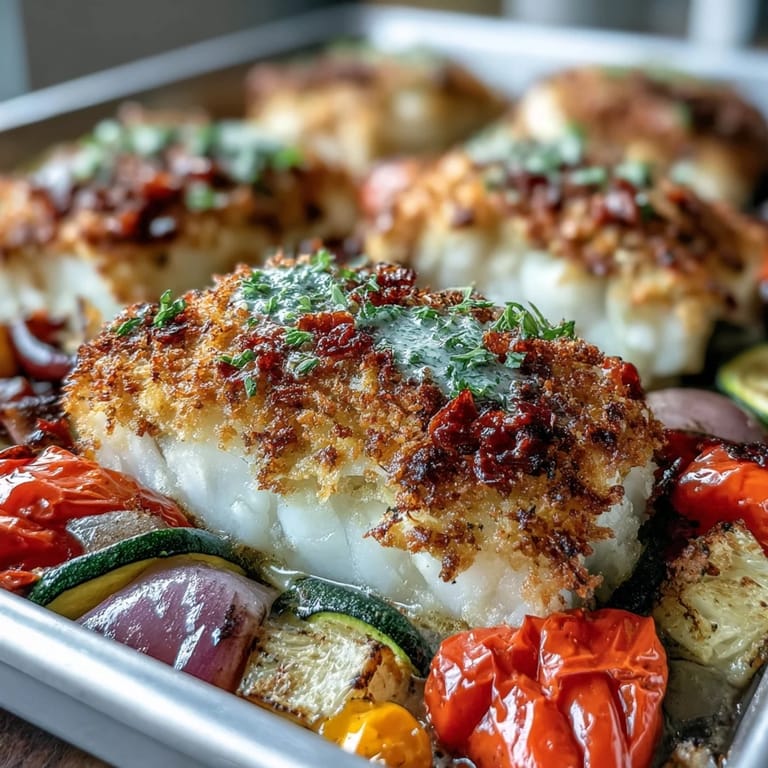
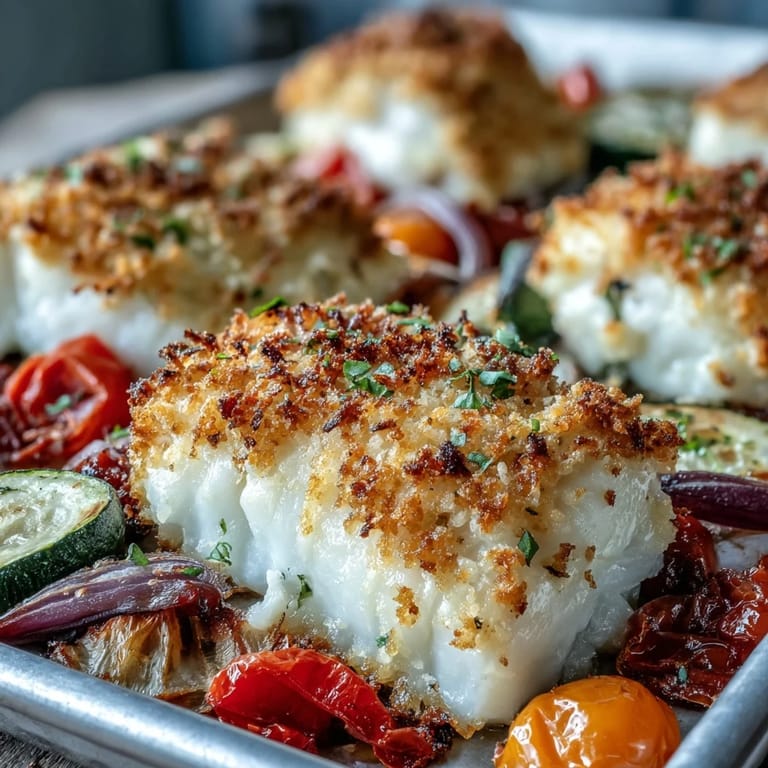
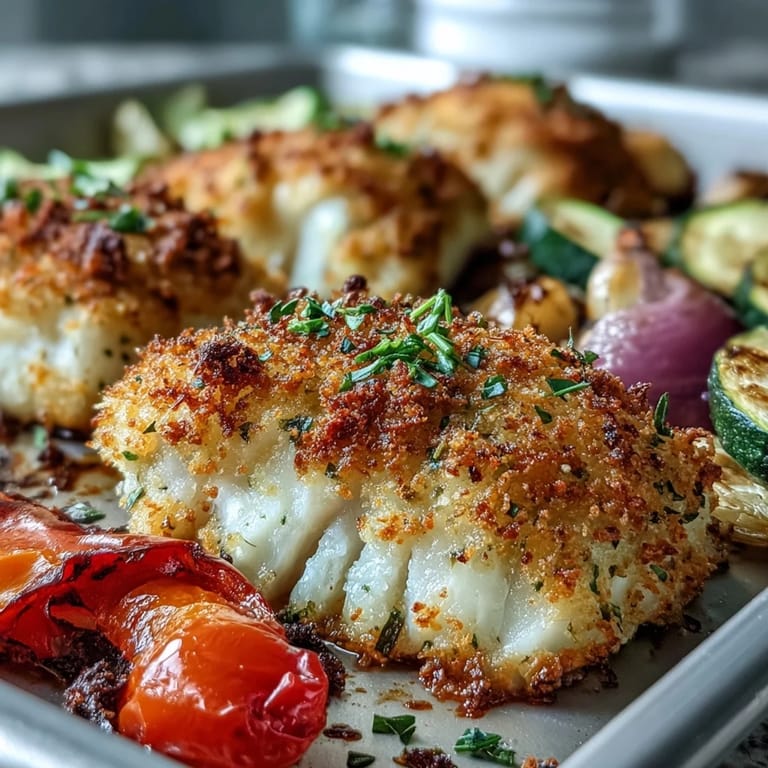
- The fish is ready when it flakes easily with a fork and the crust is deep golden brown—if the vegetables still look pale at this point, leave them in for another minute or two. Plate everything while it's hot, maybe scatter a tiny bit more parsley on top if you're feeling fancy.
 Pin it
 There's something about pulling a sheet pan from the oven and seeing every element perfectly cooked at the same moment—the fish still steaming, the vegetables charred at the edges but tender inside, the crust making that satisfying crunch when you cut into it. That's when cooking stops feeling like a task and starts feeling like magic you made with your own two hands.
Why This Works as a Weeknight Dinner
The beauty of sheet pan cooking is that there's no juggling temperatures or timing different components—everything roasts at the same heat and finishes together. I stopped overthinking dinner the moment I realized the vegetables actually benefit from sitting next to something as flavorful as cheese-crusted fish. The rendered oils and browned bits all mingle together, making even the simplest zucchini taste restaurant-quality.
Fish Swaps and Variations
Cod is my go-to because it's mild and forgiving, but I've made this with haddock, tilapia, and even halibut when I was feeling fancy. Each fish has its own personality—haddock is slightly sweeter, tilapia is more delicate—but they all work beautifully under that crust. The key is using something firm that won't flake apart during coating and won't dry out in 25 minutes.
Making It Your Own
I started experimenting after the first few times, and now this recipe is almost unrecognizable from the original idea. Some nights I add baby potatoes or thicker carrot slices if I want something more substantial; other times I swap half the panko for grated Gruyère just to see what happens. The framework is flexible enough to handle whatever's in your fridge, as long as you respect the basic principles of the crust and the roasting time.
- For extra crunch without waiting longer, broil the fish for just the final two minutes—watch it like a hawk so the crust browns but doesn't burn.
- A splash of lemon juice over everything right before serving brightens the flavors and ties the whole dish together beautifully.
- If you're cooking for someone avoiding gluten, substitute almond flour or gluten-free panko and the result is almost indistinguishable.
 Pin it
 This is the kind of meal that tastes like you spent hours in the kitchen but actually took less time than ordering takeout. Once you realize how simple it is to make something this delicious, you'll find yourself making it again and again.
Recipe FAQs
- → Can I use different fish for this dish?
Yes, haddock, tilapia, halibut, or any firm white fish work beautifully as substitutes for cod. Adjust cooking time slightly for thicker or thinner filets.
- → How do I get the crust extra crispy?
Press the coating firmly onto the egg-washed filets, and broil for the last 1-2 minutes of cooking. Watch closely to prevent burning.
- → What vegetables work best in this sheet pan meal?
Bell peppers, zucchini, cherry tomatoes, and red onion roast evenly. You can also add baby potatoes, carrots, or asparagus depending on what's in season.
- → Can I make this gluten-free?
Use gluten-free panko or crushed gluten-free crackers for the crust. Ensure all seasonings and coatings are certified gluten-free.
- → How do I know when the fish is done?
The fish is ready when it flakes easily with a fork and the internal temperature reaches 145°F. The crust should be golden brown and the vegetables tender.