 Pin it
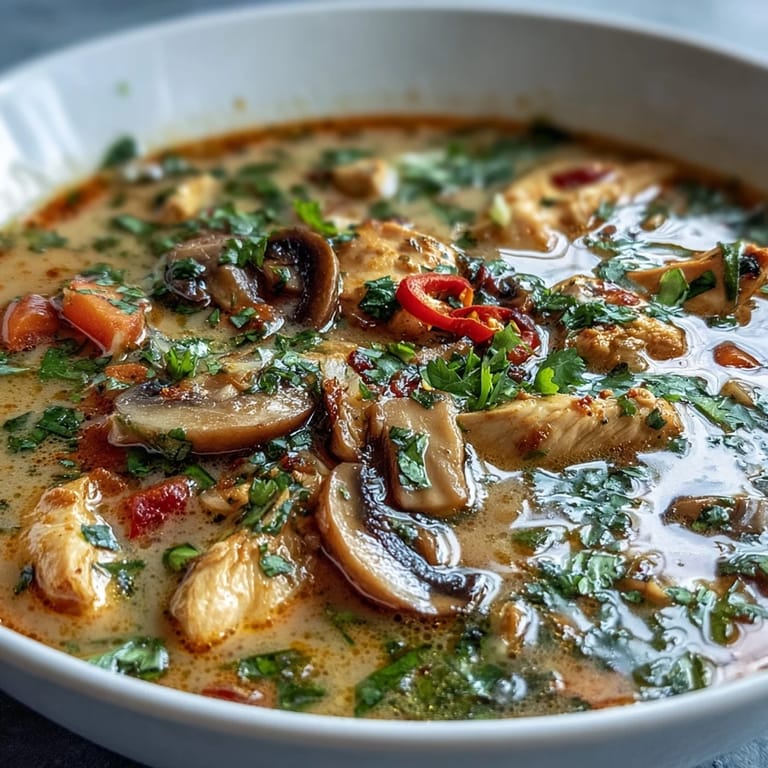
 There's something about the smell of curry paste hitting hot oil that makes me drop everything I'm doing. I learned to make this soup on a rainy Tuesday when a friend texted saying they were stressed, and instead of meeting for coffee, I decided soup was the answer. Twenty minutes later, I had something aromatic and golden simmering on my stove, and by the time they arrived, the whole apartment smelled like Thailand. That's when I realized this wasn't just a recipe—it was comfort wrapped in coconut milk.
I made this for my partner on a night they came home absolutely exhausted, and I watched their shoulders visibly relax after the first spoonful. The warmth, the fragrance, the tender chicken—it transformed what could have been a quiet evening into something that felt like care. That's when I understood that the best recipes aren't just about technique; they're about knowing when someone needs more than just food.
Ingredients
- Boneless, skinless chicken breast or thighs, thinly sliced (400 g): Thighs give you more forgiving, juicy results, but breast works beautifully if that's what you have—just don't walk away while it's cooking.
- Mushrooms, sliced (200 g): Shiitake adds earthiness and substance, but button mushrooms are reliable and absorb the broth like little flavor sponges.
- Carrots, julienned (2 medium): The natural sweetness balances the spice and curry paste in a way that tastes intentional, not accidental.
- Red bell pepper, thinly sliced (1 small): This isn't just for color—it brings a gentle sweetness and texture that keeps each spoonful interesting.
- Baby spinach or bok choy (100 g, optional): Add this at the very end so it stays bright and tender rather than turning into mush.
- Spring onions, thinly sliced (2): These are your finishing touch, bringing freshness and a gentle bite to cut through the richness.
- Fresh ginger, grated (1 tablespoon): Don't skip this—it's what makes your kitchen smell like you actually know what you're doing.
- Garlic, minced (3 cloves): Garlic and ginger together are the foundation; they're the reason people will ask what smells so good.
- Lemongrass, bruised and cut into 2-inch pieces (2 stalks, optional): This is the secret that makes people think you're more skilled than you actually are.
- Kaffir lime leaves (4, optional): If you can find these, they add an aromatic complexity that's hard to replicate—but the soup is still wonderful without them.
- Red curry paste (2 tablespoons): This is your backbone, so taste as you go and adjust based on how spicy you're feeling and what brand you're using.
- Coconut milk (800 ml): Full fat makes it luxurious and silky; light coconut milk keeps it slightly lighter but still creamy and satisfying.
- Chicken broth (500 ml): This balances the richness of the coconut milk and keeps the soup from feeling too heavy.
- Fish sauce (1 tablespoon): This sounds mysterious and intimidating, but it's what gives Thai food its depth—use soy sauce or tamari if you prefer vegetarian.
- Brown sugar (1 tablespoon): Just a touch to round out the flavors and let the other ingredients shine without tasting sweet.
- Lime juice (from 1 lime): This is your final wake-up call; it brightens everything and makes you taste each ingredient separately instead of as one blended mass.
- Fresh cilantro, chopped (for garnish): The herbaceous pop at the end that makes people sit up and notice.
- Fresh red chili, sliced (optional, for garnish): For those moments when you want just a little more fire.
- Lime wedges (for serving): Let people adjust the acidity to their own preference.
Tired of Takeout? 🥡
Get 10 meals you can make faster than delivery arrives. Seriously.
One email. No spam. Unsubscribe anytime.
Instructions
- Build your flavor base:
- Heat a large pot over medium heat and add a splash of oil. When it shimmers, add the ginger, garlic, and lemongrass if you're using it, and cook for about a minute until the kitchen fills with that incredible aroma. You'll know it's ready when your nose tells you it is.
- Wake up the curry paste:
- Stir in the red curry paste and let it cook for another minute, letting the oils release and the flavors deepen. This step is small but crucial—it's the difference between paste-flavored soup and soup that tastes like it actually came from somewhere.
- Sear the chicken:
- Add your sliced chicken and cook for 2 to 3 minutes, stirring to coat everything with that fragrant paste. The chicken doesn't need to be fully cooked yet; you just want it to pick up all those flavors.
- Bring in the broth:
- Pour in the coconut milk and chicken broth, then add the kaffir lime leaves if you have them, along with the carrots, mushrooms, and red bell pepper. Give everything a gentle stir and let it come to a simmer.
- Let it simmer gently:
- Keep the heat at a gentle simmer and cook for 10 to 12 minutes until the chicken is cooked through and the vegetables are just tender. You want to hear a soft bubbling, not an aggressive boil that breaks everything apart.
- Season and taste:
- Add the fish sauce, brown sugar, and lime juice, then taste and adjust. This is your moment to make it yours—add more paste if you want more heat, more lime juice if you want brightness, or more sugar if the spice is overwhelming.
- Add the greens:
- If you're using spinach or bok choy, add it now and let it wilt for just 1 to 2 minutes. You want it soft but still vibrant, not faded.
- Remove and ladle:
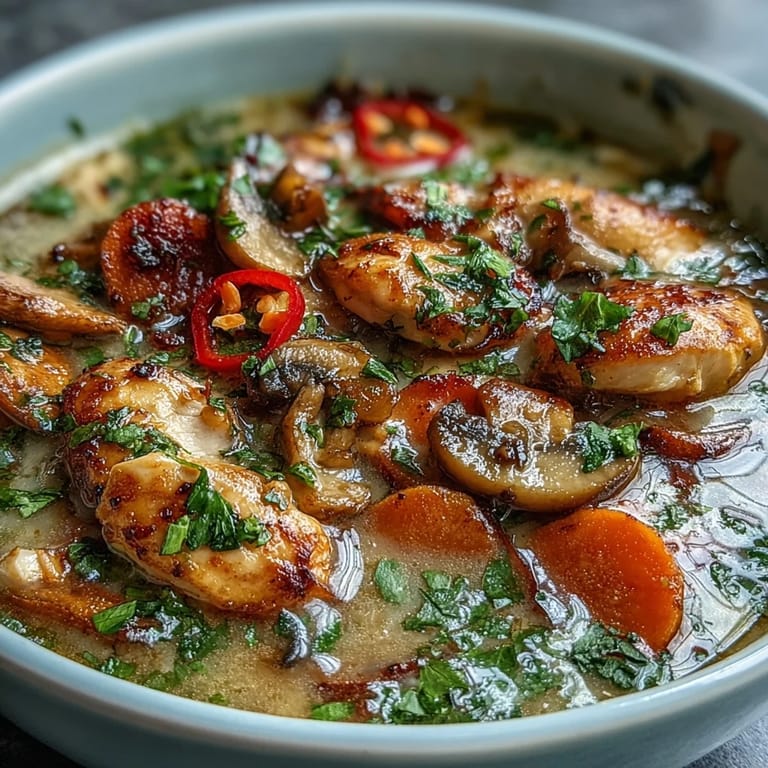
- Take out the lemongrass stalks and kaffir lime leaves if you used them, then ladle the soup into bowls. Watch it settle in the bowl—it's beautiful.
- Garnish and serve:
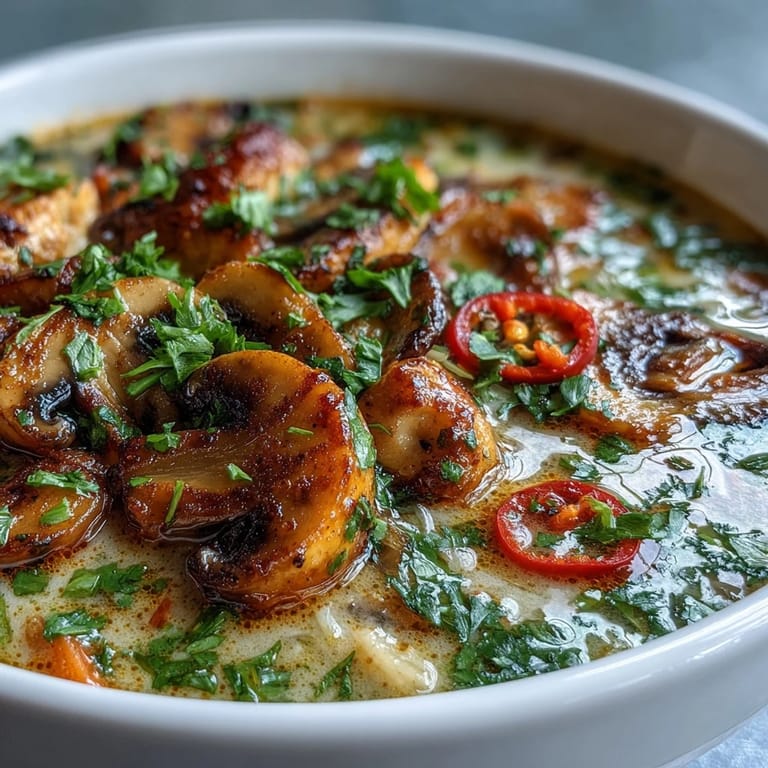
- Top each bowl with spring onions, fresh cilantro, and a slice or two of fresh chili if you like heat. Set lime wedges alongside so people can squeeze in as much brightness as they want.
 Pin it
 I've served this soup to people who said they didn't like Thai food, and something about the way it tastes homemade and gentle rather than aggressive converted them. There's something about sharing a bowl of soup that feels like an act of kindness in a way that other meals don't quite manage.
Making It Your Own
The beauty of this soup is that it's a framework, not a rulebook. I've made it with shrimp when I wanted something lighter, with extra mushrooms when I was cooking for vegetarians, and even with a splash of coconut cream when I was feeling particularly indulgent. The core—that fragrant, warming broth—stays the same, but everything else can bend to what you're craving or what you have on hand. One night I added a handful of rice noodles directly to the pot because I wanted something heartier, and it transformed into an entirely different kind of comforting.
Pairing and Serving
Jasmine rice is the traditional choice, and there's a reason for it—the subtle floral notes complement the soup without fighting for attention. Rice noodles work beautifully too, especially if you want something lighter. I've also served this as a standalone bowl when I want the soup to be the star, no sides needed. The soup is rich enough that it doesn't need anything else, though if you're feeding people with bigger appetites, serving rice on the side is always smart.
Storage and Leftovers
This soup actually improves after a day in the refrigerator as the flavors continue to meld and deepen. Store it in an airtight container for up to three days, and it reheats beautifully on the stovetop over medium heat—just stir occasionally and add a splash of water if it's thickened too much. You can also freeze it for up to a month, though the texture of the vegetables will be slightly softer when thawed. The one thing I always do is wait to add fresh cilantro and lime juice until just before serving, so those bright flavors stay crisp.
- Make a big batch on Sunday and portion it into containers for easy weekday lunches.
- The soup tastes even better on day two, so don't stress about using it immediately.
- If you freeze it, thaw it in the refrigerator overnight rather than on the counter.
 Pin it
 This soup became my default when I needed to show someone I cared but didn't have much time. It's proof that the simplest meals are often the most memorable ones.
Recipe FAQs
- → Can I make this soup vegetarian?
Absolutely. Replace chicken with firm tofu or extra vegetables, swap chicken broth for vegetable broth, and use soy sauce or tamari instead of fish sauce.
- → How spicy is this coconut curry soup?
The heat level depends on your red curry paste. Start with 2 tablespoons for moderate spice, or reduce to 1 tablespoon for milder flavor. Add fresh chili garnish for extra kick.
- → Can I freeze this soup?
Yes, freeze for up to 3 months. Note that coconut milk may separate slightly when reheated—simply whisk while warming to restore creamy texture.
- → What's the best way to slice chicken for soup?
Partially freeze chicken for 20 minutes, then slice thinly against the grain. This ensures tender, quick-cooking pieces that absorb the curry flavors beautifully.
- → Can I use light coconut milk?
Yes, though the broth will be less creamy. Full-fat coconut milk creates a richer, more luxurious texture typical of authentic Thai street food style.
- → What should I serve with this soup?
Jasmine rice or rice noodles make excellent additions for a heartier meal. Crisp white wines like Riesling complement the sweet-spicy balance perfectly.