 Pin it
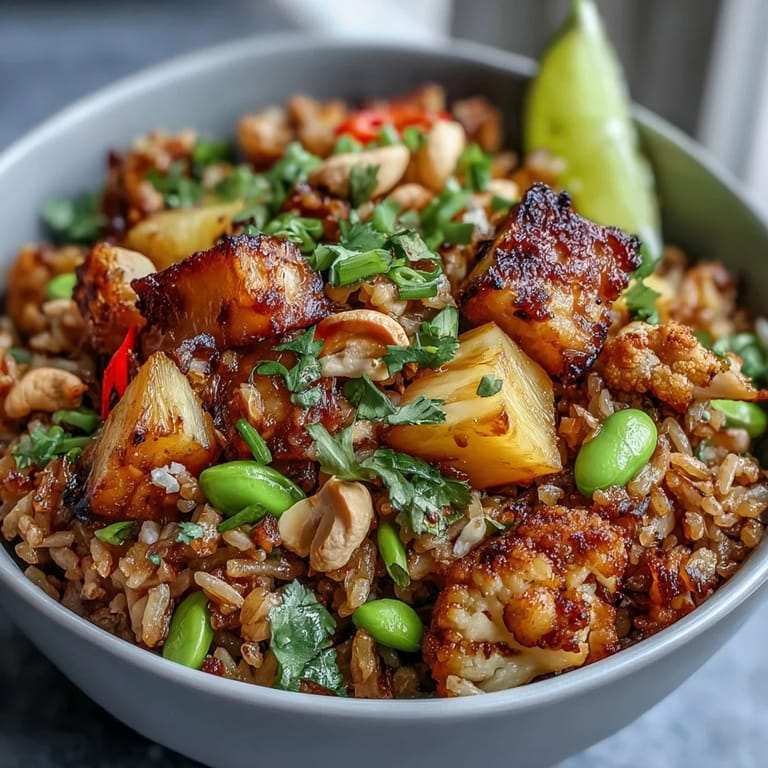
 My friend texted me a photo of a vibrant bowl of fried rice one Tuesday evening, captioning it with just a smiley face and the word wow. When she explained it was made entirely from riced cauliflower and studded with chunks of sweet pineapple, I was skeptical but curious. The first time I made it, the kitchen filled with this incredible aroma of toasted sesame and ginger, and by the time everything hit the wok, I understood why she'd been so excited. What surprised me most was how the pineapple juice caramelized slightly against the heat, creating these little pockets of sweetness throughout. Now it's my go-to when I want something that feels both indulgent and genuinely nourishing.
I made this for a potluck where I knew there would be people with various dietary restrictions, and honestly, I was nervous no one would touch it. Someone's elderly parent took a scoop, tasted it, and then went back for seconds while asking me what I'd done to make cauliflower taste like that. That moment reminded me that food isn't about being "healthy" or "trendy"—it's about creating something delicious enough that people forget to worry about what it is.
Ingredients
- Cauliflower, riced (5 cups): This is your rice, and the texture matters more than you'd think—pulse until you get pieces the size of actual rice grains, not powder.
- Fresh pineapple, diced (1 cup): If using canned, drain it well or your dish turns watery; fresh is worth seeking out for the juice and natural sweetness.
- Edamame, shelled (1 cup): These little beans are your protein powerhouse and add a satisfying pop of texture that keeps things interesting.
- Red bell pepper (1 diced): The sweetness plays beautifully against the savory soy sauce—don't skip this flavor foundation.
- Green onions (4, thinly sliced): Split these into white and green parts; the whites go in early for allium depth, the greens go in at the end for brightness.
- Garlic, minced (2 cloves): Mince it just before cooking so it releases its oils and perfumes your wok immediately.
- Carrot, diced (1 medium): Cut into small, uniform pieces so it cooks quickly and adds visual warmth to the dish.
- Peas (1/2 cup): Frozen peas are perfect here—they thaw instantly and add sweetness without any prep work.
- Tamari or soy sauce (3 tablespoons): This is the umami backbone; tamari keeps it gluten-free if that matters to your table.
- Toasted sesame oil (1 tablespoon): Use the good stuff—it's potent, aromatic, and worth every penny because a little goes such a long way.
- Fresh ginger, grated (1 teaspoon): Grate it just before cooking; the difference between fresh and ground is night and day in this dish.
- Rice vinegar (1 tablespoon): This adds brightness and keeps the flavors from feeling too heavy or one-dimensional.
- Sriracha or chili-garlic sauce (1 teaspoon, optional): Add this if you like heat, but taste as you go—you can always add more.
- Salt and black pepper: Season at the end after you've combined everything so you hit the right balance.
- Roasted cashews or peanuts (2 tablespoons, chopped): These add a final crunch and richness that makes each spoonful feel complete.
- Fresh cilantro or basil (2 tablespoons, chopped): I lean toward cilantro for its peppery edge, but basil brings an herbaceous warmth if that's your preference.
- Lime wedges: Squeeze these over your bowl right before eating; the acid wakes everything up and ties the dish together.
Tired of Takeout? 🥡
Get 10 meals you can make faster than delivery arrives. Seriously.
One email. No spam. Unsubscribe anytime.
Instructions
- Transform Your Cauliflower:
- Cut the cauliflower into florets, removing the core and leaves, then pulse in a food processor until the pieces resemble actual grains of rice. You're aiming for texture, not powder, so stop before it gets too fine.
- Get Your Wok Hot:
- Heat sesame oil in a large nonstick skillet or wok over medium-high heat until you see it shimmer and smell that nutty toasted aroma. This is the moment the cooking really begins.
- Build Flavor Foundation:
- Add minced garlic, grated ginger, and the white parts of your green onions to the hot oil and let them sizzle for about 1 minute until the kitchen smells absolutely incredible. The goal is to bloom these aromatics without letting them burn.
- Cook the Soft Vegetables:
- Toss in your diced carrots and red bell pepper, stirring constantly for 2 to 3 minutes until they're just starting to soften but still have a tiny bit of crunch. This is the moment you're building texture contrast.
- Work in the Cauliflower:
- Add your riced cauliflower to the wok, stirring well to coat everything in that sesame oil, then cook for 4 to 5 minutes while stirring frequently. The cauliflower will shrink slightly and become tender, but you want to stop before it turns mushy.
- Add the Good Stuff:
- Stir in the peas, edamame, and diced pineapple, cooking for another 2 to 3 minutes until everything is heated through. This is when the colors brighten and the pineapple juice starts mingling with everything else.
- Season and Toss:
- Pour in your tamari, rice vinegar, and sriracha if using, then toss everything to coat evenly so the sauce reaches every corner. Taste it now and adjust salt and pepper to your preference.
- Finish with Brightness:
- Remove from heat and stir in the green parts of your green onions along with half of the cilantro. Don't skip this step—the fresh herbs make all the difference in the final flavor.
- Serve with Joy:
- Divide into bowls and garnish with chopped cashews, remaining cilantro, and lime wedges. Squeeze the lime over everything just before eating for that final pop of brightness.
 Pin it
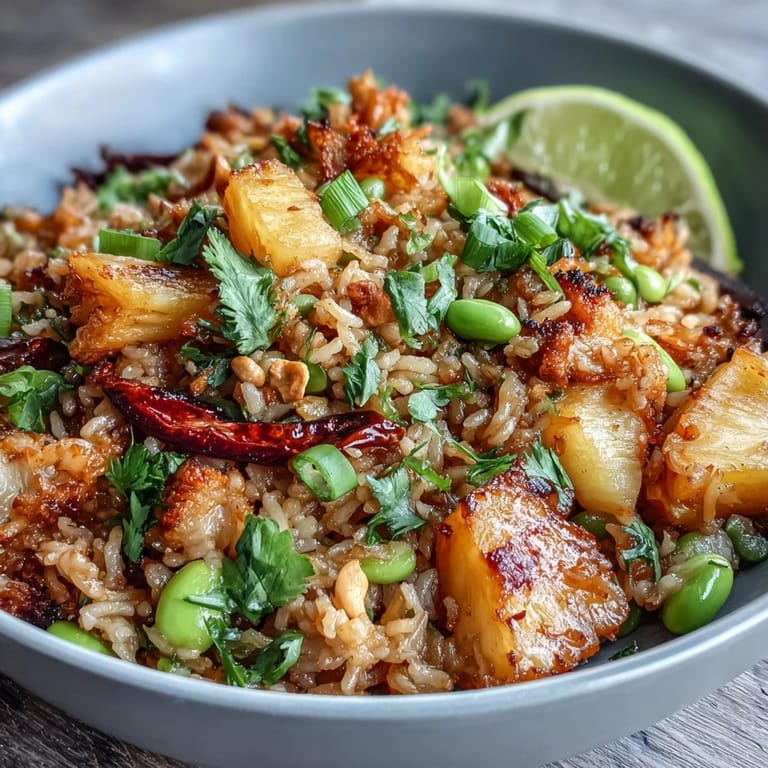
 My neighbor came over as I was finishing this dish and mentioned she'd been trying to eat more vegetables but found most of them boring. She took one bowl home, and when I saw her the next morning she told me she'd made it again for her family dinner and everyone had seconds. That's when I realized this dish isn't a compromise—it's genuinely delicious food that happens to be built on vegetables.
Why Texture Matters Here
The magic of this dish lives in its contrasts—the slight firmness of the cauliflower against the soft peas, the burst of pineapple juice, the crunch of nuts at the finish. I learned this the hard way when I once overcooked the cauliflower and ended up with something mushy that tasted fine but felt underwhelming. Now I treat that cooking time like I'm orchestrating a symphony where every ingredient needs its own moment to shine.
Making It Your Own
The beauty of fried rice is that it's endlessly flexible and forgiving once you understand the basic technique. I've added diced water chestnuts for extra crunch, swapped edamame for tofu when I had it on hand, and once threw in some roasted cashew pieces because they were sitting in my pantry. The sauce carries everything, so as long as you're building with vegetables and finishing with that soy-ginger-sesame combination, you're going in the right direction.
Storage and Serving Ideas
Leftovers actually taste even better the next day once all the flavors have time to meld together, and they keep beautifully in the refrigerator for up to 3 days in an airtight container. My favorite trick is to reheat it gently in a wok with just a splash of sesame oil rather than the microwave, which brings back some of that crispy texture and makes it taste freshly made.
- Try serving it inside hollowed-out pineapple halves for a presentation that makes people actually gasp.
- Leftover portions work perfectly as a packed lunch because it's delicious hot or at room temperature.
- Double the batch and freeze portions in individual containers for nights when you're too tired to think about dinner.
 Pin it
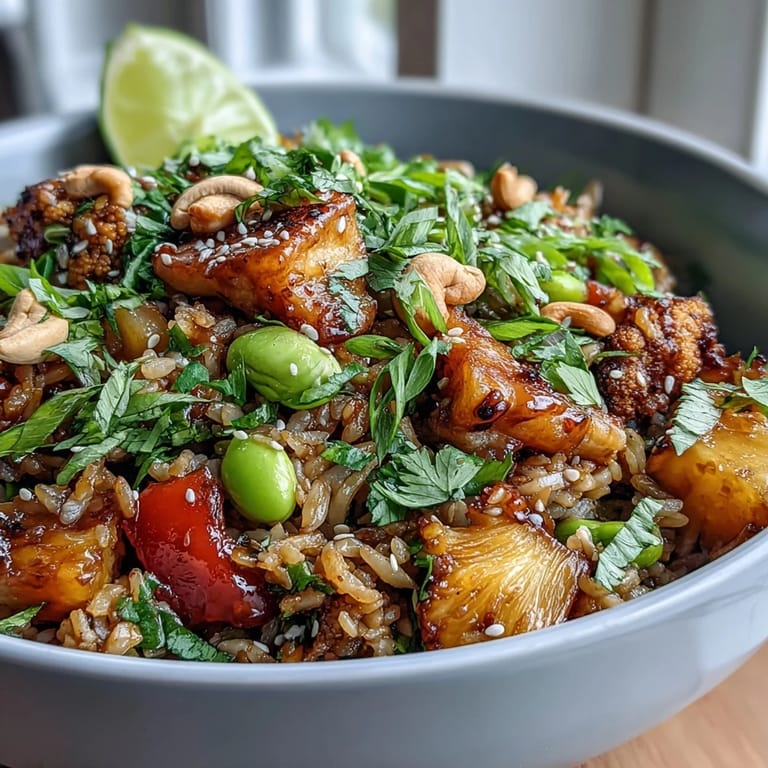
 This recipe has become my answer to the question "what should we eat?" on busy nights and special occasions alike. It's proof that the most memorable meals don't have to be complicated—they just need to be made with attention and love.
Recipe FAQs
- → Can I substitute cauliflower with another vegetable?
Riced cauliflower provides a low-carb base, but riced broccoli or finely chopped zucchini can be used as alternatives with similar texture.
- → What is the best way to prepare edamame for this dish?
Use shelled, thawed frozen edamame or boil fresh pods briefly before shelling. Add towards the end to keep them tender yet firm.
- → How can I adjust the heat in this dish?
Control spice by adjusting or omitting sriracha or chili-garlic sauce according to taste preferences.
- → Is it possible to make this gluten-free?
Yes, use tamari or gluten-free soy sauce to ensure the dish remains gluten-free.
- → What garnishes enhance flavor and texture?
Chopped roasted cashews or peanuts add crunch, while fresh cilantro or basil and lime wedges brighten the flavors.
- → Can I prepare components in advance for quick assembly?
Yes, rice the cauliflower and chop vegetables beforehand. Store separately and stir-fry freshly for best texture.