 Pin it
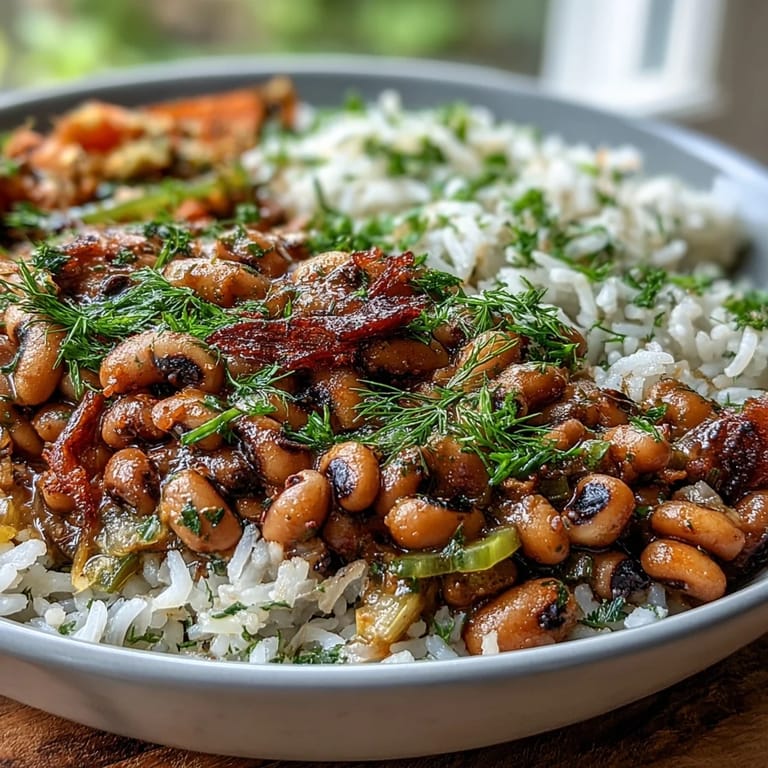
 My friend Marcus called one random Tuesday asking if I could veganize his grandmother's Hoppin John recipe for a family dinner. I'd never made it before, but I remembered him describing it as the kind of dish that tastes like home feels, warm and slightly smoky. Standing in my kitchen that afternoon, I realized the magic wasn't in meat at all, it was in the way those black-eyed peas soaked up every bit of spice and soul from the pot. One taste and I understood why he wanted to bring this Southern classic to his table exactly as it was, just without the animal products. This version became the one I reach for whenever I need something that feels like a hug in a bowl.
The first time I made this for actual people, my neighbor knocked on my door drawn by the smell. She stood in my kitchen doorway for twenty minutes just breathing in, asking questions about the spices, finally asking to stay for dinner. Watching her take that first bite and smile without saying anything told me everything, that food this honest doesn't need a fancy name or fancy ingredients to matter.
Ingredients
- Olive oil: Just enough to get the vegetables moving in the pan without making the dish greasy, about a tablespoon does the work.
- Medium onion, diced: The flavor foundation, sweet when softened and totally worth the three minutes it takes to chop.
- Green bell pepper, diced: Brings freshness and a slight sweetness that balances the smokiness coming later.
- Celery stalks, diced: This is the holy trinity talking, the quiet helper that builds depth most people won't notice but will taste.
- Garlic, minced: Three cloves might seem like nothing until it hits hot oil and fills your whole kitchen, trust the amount.
- Black-eyed peas, canned: Rinse them well under cold water to cut through any metallic taste, and don't skip this step even when you're tired.
- Smoked paprika: The real star, this ingredient is what makes people ask if there's meat in the pot, it's that convincing.
- Dried thyme, oregano, cumin: Together these create a warm, almost old-fashioned flavor that feels intentional and balanced.
- Cayenne pepper: Keep this optional and add it slowly if heat is your thing, you can always add more but you can't take it out.
- Bay leaves: Two of them, and actually remove them before serving because biting into one is genuinely unpleasant.
- Vegetable broth: Low-sodium lets you control the salt and keep the flavors bright instead of flat.
- Soy sauce or tamari: A tablespoon adds umami depth that rounds everything out, use tamari if you need gluten-free.
- Rice: Four cups cooked, whether you choose white or brown depending on what you're craving that day.
- Fresh parsley or cilantro: The brightness at the end, this quarter cup of green changes everything about how the dish lands on your tongue.
- Green onions: Slice them thin and scatter them on top like you're finishing something beautiful, because you are.
Tired of Takeout? 🥡
Get 10 meals you can make faster than delivery arrives. Seriously.
One email. No spam. Unsubscribe anytime.
Instructions
- Build your flavor base:
- Heat oil over medium in a large pot until it shimmers slightly, then add onion, pepper, and celery. You'll know they're ready in about six minutes when they're soft enough to break apart with a spoon and starting to smell seriously good.
- Wake up the garlic:
- Stir in minced garlic and let it cook for just one minute until the smell changes from sharp to roasted, this is the signal that your spices are about to work their magic.
- Toast your spices:
- Add paprika, thyme, oregano, cumin, cayenne if using, black pepper, and salt, stirring constantly for about thirty seconds so every vegetable gets coated and the dry spices bloom.
- Bring everything together:
- Pour in the rinsed black-eyed peas, vegetable broth, and soy sauce, add those bay leaves, and give it a good stir to make sure nothing is sticking to the bottom.
- Let it simmer down:
- Bring it to a gentle simmer, then reduce heat to medium-low and cook uncovered for twenty to twenty-five minutes, stirring every few minutes, until the liquid has reduced and the mixture looks thick enough to stay on your spoon.
- Taste and adjust:
- Fish out the bay leaves, then taste a spoonful and decide if it needs more salt or a squeeze more soy sauce, this is your moment to make it perfect for your palate.
- Finish with care:
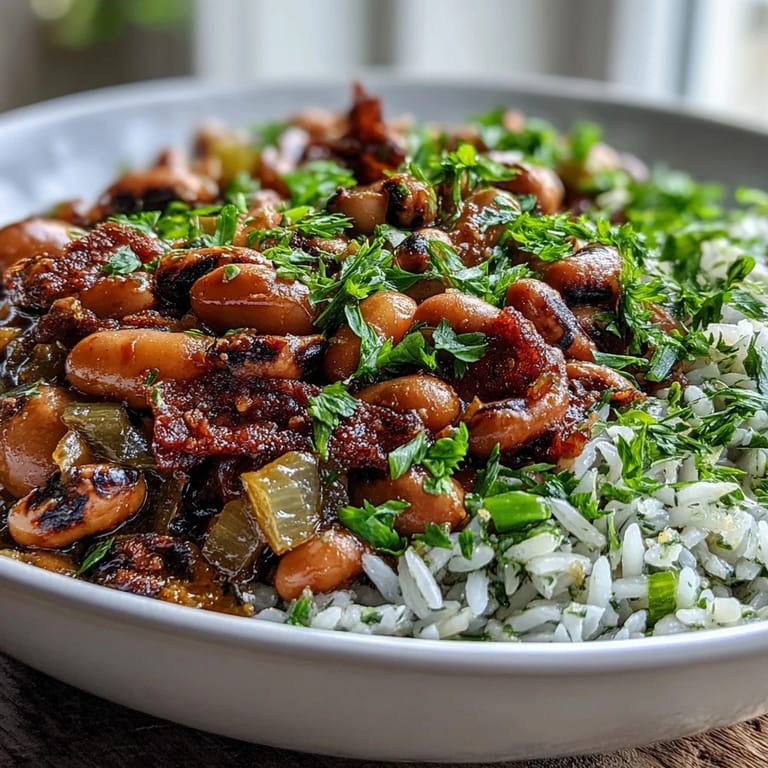
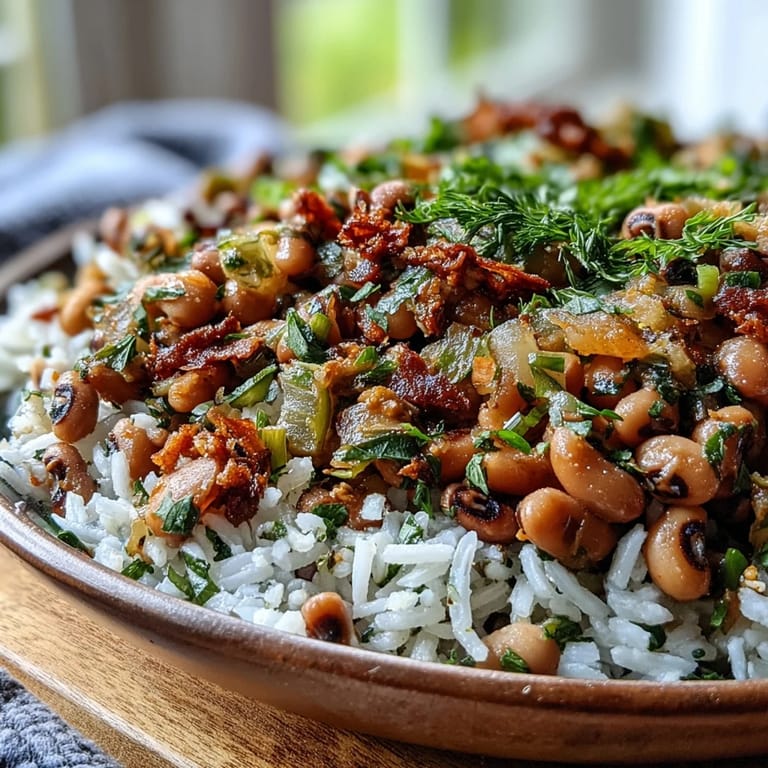
- Spoon the Hoppin John over warm rice, top with fresh herbs and green onions, and if you want a little brightness, cut a lemon in half and squeeze it over the top.
 Pin it
 There was this one Sunday when I made this dish for a potluck and someone pulled me aside after eating to ask what kind of meat gave it that depth. When I told them there was no meat at all, they went quiet for a second then said it changed how they thought about vegetarian cooking entirely. That's the moment this recipe stopped being just something I made and started being something I believed in.
Why Smoked Paprika Is Everything
The secret to this dish tasting like the traditional version isn't a fancy ingredient hunt, it's understanding what smoked paprika actually does. It carries those deep, campfire-adjacent flavors that traditionally came from ham or sausage, but it does it with its own kind of honesty. When I first tasted this version, I was shocked how the spice profile felt complete without any animal products, which taught me that authenticity isn't about rigid rules, it's about getting the flavor right.
Serving Suggestions That Actually Matter
This dish shines when you treat it like the centerpiece it is, but it also wants company that respects its flavors. Serve it with something green and slightly bitter like collard greens or sautéed kale, or give people hot sauce on the side so they can adjust the heat to their preference. Some people like it with cornbread on the side, which adds a sweetness that plays nicely against the savory depth.
Making It Your Own
Once you've made this version a few times, you'll start seeing where you can play around. Maybe you add a splash of liquid smoke if you want it more intense, or swap in kidney beans if that's what's in your pantry. The core technique stays the same but the dish stays exciting because you get to customize it based on what sounds good in that moment.
- If you want extra smokiness, add a small splash of liquid smoke or use chipotle powder instead of regular cayenne for a completely different heat profile.
- Great leftover potential, this actually tastes better the next day once the flavors have really gotten to know each other.
- Freeze what you don't eat and reheat gently, adding a splash of water if it's gotten too thick, and it'll taste almost as good as day one.
 Pin it
 This is the kind of dish that reminds me why I cook at all. It's simple enough that you can make it on a weeknight but tasty enough that people will ask for the recipe.
Recipe FAQs
- → What makes this dish authentically Southern?
The combination of black-eyed peas with the aromatic base of onion, celery, and bell pepper—known as the "holy trinity" in Southern cooking—creates authentic flavor. Smoked paprika adds depth reminiscent of traditional preparations.
- → Can I make this ahead of time?
Absolutely. The flavors actually improve overnight. Store the bean mixture separately from the rice and reheat gently before serving. Add a splash of broth if it thickens too much.
- → What rice works best?
Long-grain white or brown rice both work beautifully. Brown rice adds nutty flavor and extra fiber, while white rice provides the traditional lighter texture. Basmati is another excellent option.
- → How can I add more protein?
The black-eyed peas already provide 13 grams per serving. For additional protein, consider serving with a side of cornbread or adding chopped vegan sausage during the simmering stage.
- → Is this dish spicy?
The cayenne pepper adds mild warmth. For more heat, increase the cayenne or add hot sauce at the table. The smoked paprika provides flavor without significant spice.
- → Can I use dried black-eyed peas instead of canned?
Yes. Soak 1 cup dried peas overnight, then simmer for about 45 minutes until tender before adding to the vegetables. You may need to adjust the broth quantity slightly.