 Pin it
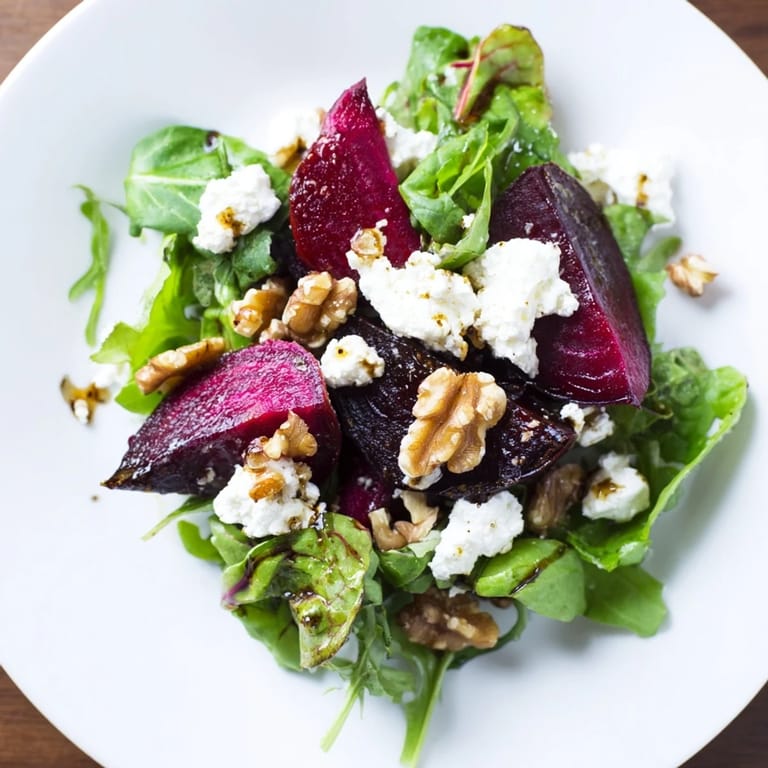
 There's something magical about the moment when you pull a foil-wrapped beet from the oven and it releases that earthy steam, transforming from a hard knot into something tender enough to yield to a knife. I discovered this salad during a particularly uninspired week of eating the same tired greens, and honestly, it was the beets that saved me—their natural sweetness against the sharp tang of goat cheese felt like a small revelation. Now it's become my go-to when I want something that looks fancy but demands almost no skill, just patience and a hot oven.
I made this for friends who were all going on various diets, and for once I wasn't stressed about accommodating everyone—it just naturally fit all their boxes. Watching them dig in without checking labels or asking questions first was its own kind of victory, and someone even asked for the recipe, which never happens at my table.
Ingredients
- 3 medium beets, trimmed and scrubbed: These are your foundation, and size matters here—medium beets roast evenly without drying out, unlike their enormous cousins that take forever and sometimes turn woody inside.
- 120 g goat cheese, crumbled: Don't skip the step of letting it come to room temperature slightly before crumbling; it breaks into soft, cloud-like pieces instead of shattering.
- 60 g walnuts, roughly chopped: A quick dry toast in a skillet brings out their nuttiness and adds the textural contrast that transforms this from nice to crave-worthy.
- 120 g mixed salad greens: Use whatever's freshest at your market—arugula alone is peppery and bold, spinach is mild and slightly sweet, and spring mix splits the difference.
- 3 tbsp extra-virgin olive oil: This is where quality whispers the loudest; cheaper oil gets bullied by the vinegar and mustard.
- 1½ tbsp balsamic vinegar: Real aged balsamic is thicker and darker, but even the basic stuff at your supermarket works if that's what you have on hand.
- 1 tsp Dijon mustard: This is your emulsifier, the friend that keeps everything from separating and adds a slight peppery kick you'll taste but won't identify as mustard.
- 1 tsp honey: A tiny sweetness to soften the vinegar's edge and make the whole dressing round and harmonious.
- Salt and freshly ground black pepper, to taste: Taste as you go and trust your instincts—dressing preferences are personal.
Tired of Takeout? 🥡
Get 10 meals you can make faster than delivery arrives. Seriously.
One email. No spam. Unsubscribe anytime.
Instructions
- Heat your oven and prep the beets:
- Preheat to 200°C (400°F) and while it's warming, give each beet a good scrub under cold water to remove any stubborn dirt. Wrap them individually in aluminum foil—this traps the steam and makes them essentially pressure-cook inside their own skin, which keeps them moist and tender.
- Roast until they surrender:
- Place the foil packets on a baking sheet and slide them in for 35 to 40 minutes, depending on how large your beets are. You'll know they're done when a knife slides through like warm butter; if you hit resistance, give them another few minutes.
- Cool and peel:
- Let them sit for a few minutes until you can handle them without burning your fingers, then gently rub off the papery skin under cool running water—it should slip off almost like you're undressing them.
- Build the dressing:
- In a small bowl, whisk together the olive oil, balsamic vinegar, Dijon mustard, and honey, stirring until the mustard bridges the gap between oil and vinegar and everything becomes cohesive. Season with salt and pepper, tasting and adjusting until it makes you happy.
- Assemble with intention:
- Spread your greens on a platter or into a bowl, then arrange the warm or room-temperature beet pieces on top, scatter the crumbled goat cheese between them, and sprinkle the walnuts everywhere. Drizzle the dressing just before serving so the greens stay crisp, or if you're feeling composed and artistic, keep it on the side and let people dress their own portions.
 Pin it
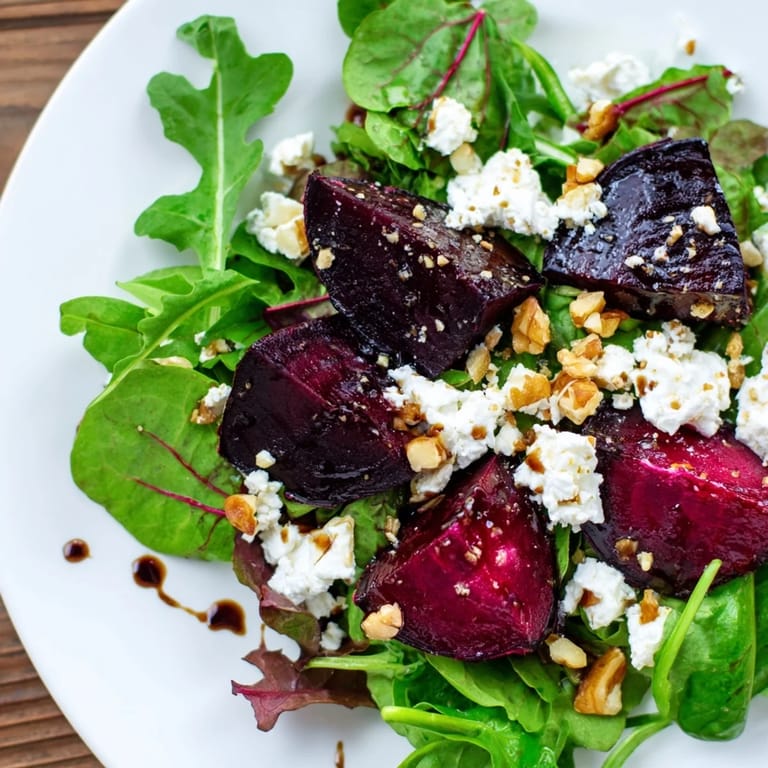
 What I love most is serving this when the evening light hits the plate just right, and the beets glow like tiny rubies against the green. It's one of those moments when food becomes a small act of care.
Toasting the Walnuts
Skipping the walnut toasting step is technically fine, but optional is a polite way to say you're missing out. A dry skillet for two to three minutes transforms them from pleasant and crunchy to aromatic and deeply nutty—you'll smell the change before you see it, and that's your signal to pull them off the heat. I always taste one as quality control, and I'm never sorry.
Making the Dressing Sing
The balsamic-honey-mustard trio is a classic balance of sweet, sharp, and smooth, but this dressing is forgiving enough that you can adjust it toward your preferences. Like it sharper? Add more vinegar. Want it sweeter to balance the earthiness of the beets? A touch more honey won't hurt. The mustard is doing invisible work, creating an emulsion that keeps the oil and vinegar from giving up on each other, and that's why whisking matters—you're not just mixing, you're coaxing them into friendship.
Variations and Pairings
Once you understand the blueprint of this salad, you can improvise endlessly. Pecans are slightly sweeter than walnuts and work beautifully if that's what you have. Feta is tangier and saltier than goat cheese, so you might dial back the salt in the dressing slightly. I've even added a handful of fresh mint or tarragon when herbs looked good at the market, and the result was unexpectedly delightful. This salad sings next to a crisp Sauvignon Blanc, but honestly, it's good enough that it doesn't need company.
- For a protein boost, add grilled chicken, chickpeas, or crispy chickpea croutons.
- A squeeze of fresh lemon juice in the dressing adds brightness if the balsamic feels too heavy.
- If you're feeding guests with nut allergies, swap the walnuts for toasted pumpkin seeds for similar crunch and richness.
 Pin it
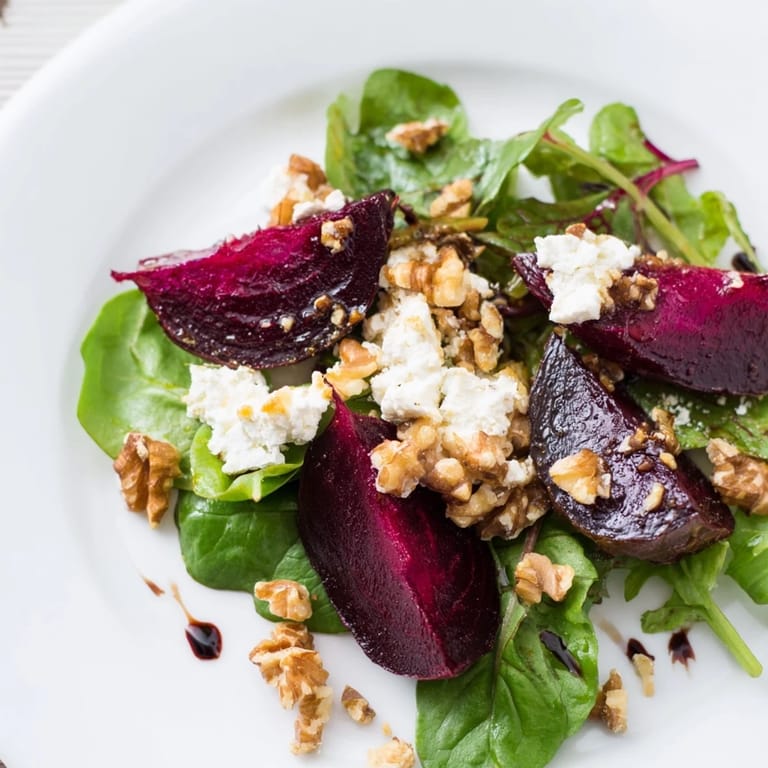
 This salad lives in that beautiful zone where it's simple enough for a weeknight but impressive enough for guests, and it asks almost nothing of you except patience for the oven and a willingness to taste as you go. That's the whole philosophy right there.
Recipe FAQs
- → How do I roast beets properly?
Wrap each beet in foil and roast at 200°C (400°F) for 35–40 minutes until tender when pierced with a knife. Let them cool slightly before peeling and cutting.
- → Can I substitute walnuts in this salad?
Pecans work well as an alternative to walnuts, providing a similar crunch and flavor profile.
- → What dressing complements this salad best?
A homemade balsamic vinaigrette with olive oil, mustard, honey, salt, and pepper enhances the earthy sweetness of the beets and the creaminess of the cheese.
- → Is toasting walnuts necessary?
Toasting walnuts is optional but recommended to bring out their flavor and add extra crunch.
- → What cheese alternatives can I use?
Feta cheese can substitute goat cheese for a different but still creamy texture and tangy taste.