 Pin it
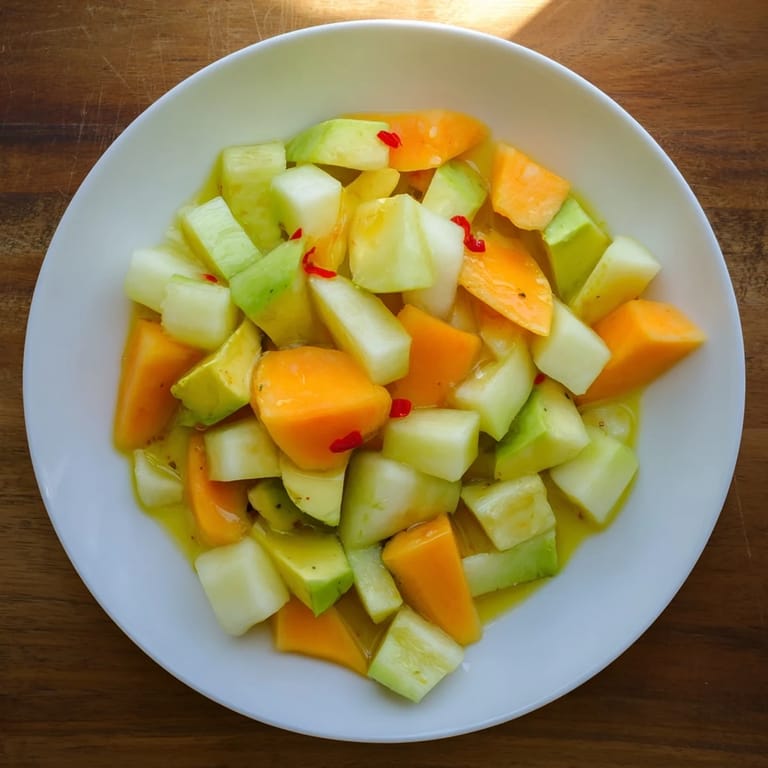
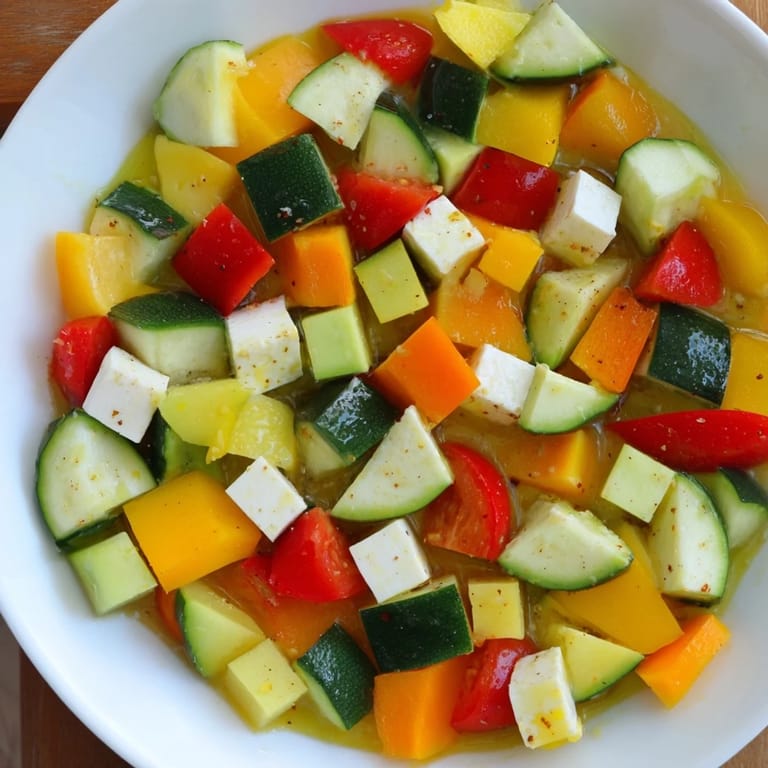
 I still remember the afternoon I decided to stop fussing with recipes and just let the ingredients speak for themselves. It was summer, and I had this gorgeous collection of colorful produce spread across my cutting board—a ripe mango, crisp cucumber, deep red beet—each one practically glowing. That's when it hit me: what if I stopped trying to combine them into a traditional salad and instead celebrated each ingredient as its own perfect square? That's how this Cube Geometry Study was born. It sounds methodical, almost architectural, but there's something deeply satisfying about turning fresh produce into this edible grid of color and flavor.
Last spring, I made this for a casual dinner party, and something unexpected happened. My friend Sarah, who usually picks through salads leaving half on her plate, sat there rearranging the cubes on her plate, creating her own patterns, eating methodically and thoughtfully. She told me later that the geometry made her actually taste each component instead of mindlessly eating. That moment taught me that presentation isn't vanity—it's an invitation to pay attention.
Ingredients
- 1 small cucumber, peeled and cut into 1 cm cubes: The foundation of freshness. I learned the hard way that peeling makes a difference—it removes any bitterness from the skin and lets the delicate flavor shine.
- 1 ripe mango, peeled and cut into 1 cm cubes: Choose one that yields slightly to pressure but isn't mushy. The sweetness is what makes this salad feel a bit luxurious rather than virtuous.
- 1 ripe avocado, peeled and cut into 1 cm cubes: Cut this last, right before assembly, or it'll brown before you know it. The creaminess is essential contrast.
- 1 small red beet, cooked, peeled, and cut into 1 cm cubes: You can roast it yourself or use a pre-cooked beet from the store—I won't judge. It's the earthy jewel tone that makes the whole thing work visually.
- 1 small yellow bell pepper, seeded and cut into 1 cm cubes: Pick one that's firm and glossy. The sweetness and crunch are what keep this from feeling too vegetable-heavy.
- 1 small watermelon wedge, rind removed, cut into 1 cm cubes: Use seasonal, ripe watermelon when you can. Those crisp, almost icy cubes are a moment of pure joy.
- 120 g feta cheese, cut into 1 cm cubes: The salty, crumbly texture ties everything together. It's the only thing that grounds all this bright fruit and vegetable energy.
- 2 tbsp extra-virgin olive oil: Use one you actually like to taste—this isn't the place to hide a mediocre bottle.
- 1 tbsp lemon juice: Fresh squeezed makes a difference. It brightens everything without dominating.
- 1/2 tsp sea salt, 1/4 tsp freshly ground black pepper: Season to taste, not to the recipe. You're the final judge.
- 1/2 tsp honey (optional): Just a touch, if you want to echo the natural sweetness of the mango and melon.
Tired of Takeout? 🥡
Get 10 meals you can make faster than delivery arrives. Seriously.
One email. No spam. Unsubscribe anytime.
Instructions
- Gather and prep your ingredients with intention:
- Pull out everything you need and arrange it where you can see it. There's something meditative about setting up your workspace for this kind of precise work. Wash and dry everything thoroughly—you want your cubes to glisten, not weep.
- Cut with patience and precision:
- This is where the recipe earns its name. Use a sharp knife (seriously, a dull knife is your enemy here) and aim for 1 cm cubes. A ruler helps if you're a perfectionist like me, but your eye will adjust quickly. Work vegetable by vegetable, and pause to admire each color as you go.
- Make your dressing while your hands are already moving:
- Whisk together the olive oil, lemon juice, salt, pepper, and honey in a small bowl. Taste it. Adjust it. Make it sing. This is your flavor foundation.
- Arrange your grid with the confidence of an artist:
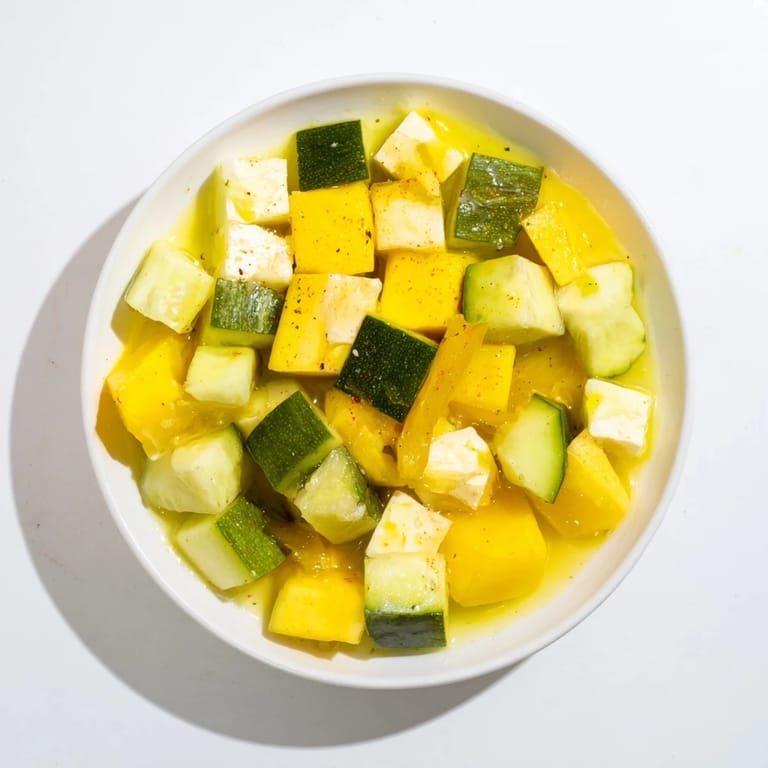
- On your platter, start arranging. Some people go for perfect rows. Others create a pleasing pattern they feel in the moment. There's no wrong way—just make sure colors alternate and complement each other. Step back and look. This is the moment where dinner becomes an experience.
- Dress with a light hand, right before serving:
- Drizzle the dressing over the arranged cubes. Too much and the geometry gets lost in a wet mess. Too little and the flavors feel disconnected. You're looking for an elegant sheen.
- Serve and savor immediately:
- This is a salad that lives in the moment. The cubes stay crisp for maybe twenty minutes, so gather everyone, plate it up, and eat while everything is still at its peak.
 Pin it
 What moved me most about this salad is that it has changed how I think about simplicity. I used to associate it with laziness. Now I understand that true simplicity—where each element is as perfect as possible and nothing distracts from that—is actually the hardest thing to achieve. Every time I make this, I'm reminded that the most elegant meals are often the ones where restraint wins.
The Geometry of Flavor
There's a reason this arrangement matters beyond looks. When you cut everything into uniform pieces, each vegetable and fruit maintains its integrity while being part of a unified whole. You taste the watermelon as watermelon, the beet as beet, the feta as feta—but together, they create something that's greater than any single ingredient. It's a lesson in how good composition works in cooking and in life.
Variations That Feel Right
The beauty of this recipe is that it's a framework, not a mandate. Swap the mango for papaya or pineapple if that's what looks good at your market. In winter, I've used pomegranate seeds and persimmon cubes. For a vegan version, press extra-firm tofu until it's dry, cut it into cubes, and treat it with the same precision you'd give the feta. The grid holds whatever you want to celebrate.
Serving and Pairing
Serve this at the beginning of a meal when palates are fresh and eyes are hungry. It's light enough to not overwhelm, but substantial enough to feel like a proper start. Pair it with a crisp Sauvignon Blanc that echoes the brightness, or sparkling water with lime if you want to let the salad be the main character. There's also something lovely about serving it on a wooden board instead of a traditional plate—it emphasizes the artisanal nature of what you've created.
- Make sure all your cubes are roughly the same size so every bite feels balanced and intentional.
- Cut the avocado last and assemble within 30 minutes of serving to keep everything fresh and vibrant.
- Trust your instincts about arrangement—symmetry is beautiful, but so is organized chaos if it feels right to you.
 Pin it
 Every time I make this salad, I remember why I cook in the first place—not to impress, but to create a moment where beauty and flavor and care converge. This is simple food elevated by attention. Enjoy it that way.
Recipe FAQs
- → What vegetables are best for this salad?
Cucumber, red beet, yellow bell pepper, and watermelon provide crisp textures and vibrant colors when cut into uniform cubes.
- → Can I substitute feta cheese for a plant-based option?
Yes, firm tofu cut into cubes works well as a dairy-free alternative while maintaining texture.
- → How do I achieve uniform 1 cm cubes easily?
Using a sharp chef's knife and optionally a ruler for precision helps in cutting consistent cubes.
- → What dressing complements the salad?
A simple mix of extra-virgin olive oil, lemon juice, sea salt, black pepper, and optional honey enhances the salad’s flavors without overpowering.
- → Can this salad be prepared in advance?
It's best served immediately after dressing to maintain the crisp textures and neat presentation.