 Pin it
 I discovered the Fibonacci spiral bread by accident during a late-night kitchen experiment, mesmerized by a documentary about nature's mathematical patterns. There was something poetic about translating those spirals—seen in sunflowers and nautilus shells—into something I could actually bake and share. That first loaf, though imperfect, felt like edible geometry, and I knew I had to master it.
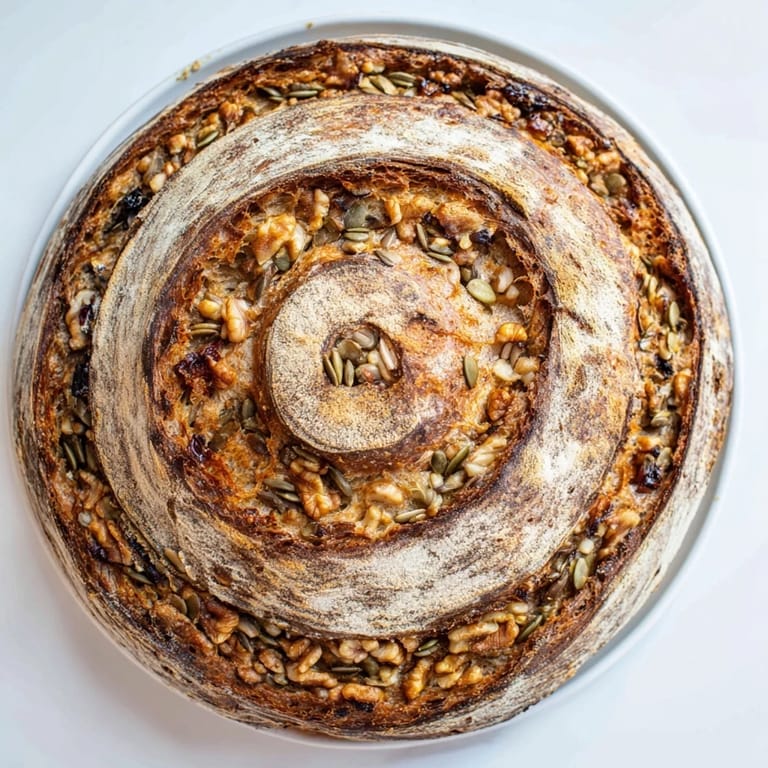
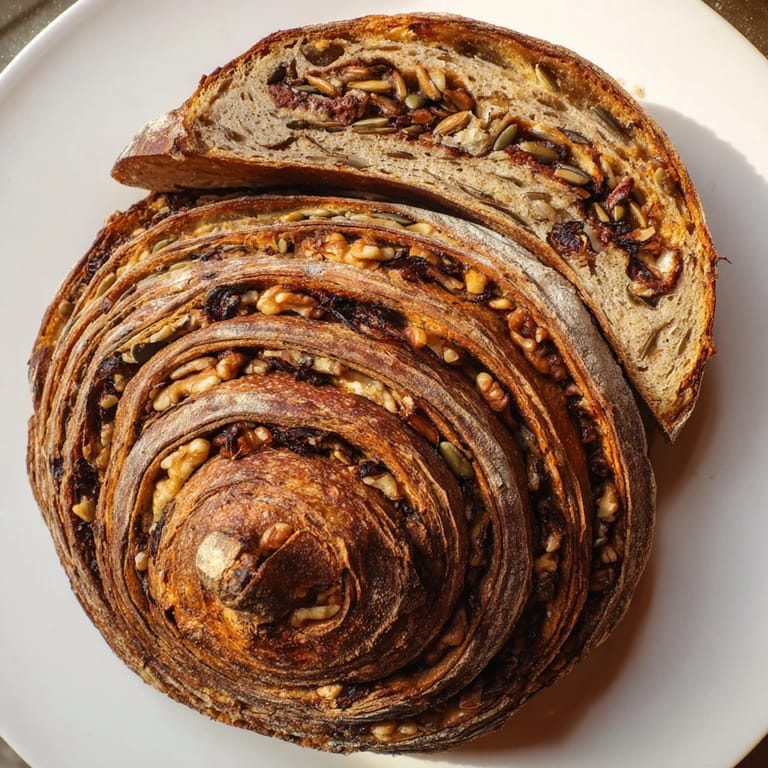
I'll never forget pulling this bread from the oven for the first time at a dinner party. The golden spiral caught the light so perfectly that my guests gasped before I even cut into it. That moment—when food becomes art—is exactly why I keep making this bread.
Ingredients
- Strong bread flour (500 g): The backbone of your structure; it develops the gluten network that creates those beautiful, stretchy layers. I learned to measure by weight rather than cups—it makes a real difference in consistency.
- Lukewarm water (350 ml): This temperature is crucial; too hot kills your yeast or starter, too cold and fermentation stalls. I always test it on my wrist like I'm checking a baby's bottle.
- Sourdough starter or instant yeast (100 g starter or 7 g yeast): If using sourdough, make sure it's active and bubbly—fed within the last few hours. The long fermentation develops incredible depth of flavor you simply can't rush.
- Fine sea salt (10 g): Enhances flavor and strengthens gluten; add it after the autolyse to prevent it from interfering with fermentation.
- Olive oil (15 ml): Enriches the crumb and adds tenderness; it's subtle but transformative.
- Toasted sunflower seeds (20 g): Your innermost spiral layer, providing delicate nuttiness and a light crunch in the center.
- Chopped walnuts (30 g): The earthy second layer, adding sophisticated depth as the spiral expands outward.
- Pumpkin seeds (40 g): Building the spiral with increasingly vibrant flavors, these seeds add color and a pleasant textural contrast.
- Grated hard cheese—Gruyère or Parmesan (50 g): The savory heart of the spiral; freshly grated makes an enormous difference in how it incorporates into the dough.
- Sun-dried tomatoes, drained (60 g): Make sure to drain them well or your dough becomes too wet; their concentrated umami is essential to the flavor progression.
- Mixed olives, pitted and chopped (70 g): Choose olives you actually enjoy eating straight from the jar—that flavor will sing through the bread.
- Sautéed spinach, well-drained (80 g): The outermost layer should be thoroughly dried, or it will introduce excess moisture that weakens the crust. I squeeze mine in a kitchen towel.
Tired of Takeout? 🥡
Get 10 meals you can make faster than delivery arrives. Seriously.
One email. No spam. Unsubscribe anytime.
Instructions
- Create the foundation with autolyse:
- In your large bowl, combine the flour and water, stirring just until everything is hydrated—there shouldn't be any dry flour, but don't overmix. Cover this and let it rest for 30 minutes. This quiet moment allows the flour to fully absorb the water and begins developing gluten naturally, making the next steps easier and creating better flavor.
- Bring the dough to life:
- Add your sourdough starter (or yeast), salt, and olive oil to the rested dough. Mix until a shaggy, sticky mass forms. Now knead on a lightly floured surface for 8–10 minutes. You'll feel the dough transform under your hands—it becomes smoother, springs back when you poke it, and feels alive. This is the moment you know fermentation will work magic.
- Let time do the heavy lifting:
- Place your dough in an oiled bowl, cover it loosely, and let it rise at room temperature for 8–12 hours. You're looking for the dough to roughly double in size. If your kitchen is cool, it might take closer to 12 hours, and that's perfectly fine—long fermentation actually improves flavor and texture.
- Divide and conquer:
- Turn your risen dough onto a lightly floured surface and divide it into 7 equal portions. I use a scale for this to ensure each spiral segment has the right proportion. Handle the dough gently; you want to preserve the air bubbles you've built.
- Build your Fibonacci layers:
- This is where the magic happens. Take the smallest dough portion and gently knead in your 20 g of toasted sunflower seeds until evenly distributed. Then take the next portion and knead in the 30 g of walnuts. Continue this process with each addition (pumpkin seeds, cheese, sun-dried tomatoes, olives, and finally spinach), with each portion increasing in both size and ingredient quantity. Each piece becomes more textured, more flavorful, a miniature world unto itself.
- Shape the spiral:
- Roll each kneaded portion into a rope, starting with the sunflower seed rope. On your parchment-lined baking sheet, coil this rope around a central point. Now coil the walnut rope around it, then the pumpkin seeds, and so on, building outward like a snail shell. Press the end of the final spinach rope firmly into the dough to seal it. The spiral should look intentional and beautiful even before it bakes.
- Final rise with patience:
- Cover the shaped spiral loosely with a cloth and let it rise for about 1.5 hours. You're waiting for it to look puffy and alive, with visible expansion between the coils. This final rise is shorter because the dough is already well-fermented and the added ingredients contain moisture.
- Prepare for the oven's transformation:
- Preheat your oven to 230°C (445°F) and place an empty tray on the bottom rack. Dust your spiral generously with flour, creating a light coating. Using a sharp blade or lame, score along the spiral lines with confident, shallow slashes—these allow steam to escape and give the crust beautiful definition.
- Create steam and bake:
- Just before your bread goes in, carefully pour a cup of hot water into the bottom tray. This creates a steamy environment that keeps the crust from setting too early, allowing your bread to expand fully and develop that gorgeous golden exterior. Bake for 40 minutes, rotating the baking sheet halfway through for even browning. You're finished when the loaf is deep golden brown and sounds hollow when tapped on the bottom.
- Cool with restraint:
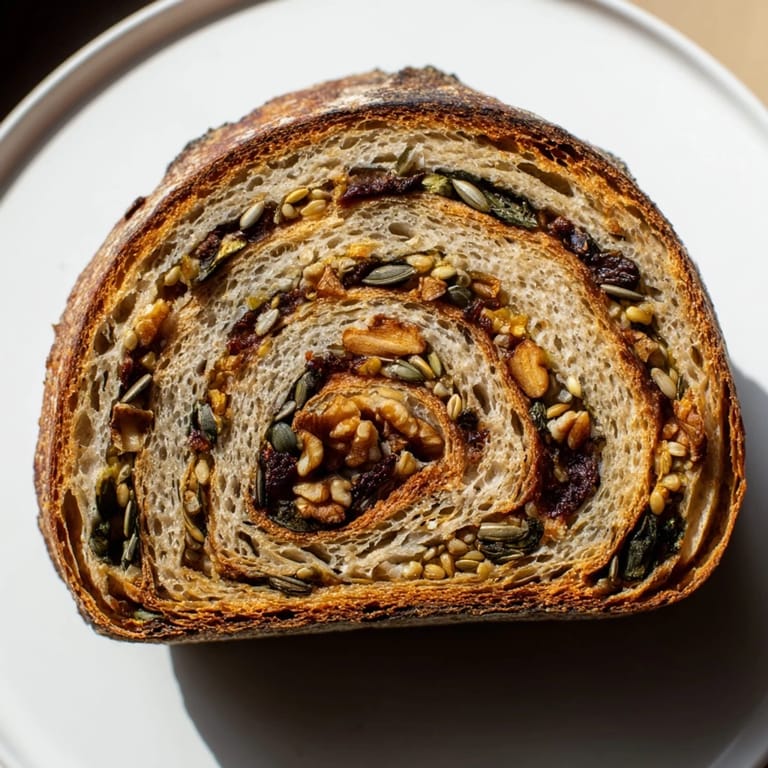
- Place your finished loaf on a wire rack and wait—I know it's torture, but this step is non-negotiable. As it cools, the interior crumb sets properly. Slice too early and you'll have a gummy interior. Cool completely before slicing to reveal all those beautiful, distinct spiral layers with their different textures and colors.
 Pin it
 I'll always remember the first time someone cut into this bread at a table and just stopped, watching the layers reveal themselves. The spiral pattern, the distinct colors of each ingredient band, the contrast between the crunchy crust and tender interior—it felt like sharing something precious. That's when I realized this bread was never just about looking pretty; it was about creating edible memory.
The Beauty of Mathematical Baking
The Fibonacci spiral isn't just decorative—it's a natural pattern that appears everywhere in nature, and baking it feels like tapping into something ancient and true. Working with this design reminds me that baking is both art and science, and when you respect both, magic happens. The mathematical progression of ingredient quantities means flavors build intentionally; you're not just adding more stuff, you're orchestrating a flavor journey from subtle to bold.
Ingredient Flexibility and Seasonal Thinking
While I've given you a specific ingredient progression, this bread genuinely thrives on personalization. The only rule is that you increase quantities as you spiral outward and maintain the basic ratio of dough to additions. In spring, I've built spirals with fresh herbs and garlic; in summer, roasted vegetables replace some of the seeds. Winter calls for dried cranberries and rosemary. The structure remains beautiful regardless of what you choose, and your bread becomes a edible reflection of the season and what you love to eat.
Building Confidence Through Repetition
The first time you make this, you might feel like you're performing surgery on bread dough, worrying about every spiral placement. By the third time, you'll understand the dough's forgiveness and find yourself shaping with intuition rather than anxiety. This bread teaches patience but rewards it generously. And here's what I've learned from making it dozens of times:
- Your hands will tell you when the dough is ready for the next step—trust that feedback more than any timer
- Slight imperfections in the spiral add character and make each loaf unique, which is far more interesting than perfection
- Keeping a notebook of your fermentation times (especially if you work with sourdough) helps you dial in your process season by season and kitchen by kitchen
 Pin it
 This bread changed how I think about patience in the kitchen. Watching those spirals rise and bake, seeing the mathematical beauty transform into something warm and nourishing, reminded me why I fell in love with cooking in the first place.
Recipe FAQs
- → What is the purpose of the Fibonacci spiral in this bread?
The spiral guides the shaping of dough segments with increasing density and unique ingredients, creating a visually stunning loaf with layered textures.
- → How does the layering affect the bread's texture?
Each segment's different seeds, nuts, and vegetables add distinct crunch and moisture, contributing to a varied and rich crumb texture.
- → Can the cheese be omitted or substituted?
Yes, for a vegan variation, omit the cheese or replace it with a vegan alternative without affecting the overall structure.
- → Why is steam used during baking?
Introducing steam helps develop a crisp and glossy crust by keeping the surface moist in early baking stages.
- → What is the ideal fermentation time for this dough?
The dough benefits from a long rise of 8–12 hours at room temperature to develop flavor and improve texture.