 Pin it
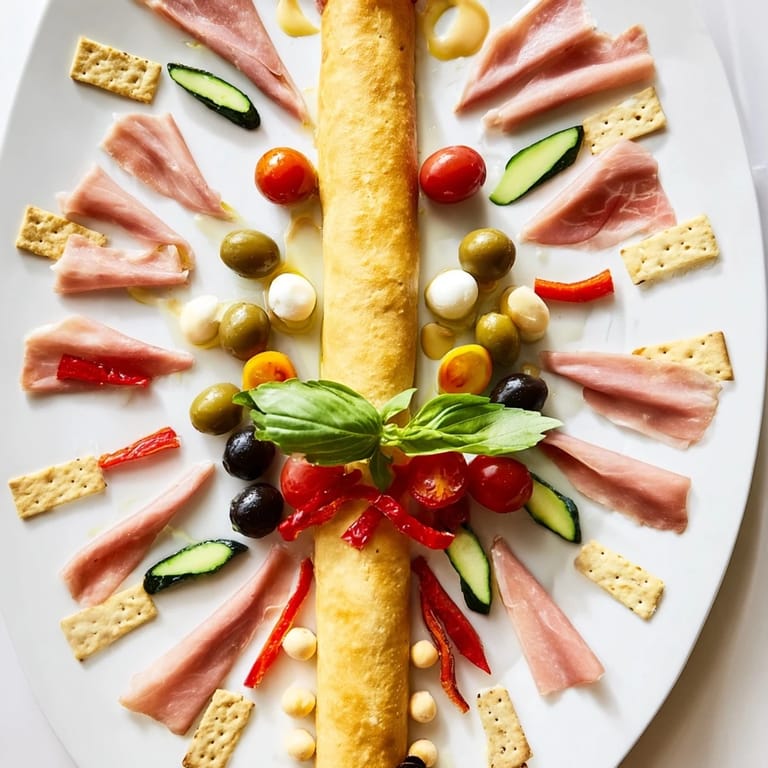
 I discovered the magic of fractal trees in my kitchen on a Tuesday afternoon when I was frantically preparing for an unexpected dinner party. With only scattered ingredients and a need to impress, I suddenly imagined arranging everything like branches sprouting from a trunk—and this Fractal Tree Branching Bread Platter was born. That first version was chaotic but mesmerizing, and my guests couldn't stop talking about how it transformed simple components into something that felt both artistic and endlessly fun to graze from.
I remember my sister's face lighting up when she saw the completed platter at my dinner table. She circled it slowly, tracing the fractal pattern with her eyes, then looked at me and said, "This is too beautiful to eat." Of course, we ate it anyway, laughing as everyone discovered their own favorite branch and the platter gradually transformed into a beautiful mess.
Ingredients
- Large breadstick (25–30 cm long): This becomes your anchor, your tree trunk—choose one that's sturdy enough to stand proud in the center without toppling. I learned the hard way that a fresh, warm breadstick from a bakery holds its shape better than a day-old one.
- Prosciutto or vegetarian deli slices: These create your largest, most dramatic branches. If you go vegetarian, thinly sliced smoked paprika-marinated tofu or grilled eggplant offers unexpected sophistication.
- Mini mozzarella balls: Their delicate whiteness punctuates the composition beautifully. Choose the smallest ones you can find—they feel more intentional and eat more gracefully.
- Baby pickles or gherkins: They add tang and the satisfying snap that makes people reach for another branch. I prefer cornichons for their jewel-like appearance.
- Cherry tomatoes, halved: These jewel-toned pieces introduce bright color and should be ripe but still firm enough to thread onto your arrangement without getting crushed.
- Thin cucumber slices: Slice these just before assembly—they dry out and lose their fresh appeal if they sit too long. A mandoline creates uniform, professional-looking pieces.
- Green or black olives: Their dark sophistication anchors the second layer visually. I prefer a mix of both for complexity.
- Small basil leaves: Reserve these for the final assembly moment so they stay vibrant and fragrant. Fresh basil is non-negotiable here.
- Roasted red pepper strips: Whether homemade or jarred, these add an elegant pop of color and sweetness. Pat them dry so they don't dampen your platter.
- Small crackers or crostini: These provide textural contrast and are the finishing flourish of your tiniest branches. Choose ones sturdy enough to support toppings if guests want to combine them with cheese or meats.
Tired of Takeout? 🥡
Get 10 meals you can make faster than delivery arrives. Seriously.
One email. No spam. Unsubscribe anytime.
Instructions
- Anchor your trunk:
- Place the breadstick in the very center of your platter, running lengthwise. This is your starting point—imagine it's the heart from which everything radiates. Position it slightly off-center toward you if your platter is deep; this creates better proportions and makes reaching easier for your guests.
- Create the first branches:
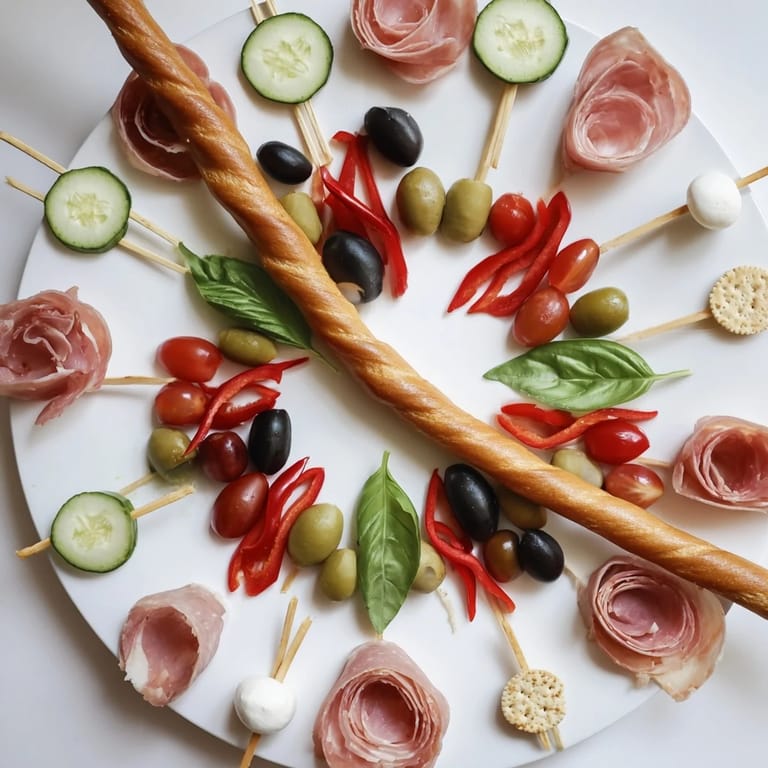
- Take the prosciutto slices and fold or roll them loosely, then arrange them in pairs radiating outward from the breadstick's top. Tuck a mini mozzarella ball beside each roll, and place a baby pickle between them. Step back and admire—this is where the fractal pattern begins its dance. Ensure symmetry; if the left side has a specific arrangement, mirror it on the right.
- Build the second layer:
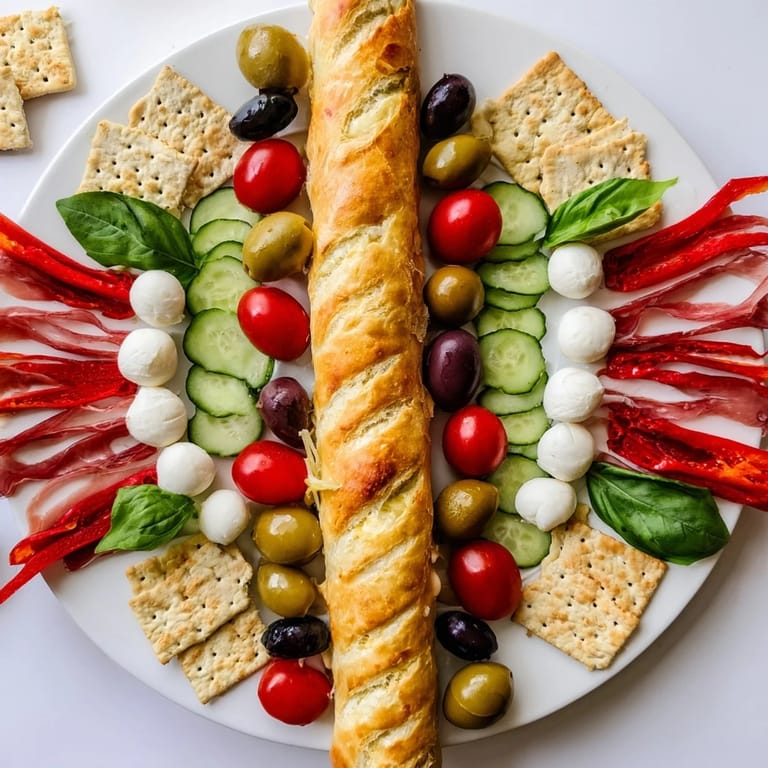
- Moving outward, arrange your cherry tomato halves, cucumber slices, and olives in the gaps between your first branches. These pieces should branch off from the ends of the larger items, spreading outward like limbs reaching for sunlight. Imagine you're following the natural spiral of tree growth.
- Complete with the finest branches:
- Finally, tuck basil leaves, roasted pepper strips, and tiny crackers into every remaining space, creating a sense of fractal tapering. The smallest pieces should be at the very edges, fading out like the finest twigs of a winter tree. This is where artistry meets appetizer—take your time, and let each addition feel intentional.
- Perfect the composition:
- Step back and look at your work from above. Adjust any gaps, ensure color distribution feels balanced, and verify that your fractal pattern is visually clear. Tighten or loosen spacing as needed. The goal is that guests can immediately see the tree-like structure before they understand what they're looking at.
- Bring it to the table:
- Present it proudly and watch people pause in genuine delight. Serve immediately so everything maintains its fresh crispness and visual impact.
 Pin it
 What started as a last-minute dinner party hack has become my favorite way to feed people when I want them to feel celebrated. There's something about a meal that's also a piece of art that shifts the evening's energy—suddenly conversations linger longer, and people remember not just what they ate, but the moment they gathered around this impossible platter.
Making It Vegetarian
The vegetarian version is just as stunning and honestly just as delicious. Replace the prosciutto with grilled eggplant ribbons, marinated artichoke hearts, or thinly sliced smoked tempeh for that umami depth you'd get from cured meat. I've also used layered sheets of roasted zucchini and sun-dried tomatoes to create the visual drama of those largest branches. The key is choosing ingredients with strong colors and interesting textures—they carry more visual weight when you're not relying on the richness of meat.
Flavor Variations to Explore
Once you master the basic structure, this platter becomes a canvas for your pantry and imagination. I've done Mediterranean versions with kalamata olives and preserved lemon, Italian interpretations with salami and fresh burrata, and late-summer arrangements heavy on heirloom tomatoes and basil. Each version tells a different story about what season you're in and what you're craving. The fractal structure remains your guide—the ingredients are just your paint.
The Art of Elegant Assembly
This platter works because it honors both beauty and practicality. It feeds six people as a generous appetizer, or twelve as a grazing option alongside other dishes. The visual architecture means every guest naturally understands how to approach it—you don't need instructions, just hands reaching and joy spreading. I've learned that food arranged with intentionality tastes somehow better, as if the care you took in creation transfers to the experience of eating it.
- Prepare all your ingredients and arrange them in small bowls before you begin the platter—this prevents stress and lets you work with flow instead of franticity
- Use a platter with some depth rather than a flat board; it contains the ingredients naturally and creates visual drama
- Consider your color story from above—ideally you want reds, whites, greens, and darks distributed evenly so no single hue dominates
 Pin it
 This platter taught me that sometimes the most memorable meals are the ones where you step back and admire what you've created before anyone takes a bite. That moment of shared wonder, before the eating begins, is when food becomes memory.
Recipe FAQs
- → What is the central element of this platter?
The centerpiece is a large breadstick that simulates the trunk of a fractal tree, anchoring the arrangement.
- → Which ingredients form the largest branches?
Prosciutto or vegetarian deli slices, mini mozzarella balls, and baby pickles create the largest branches extending from the breadstick.
- → How are the smaller branches arranged?
Cherry tomatoes, cucumber slices, and olives form the medium branches, while basil leaves, roasted red pepper strips, and small crackers create the smallest ones.
- → Are there vegetarian options available?
Yes, prosciutto can be replaced with extra cheese or grilled vegetables for vegetarian preferences.
- → What tools are needed to assemble the platter?
A large serving platter and a sharp knife for chopping and arranging ingredients are sufficient for this assembly.
- → How can I enhance the flavor of this platter?
Drizzling olive oil and sprinkling cracked pepper over the arrangement adds extra depth and flavor.